
NeuCube: Decoding the Spatio-Temporal Dynamics of Facial Aging with Spiking Neural Networks
An evolving spatio-temporal approach for gender and age group classification with Spiking Neural Networks
This paper introduces a novel evolving spatio-temporal framework for age group and gender classification using the NeuCube spiking neural network (SNN) platform. By extracting anthropometric features from facial landmarks and encoding them into spike trains, the method achieves SOTA performance on the FG-NET and MORPH databases.
TL;DR
Researchers have successfully applied the NeuCube neuromorphic platform to the problems of age and gender classification. By treating facial aging as a slow-moving spatio-temporal process rather than a static image problem, this approach utilizes Spiking Neural Networks (SNNs) and Anthropometric models to achieve superior accuracy (up to 98-99%) on benchmark datasets like FG-NET and MORPH, significantly outperforming traditional machine learning classifiers.
Problem & Motivation: Aging as a Four-Dimensional Process
Facial aging is often viewed as a change in texture (wrinkles), but it is fundamentally a spatio-temporal phenomenon. While we perceive age from a single photo, the true biological signal is a "drift" of facial landmarks—proportions of the jaw, the width of the orbits, and the relative position of the mouth—that changes across a subspace of time.
Current SOTA methods often rely on standard CNNs or static feature extraction, which face three major hurdles:
- Sensitivity to Environment: Illumination and pose often interfere with texture-based aging features.
- Temporal Neglect: Most classifiers do not explicitly model the temporal sequence of how a face changes.
- Computational Efficiency: Traditional deep models required for high accuracy are often resource-intensive.
The authors' insight was to use an Anthropometric Model (based on geometric ratios) to eliminate illumination issues and a Neuromorphic Cube to capture the temporal progression of facial changes.
Methodology: The Neuromorphic Architecture
The proposed framework follows a sophisticated pipeline from landmarks to spikes:
1. Feature Extraction (The Anthropometric Model)
Using 68 facial landmarks, the authors calculate 7 specific indices (e.g., Facial Index, Mandibular Index, Orbital Width). Because these are ratios and distances, they are invariant to textures like moustaches or glasses.
2. Data Encoding (AER)
The real-valued indices are converted into Address Event Representation (AER) spike trains. This mimics the biological retina, where a potential increase triggers a positive spike and a decrease triggers a negative one.
3. The NeuCube (SNNc) and STDP
The heart of the system is a 10x10x10 cube of 1000 spiking neurons.
- Unsupervised Stage: The cube uses Spike-Timing-Dependent Plasticity (STDP). If neuron A fires before neuron B, their connection strengthens. This allows the cube to "learn" the temporal relationships between facial feature changes.
- Supervised Stage: A dynamic evolving SNN (deSNN) classifier is attached to the cube to map the resulting patterns to specific age groups or genders.
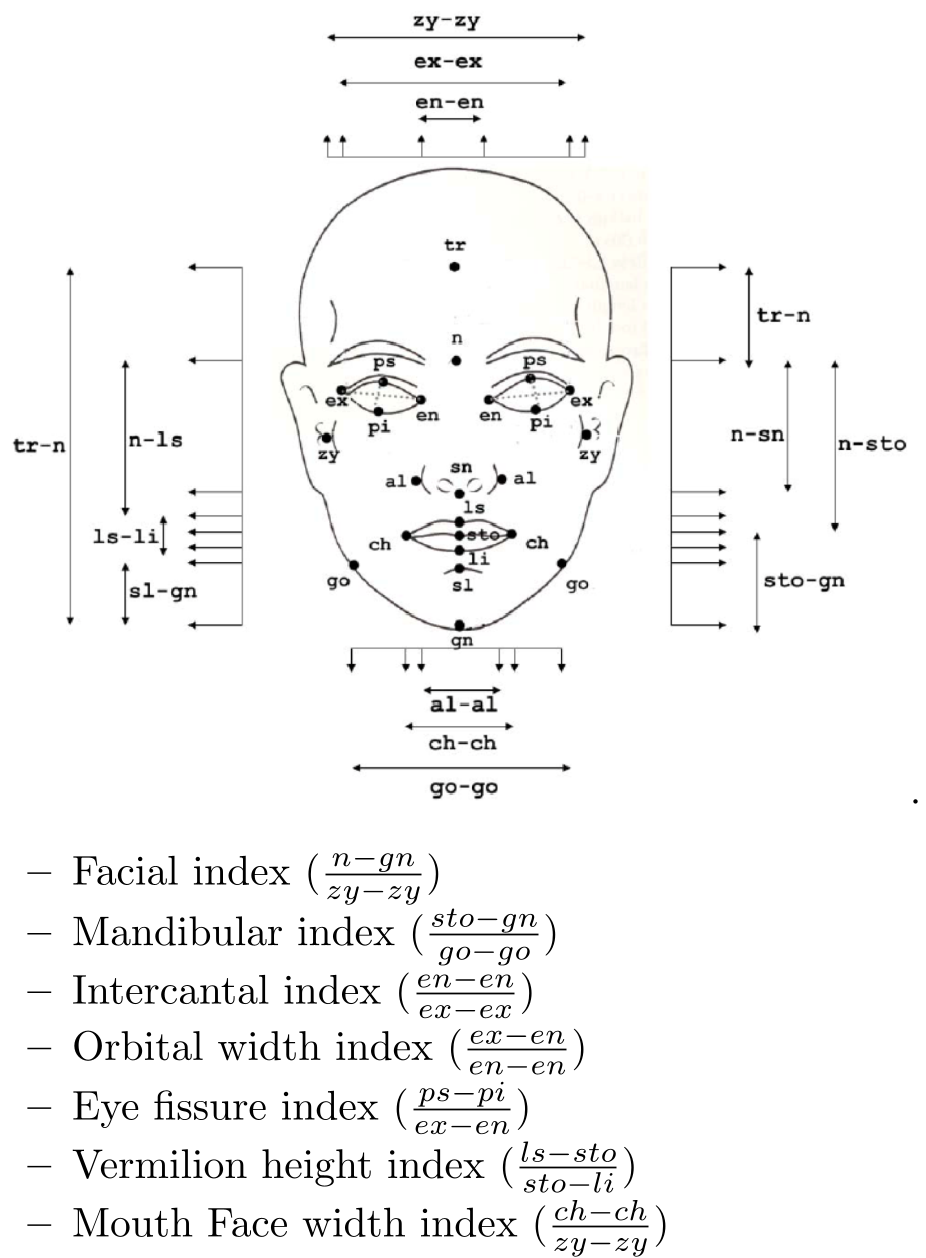 Figure 1: The NeuCube framework showing the transition from data encoding to the 3D SNN reservoir and final classification.
Experiments & Results: Crushing Balinese Baselines
The authors tested the model against traditional heavyweights like Multi-Layer Perceptrons (MLP), k-Nearest Neighbors (kNN), and Naive Bayes across two major galleries: FG-NET and MORPH Album 2.
Key Findings:
- Age Group Classification: On FG-NET, NeuCube achieved 98% accuracy compared to 91.1% for kNN. On MORPH, it hit 95%, significantly better than the 92.6% reached by the GEF (Grouping Estimation Fusion) method.
- Gender Recognition: The performance was even more striking in younger age groups (0-18), where NeuCube reached 95% accuracy, while standard models struggled due to the lack of secondary sexual characteristics in children's faces.
 Table 1: Accuracy comparison on FG-NET dataset. NeuCube shows a clear lead over traditional ML techniques.
Critical Insight: Biological Plausibility Meets Biometrics
One of the most fascinating aspects of this research is the visualization of the SNN cube. By analyzing which neurons fired and how connections strengthened, the authors could observe which facial features were most descriptive for different ages:
- Infants (0-3): Showed high activity in Facial and Orbital width indexes (rapid craniofacial growth).
- Teens/Adults (4-16): Switched prominence to Mandibular and Eye fissure indexes.
This confirms that the NeuCube isn't just a "black box"; it learns the bio-mechanical shifts in facial structure.
Conclusion & Future Look
The study demonstrates that Spiking Neural Networks are not just for fast-paced signal processing like EEG or audio. They are exceptionally gifted at capturing inter-related spatio-temporal drifts in biometrics.
The main limitation currently lies in the reliance on accurate landmark detection; if the initial 68 points are misaligned, the geometric ratios collapse. However, the future looks promising for gender-specific aging models, which could eventually allow us to simulate how a person’s face will evolve over the next 20 years with unprecedented accuracy.