
Intelligent Sports Retail: Reforming the Stationery Industry via Data Mining Fusion
Design of a sports culture data fusion system based on a data mining algorithm
This paper proposes a sports culture data fusion system leveraging data mining techniques, specifically K-means, GBDT-LR fusion, and Naive Bayes, to analyze e-commerce consumption patterns. The system integrates geospatial clustering, customer segmentation, and preference prediction to modernize decision-making in the sports stationery industry.
TL;DR
This research addresses the modernization of the sports stationery industry by designing a data fusion system based on Big Data. By utilizing a cocktail of algorithms—K-Means, GBDT, and Naive Bayes—the system identifies regional consumption "hotspots," tiers customers with extreme precision, and predicts buying preferences, resulting in a 20%+ revenue boost for pilot enterprises.
Academic Context: The work sits at the intersection of Business Intelligence (BI) and Spatial Econometrics, moving beyond simple reporting to predictive data warehousing.
Problem & Motivation: The "Data Rich, Information Poor" Trap
While the Chinese e-commerce market reached 20.2 trillion yuan in 2016, the sports stationery sector remained trapped in traditional sales models. The authors identified three critical gaps:
- Geospatial Blindness: Firms didn't understand how geography affects online shopping frequency.
- Flat Customer Models: Traditional RFM (Recency, Frequency, Monetary) models were too simplistic for complex digital behaviors.
- Static Logic: Existing systems couldn't "predict" preference—they only recorded history.
Methodology: The Core Architecture
The proposed system utilizes a multi-layered data mining approach to bridge the gap between raw web-crawled transaction records and executive decisions.
1. Geospatial Feature Clustering
Using ArcGIS and K-means clustering, the research incorporates spatial coordinates and into the distance metric. This allows for the discovery of "High-High" and "Low-Low" quadrants via Moran’s I index, revealing a strong positive spatial autocorrelation in China's sports consumption.
2. The GBDT-LR Fusion & Improved RFM
To solve the feature engineering bottleneck, the authors combined Gradient Boosting Decision Trees (GBDT) with Logistic Regression (LR). GBDT automatically discovers distinguishable feature combinations, which are then fed into the LR model for final classification.
Simultaneously, they expanded the RFM model into a 10-indicator matrix, including sub-metrics like "monthly maximum purchase frequency" and "first quartile purchase time."
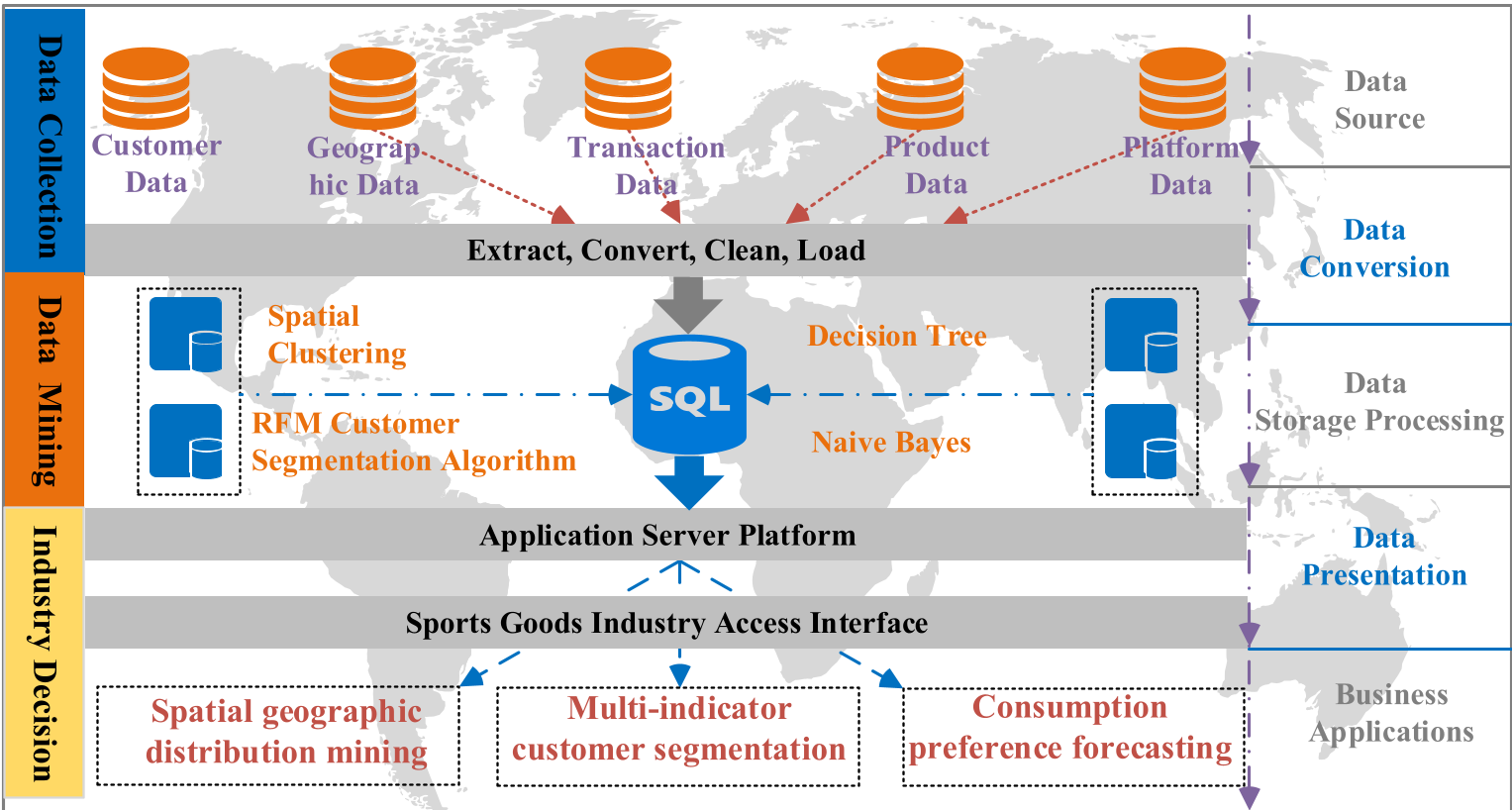 Figure 1: The architecture of the sports goods industry consumption data system, integrating ETL, Data Warehousing, and Mining.
Experiments & Results: Real-World ROI
The system was tested in a B/S structure using Oracle 10g and MySQL.
- Performance: In a two-server cluster environment, the system maintained stability with 700 concurrent services, proving its scalability for large-scale retail platforms.
- Commercial Impact: A three-month trial showed that identifying "Important Major Customers" (Type 001) and "Important Old Customers" (Type 111) allowed for targeted recommendations.
- Accuracy: The Naive Bayes model achieved a prediction accuracy of 95.3%, facilitating highly relevant product suggestions.
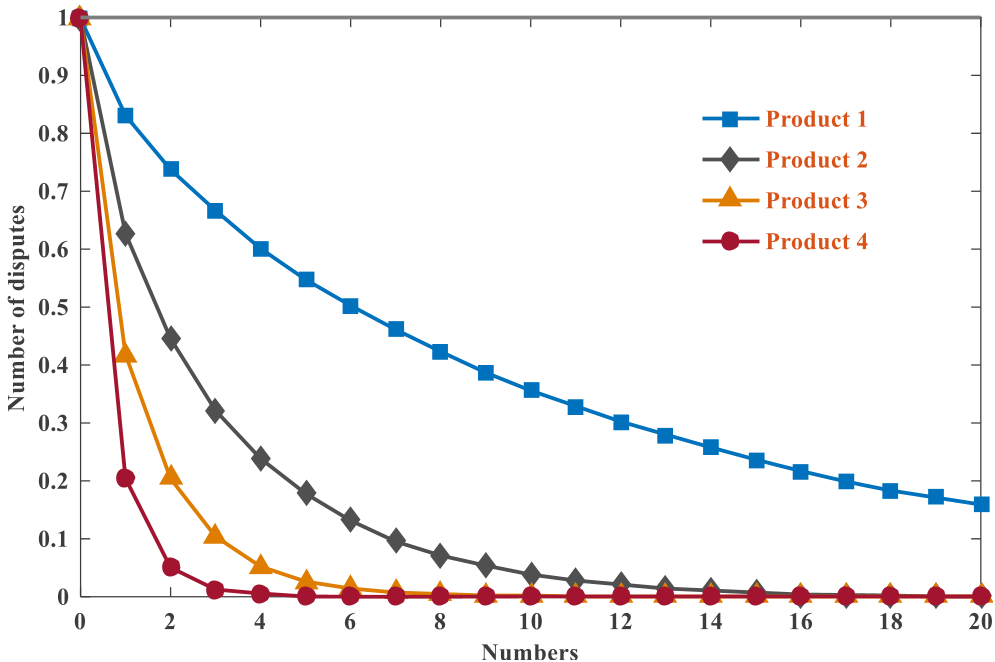 Figure 2: The system significantly reduced packet loss while increasing the efficiency of data processing compared to single-server setups.
Critical Analysis & Conclusion
Takeaway
The paper successfully demonstrates that "Data Fusion" is not just about gathering more data, but about algorithmic synergy. Combining spatial awareness (K-means) with behavioral prediction (GBDT-LR) creates a multidimensional profile of the consumer that a single algorithm would miss.
Limitations
- Algorithmic Breadth: While effective, the paper relies on established models (2019 context). Modern Deep Learning approaches (like Graph Neural Networks for spatial data) could further enhance performance.
- Data Scope: The dataset is limited to 2017 record sets; long-term shifts in consumer behavior post-pandemic are not reflected.
Future Outlook
The next frontier for this system is the integration of Real-time Stream Processing and Multi-modal Learning, where social media sentiment is fused with transaction data to predict short-lived sports trends (e.g., Olympic-driven spikes).