
Does Fitness Spread Like a Virus? Decoding the Social Dynamics of Physical Activity
The Spread of Physical Activity Through Social Networks
This study investigates the interplay between social network structures and physical activity among 44.5k Fitbit users over a one-year period. Utilizing time-aggregated and longitudinal panel regression alongside non-parametric causal tests, the research quantifies how social ties and "alters'" activity levels influence an "ego's" daily step counts, particularly in users with chronic conditions.
Executive Summary
TL;DR: Analyzing 9.3 million days of step data from 44,500 Fitbit users, this study provides measurable evidence that your friends' activity levels and your total number of social ties significantly impact your own movement. The effect is most pronounced in individuals managing chronic conditions like diabetes, where social ties correlate with a nearly six-fold increase in daily steps compared to the general population.
Academic Context: This work represents a sophisticated step forward in the "Contagion vs. Homophily" debate. It moves beyond simple correlation by applying advanced graphical causal models to large-scale, high-frequency wearable data, positioning itself as a critical bridge between network science and digital health.
The "Birds of a Feather" Problem: Motivation
In social network analysis, we often see clusters of behavior—obesity, smoking, or fitness. The central question is: Why?
- Homophily: We become friends with people like us (active people seek active friends).
- Confounding: We share an environment (friends in the same city experience the same sunny weather).
- Contagion (Influence): My friend's behavior actually causes me to change mine.
Existing studies often fail to distinguish these, leading to "evidence-poor" claims about behavioral spread. The authors sought to test if the "Fitbit effect" is real influence or just a byproduct of who we choose to befriend.
Methodology: The Core Architecture
The researchers used a two-pronged approach to dissect the data:
1. Between-Subject & Within-Subject Analysis
By using Fixed-Effects Panel Regression, the authors could control for "static" traits—things about a person that don't change over the year (like personality or baseline metabolism). This allowed them to focus purely on how fluctuations in a friend's activity predicted fluctuations in the user's activity.
2. The Causal Litmus Test
To address hidden traits (latent homophily), the authors employed a framework based on d-separation in graphical models. They treated the system as a Markov process where an individual’s current state depends on their previous state and their hidden traits.
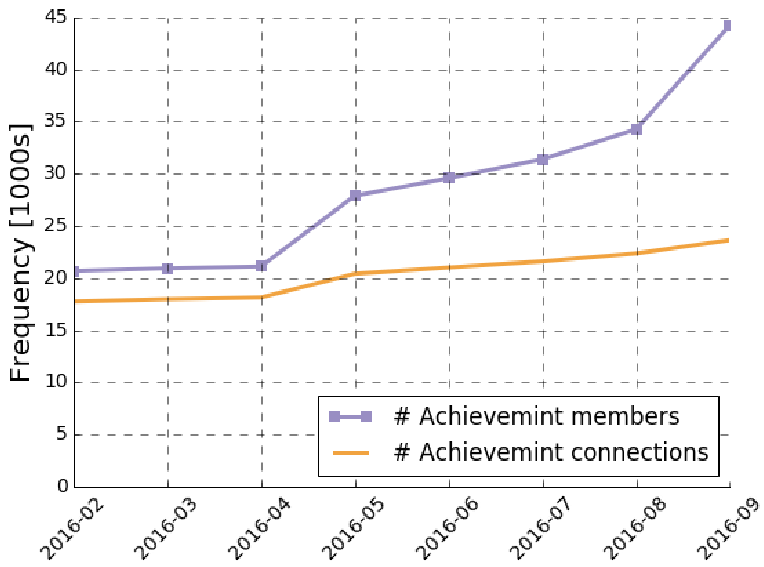 Figure: The graphical model depicting Latent Homophily (solid lines) vs. Contagion (dotted line).
Key Insights and Results
The "Chronic Condition" Catalyst
Perhaps the most significant finding is the interaction between social networks and health status. For most users, a new friend adds a modest ~6 steps. However, for diabetic users, the association is 5.8 times stronger.
 Table: Health status breakdown showing elevated BMI and specific activity profiles across conditions.
The Gender Paradox
The study confirmed Gender Homophily: users overwhelmingly prefer same-sex fitness buddies. Interestingly, while men generally take more steps, having a higher proportion of female friends was associated with higher activity levels for both genders when other factors were controlled, suggesting diverse social circles may offer different normative supports.
Critical Analysis: Is it Truly Causal?
The authors successfully rejected a null model that attributed all correlation to latent homophily. This is a rare "partial identifiability" win in observational data.
Limitations:
- Stationarity: The math assumes human behavior follows a stationary Markov process. In reality, "non-Markovian" events (like a sudden viral office fitness challenge) can break these assumptions.
- The Weather Factor: While global seasonality was removed, local environmental factors (a rainy week in Seattle vs. sunny Phoenix) could still create false signals of contagion among local friends.
Conclusion & Future Work
This research confirms that social networks are not just digital "vanity metrics" but functional tools for health intervention. The dramatic impact on diabetic and depressed users suggests that clinicians should look beyond individual prescriptions and start considering "social prescriptions."
Future Outlook: The next frontier involves fine-grained "bout-level" analysis (minute-by-minute data) to see if friends influence each other in real-time throughout the day, rather than just on a monthly aggregate.