
SRN: Mapping the Social DNA of Movies through Spatio-Temporal Networks
SRN: The Movie Character Relationship Analysis via Social Network
The paper introduces SRN (Social Relationship Network), an undirected weighted graph model designed for movie character relationship mining. It utilizes spatio-temporal context and character co-occurrence to construct a social network and proposes a community identification method based on core character determination, achieving an average identification accuracy of 80.7% across 16 hours of video.
TL;DR
Understanding the narrative of a movie requires more than just identifying faces; it requires understanding the complex social web between characters. Researchers have introduced SRN (Social Relationship Network), a method that transforms raw video into a weighted graph. By analyzing character co-occurrence through a spatio-temporal lens and calculating "influence coefficients," SRN identifies core protagonists and their respective social circles with over 80% accuracy.
Contextual Motivation: Beyond Simple Mentions
Most existing video analysis tools treat movies as a sequence of frames. However, a movie is a "small society." Previous efforts like RoleNet quantified relationships simply by counting how many times characters appeared in the same scene.
The authors of SRN argue this is insufficient. A background character appearing in a crowded scene shouldn't carry the same weight as two protagonists engaged in a private dialogue. The challenge lies in quantifying the importance of a character's presence relative to the scene’s context.
Methodology: How SRN Decodes Relationships
The SRN pipeline consists of three critical stages: Character Identification, Network Construction, and Community Analysis.
1. Spatio-Temporal Importance Analysis
Instead of a binary "present/absent" count, SRN uses a Gaussian weighting mechanism. If character A and character B appear in shots that are close in time, the relationship is weighted more heavily.
The importance of a character in scene is defined as: where is the co-occurrence value and is the frequency. This ensures that "loud" characters (those interacting with many others) and "frequent" characters both receive proper credit.
2. Building the Network
The final SRN is represented as . The weights are calculated using the product of occurrence matrices, effectively capturing the global "closeness" of every character pair across the entire film.
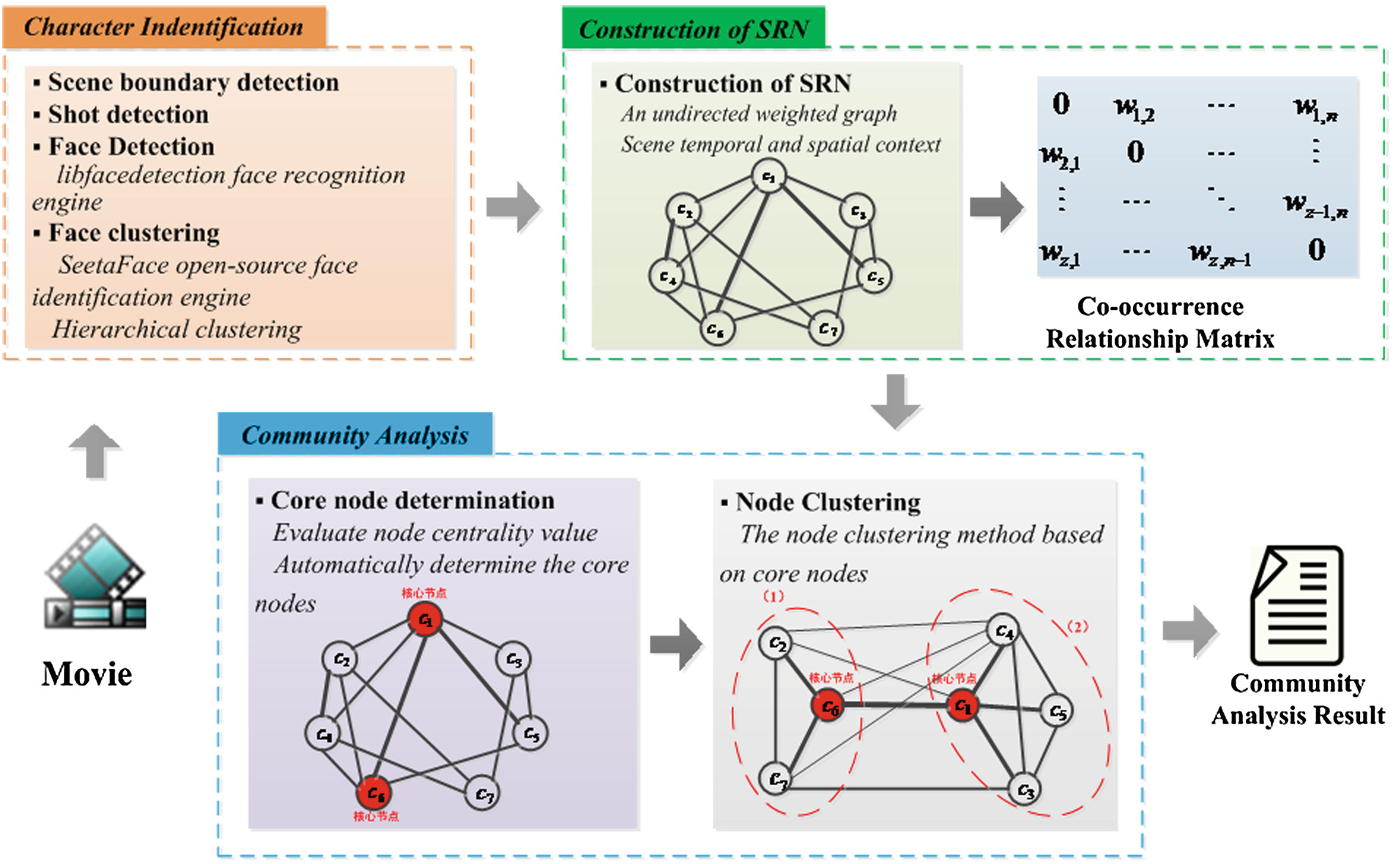 Figure 1: The multi-stage flow from raw video to community identification.
Identifying the "Cores" and "Communities"
How do you distinguish a lead actor from a supporting one? SRN calculates the Centrality Value of each node. The researchers discovered that core characters usually exhibit a massive "gap" in centrality compared to others.
By calculating the maximum difference between adjacent sorted nodes, the algorithm automatically draws a line between the "stars" and the "supporting cast." It then iteratively assigns non-core characters to the community of the core character they have the strongest bond with.
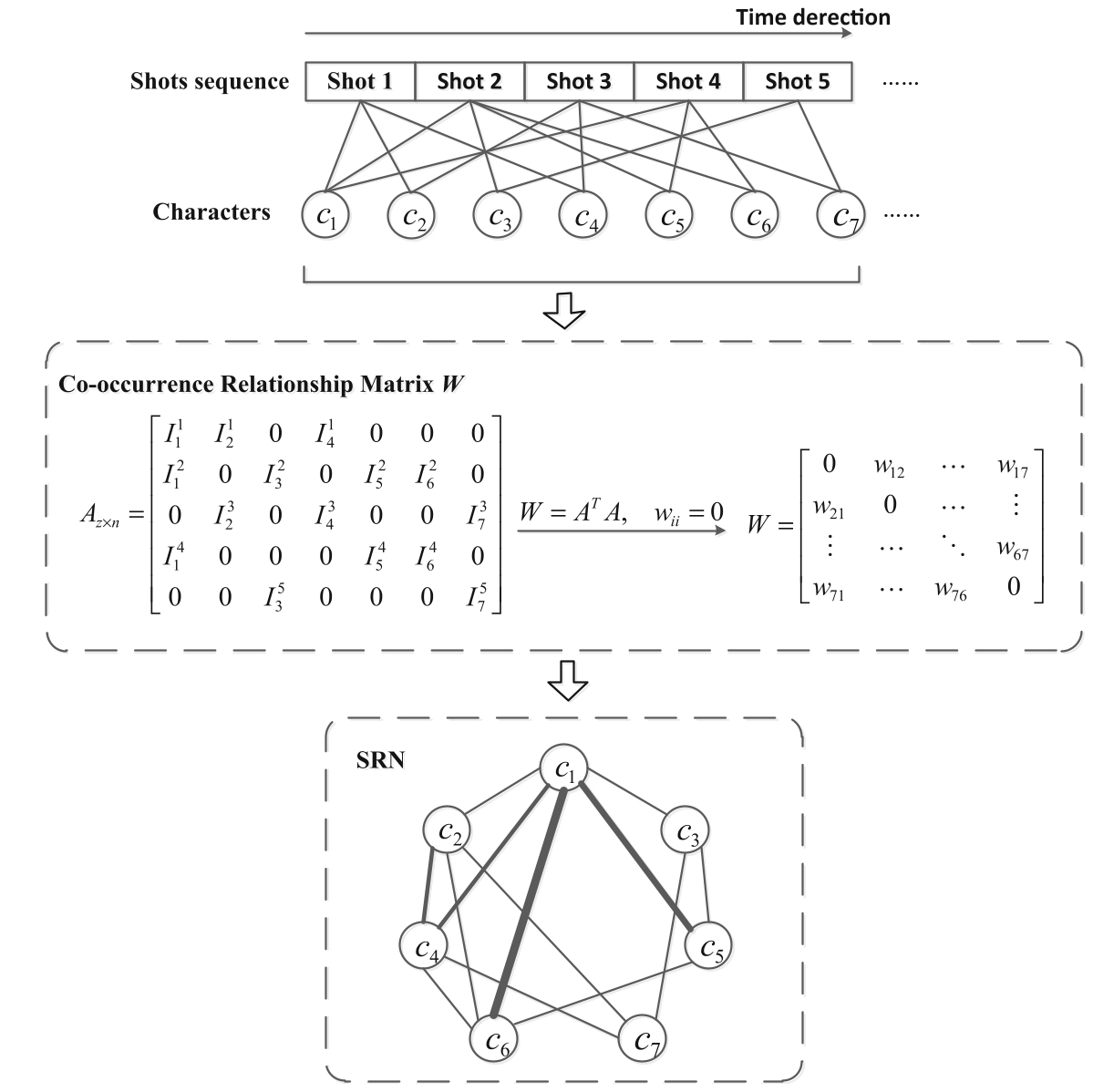 Figure 2: Transformation of scene-character relationships into a weighted Social Relationship Network.
Experimental Validation
The model was tested on a dataset of 8 diverse films, including Mission Impossible 4 and Catch Me If You Can.
- Core Character Hits: In 75% of the movies, the algorithm perfectly identified the protagonists.
- Clustering Performance: The average community identification rate was 80.7%.
| ID | Movie | Core Character Accuracy () | Community Rate () |
|---|---|---|---|
| M1 | You've Got Mail | 100% | 0.833 |
| M3 | Mission Impossible 4 | 100% | 1.000 |
| M7 | Four Brothers | 77.5% | 0.656 |
Table: Sample of results showing the correlation between core detection and community accuracy.
Critical Insight & Future Outlook
The beauty of SRN lies in its simplicity—it bridges the gap between raw computer vision (face clustering) and high-level sociology. However, the paper notes a clear limitation: cascading errors. If the initial face clustering or core character detection fails (as seen in M7 and M8), the community identification suffers significantly.
The next frontier for this tech isn't just identifying who is related, but how. Future iterations could fuse SRN with Audio-Visual Sentiment Analysis to determine if a relationship is friendly or antagonistic, paving the way for AI that can truly "understand" the plot of a movie just by watching it.