
Stability, Efficiency, and Contentedness: The Strategic Logic of Social Storage Networks
Stability, efficiency, and contentedness of social storage networks
This paper introduces a game-theoretic model for social storage networks (Friend-to-Friend backup), characterizing them as endogenous systems where agents strategically select partners. It proposes the concept of "Bilateral Stability" to ensure mutual consent for both link addition and deletion, achieving stable, efficient, and contented data backup configurations.
TL;DR
In the world of decentralized data backup, your friends are your safety net. This paper reframes Social Storage (F2F) as an endogenous network formation game. It argues that for these networks to survive, breaking a partnership must be as mutual as forming one—a concept dubbed Bilateral Stability. By calculating an ideal "Stability Point," the authors show how to build networks that are not just stable, but also efficient and satisfying for every participant.
Motivation: Why "Friendship" Isn't Enough
Existing Social Storage research usually treats the underlying social graph (like Facebook or Orkut) as a fixed "Exogenous" structure. The assumption is: "If they are friends, they will back up each other's data."
The authors point out two fatal flaws in this logic:
- Rationality: Just because you are friends doesn't mean you want the cost of storing their 10TB of cat videos.
- The Deletion Threat: In standard network models, anyone can "unfriend" (delete a link) unilaterally. In storage, if your partner deletes the link, your data is gone.
This creates a need for a model where agents are self-interested (rational) and partnerships are protected by mutual consent.
Methodology: The Strategic Game
The researchers define two frameworks to capture agent utility:
- Multi-Objective (MO): Agents balance the Expected Value of Data (based on disk failure rate (\lambda)) against the Cost of Maintenance ((c)).
- Single-Objective (SO): Agents maximize reliability subject to hard Budget and Storage constraints.
The Central Innovation: Bilateral Stability
While classic "Pairwise Stability" (Jackson & Wolinsky) requires mutual consent to add a link, it allows unilateral deletion. The authors propose Bilateral Stability:
A link is only deleted if both agents agree it is beneficial, or if it doesn't hurt the partner.
The Stability Point ((\hat{\eta}))
The paper derives a mathematical sweet spot—the Stability Point. This is the neighborhood size where adding one more friend costs more than the reliability it gains, and removing one friend loses more data value than the cost it saves.
 The formula for the unique stability point (\hat{\eta}) in the MO-Framework.
Experiments & Core Insights
The authors analyze symmetric networks (where agents have similar data values and costs) and demonstrate several key findings through graph topology analysis:
- Unique Stability: In most cases, there is a single neighborhood size that agents naturally gravitate toward.
- Regularity vs. Stability: A network where everyone has exactly (\hat{\eta}) neighbors is stable. However, if the total number of agents (N) is odd and (\hat{\eta}) is odd, someone is always left "unhappy" (with (\hat{\eta}-1) or (\hat{\eta}+1) links).
- Efficiency and Contentedness: A stable network isn't always efficient. The paper highlights that an external administrator could make a "stable but mediocre" network "contented" (where everyone hits max utility) by introducing dummy agents—centralized nodes that act as universal backup partners.
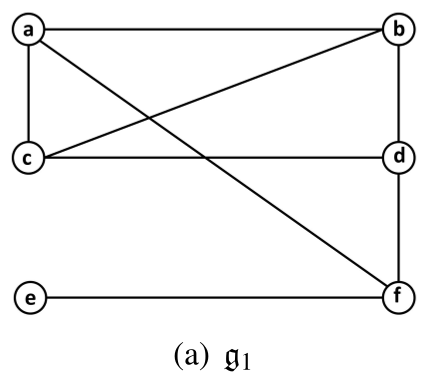 Comparison of different stable network structures. While all are stable, only one maximizes the total social welfare.
Critical Analysis & Future Outlook
The beauty of this work lies in its physical intuition: it treats a digital backup partnership like a legal contract.
Limitations:
- Symmetry: The current results heavily rely on agents having identical costs and data values. Real-world users are heterogeneous.
- Trust: The model assumes all agents trust each other equally.
Future Work: The authors suggest moving toward Social Range Matrices, where utility is weighted by how much you "care" about a specific partner (friend vs. enemy). Proving stability in these "Anarchy" or "Monarchy" scenarios is the next frontier for Social Cloud Computing.
Takeaway
Stability in decentralized systems isn't just about technical uptime; it's about incentive alignment. By enforcing mutual consent for link deletion and targeting the mathematical stability point, we can build social storage systems that are economically resilient and technically sound.