
Stability and Efficiency: Designing Social Networks with "Budgeted" Nodes
Stability and Efficiency of Social Networks with Strategic, Resource Constrained Nodes
This paper presents a non-cooperative game-theoretic model for social network formation where nodes are subject to hard resource constraints, specifically a limit of forming at most k links. Utilizing Nash Equilibrium as the stability metric and total network utility for efficiency, the authors characterize optimal topologies for k=1 and k=2, proving that all efficient networks are inherently stable in these scenarios.
TL;DR
When everyone wants to be connected but has limited resources, what does the perfect network look like? This paper explores a strategic game where nodes can only afford at most k links. The authors prove a surprising harmony: for nodes constrained to 1 or 2 links, the structures that are best for the "society" (Efficient) are also the ones individuals are happy to stay in (Stable Nash Equilibrium).
The Friction Between "Me" and "Us"
In the study of social and economic networks, two concepts often clash:
- Efficiency: The state where the total benefit of all individuals in the network is maximized.
- Stability (Nash Equilibrium): A state where no single person wants to change their links because they are already getting their personal maximum benefit.
Usually, these two don't align. An individual might want to "leech" off a central node without contributing, leading to a stable but fragile and inefficient network. This paper asks: Does limiting the "budget" (the number of links a node can form) force these two concepts closer together?
Methodology: The Strategic Link Game
The authors model the network as a non-cooperative game.
- Cost (c): Every link you initiate costs you.
- Benefit (δ): You get a benefit from everyone you are connected to, directly or indirectly. The further away they are, the less benefit you get (decay factor).
- Constraint (k): You can only initiate up to k links.
Architecture of Optimal Networks
The researchers focused on the foundational cases of and .
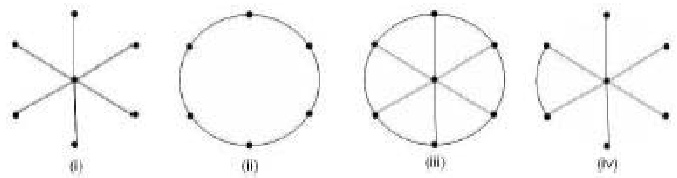 Figure 1: (i) Star, (ii) Cycle, (iii) Wheel - the primary candidates for stable/efficient structures.
Key Findings: The k=1 and k=2 Solutions
Scenario 1: The One-Link Limit (k=1)
When nodes are extremely limited, the Star Network is the champion. In a star, one center node provides the "infrastructure," and everyone else links to it.
- Insight: If costs are low, a "Wheel of length 3 with a local star" (WS3) takes over.
- Result: Every efficient network is a Nash Equilibrium. Individual greed and social good are perfectly aligned.
Scenario 2: The Two-Link Limit (k=2)
With more resources, the structures become more complex. The paper introduces Extended Wheel Networks (EWN).
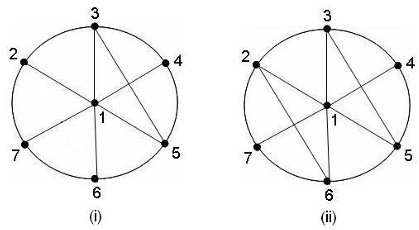 Figure 2: EWN1 and EWN2 - where extra links create "shortcuts" that boost global efficiency.
As the cost fluctuates, the "best" network shifts:
- If is high, the simple Wheel is best.
- If is low, the EWN2 (adding more shortcuts) becomes more efficient.
- The Proof: Just like , for , any network that is globally efficient is also individually stable.
Critical Analysis & Conclusion
Why does this matter?
This research provides a theoretical backbone for designing decentralized systems (like P2P file-sharing or social media recommendation algorithms). It suggests that by simply limiting the number of "friends" or "connections" a node can maintain, the system naturally gravitates toward an efficient state without needing a central coordinator.
Limitations & Future Work
The proof currently only holds for and . In the real world, might be much larger, or vary from person to person (e.g., an influencer vs. a regular user). The authors suggest that exploring is the next "frontier" of this research.
Takeaway: In a world of scarcity, strategic behavior doesn't necessarily lead to chaos; it can lead to the most efficient structures possible.