
Unmasking the Architecture of Connection: A Statistical Deep-Dive into Online Social Networks
Research on Statistical Feature of Online Social Networks Based on Complex Network Theory
This paper investigates the topological characteristics of Online Social Networks (OSNs) using a dataset from the Stack Overflow forum. By applying complex network theory, the author identifies that OSNs exhibit typical small-world properties, scale-free distributions, and high clustering coefficients (C ≈ 0.921).
TL;DR
By treating the Stack Overflow forum as a massive undirected graph, this research quantifies the "DNA" of online collaboration. The study proves that digital social structures aren't just random clusters; they are sophisticated Small-World and Scale-Free entities defined by high local density (clustering) and surprisingly short global "handshakes" (path lengths).
Current Standing: This work serves as a foundational empirical validation of complex network theory as applied to specialized professional communities, reinforcing the Assortative Mixing nature of human experts.
The "Complexity" Problem: Why Random isn't Real
In the early days of graph theory, we relied on regular grids or random Erdős–Rényi graphs. However, real human systems are "messy." They exhibit:
- Self-Organization: No central authority dictates who follows whom.
- Scale-Free Nature: A few "super-hub" users hold the network together, while most have only a few connections.
- Dynamic Evolution: Nodes (users) and edges (interactions) appear and vanish in real-time.
The author argues that we cannot understand the "why" of social systems without first accurately measuring the "how" of their topology.
Methodology: The Toolkit of a Network Surgeon
The research utilizes several core metrics to dissect a dataset of 15,014 nodes and over 3.6 million edges:
1. Degree Correlation (Assortativity)
Using Newman’s coefficient (), the study measures if "popular" nodes stick together. A result of indicates Positive Correlation. In a social context, this means experts tend to interact with experts, creating a self-reinforcing elite core.
2. The Small-World Phenomenon
Despite the network's thousands of members, the Average Path Length (APL) is a mere 1.096. This suggests that virtually any two users are effectively "one hop" away, a classic hallmark of the Small-World effect that facilitates rapid information exchange.
3. Community Partitioning
The author introduces a "peeling" method for community detection:
- Calculate degrees for all nodes.
- Iteratively delete low-degree nodes.
- Analyze the remaining high-density clusters. This process successfully identified 89 distinct community structures within the Stack Overflow ecosystem.
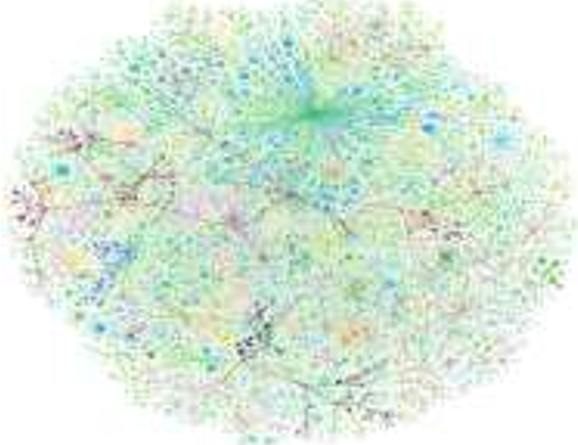 Figure 1: Visualizing the complexity of information systems at the autonomous level.
Quantitative Battleground: Experimental Results
The findings are summarized in a striking statistical profile:
| Metric | Value | Significance |
|---|---|---|
| Clustering Coefficient (C) | 0.921 | Extremely high local familiarity. |
| Average Path Length (APL) | 1.096 | Near-instantaneous information reach. |
| Sparsity (p) | 0.016 | Efficient structure; few redundant links. |
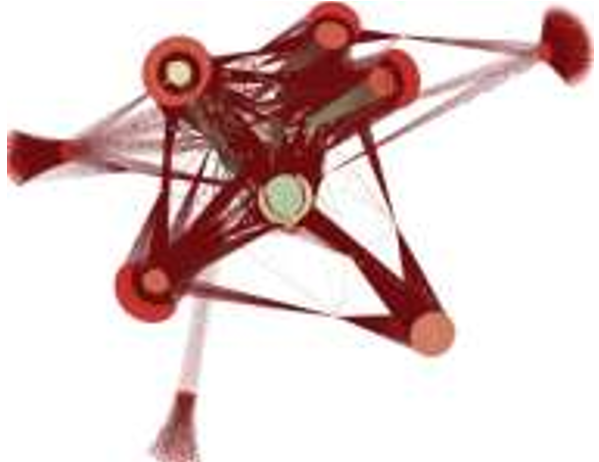 Figure 2: The visualization of user interactions shows high density within localized interest groups.
Compared to a random graph of the same size, this network is far more clustered. This "high C, low APL" profile is exactly what makes OSNs so effective at spreading knowledge (and occasionally, misinformation).
Critical Insight: Why This Matters
The Assortative Mixing discovered () is the most telling psychological insight. Unlike technological networks (like the power grid), where high-degree hubs often connect to low-degree stubs to prevent failure, social networks are "homophilic."
From a developer's or business perspective, this means:
- Propagation: Information doesn't just spread; it accelerates within "elite" high-degree circles first.
- Trust: The high clustering coefficient (0.921) implies that "the friend of my friend is likely also my friend," creating a foundation for trust in digital commerce and academic exchange.
Limitations & Future Work
The study focuses on an undirected view of Stack Overflow. In reality, expert-beginner interactions are often directed (one-way help). Future research should explore "directed assortativity" to see if experts are as willing to answer questions from beginners as they are to debate with peers.
Conclusion
This research confirms that the "chaos" of online forums actually follows strict statistical laws. By understanding these parameters, we can better design recommendation engines, identify influential "key opinion leaders," and build more resilient digital communities.