
Bridging the Gap: A Unified Technical Perspective on Crowdsourcing Quality Control
A technical survey on statistical modelling and design methods for crowdsourcing quality control
This paper presents a comprehensive technical survey on Crowdsourcing Quality Control (QCC), bridging two traditionally isolated domains: statistical modeling for response aggregation and mechanism design for worker behavior influence. It proposes a unified graph-based framework to categorize QCC research based on four key aspects—workers, questions, options, and contexts—while reviewing state-of-the-art methods like the Dawid & Skene model and peer-consistency incentives.
TL;DR
Crowdsourcing is a powerful tool for data labeling, but it is plagued by "noise" from unmotivated or unskilled workers. This survey reconciles the two pillars of quality control: Statistical Modeling (inferring the truth) and Mechanism Design (incentivizing the truth). By introducing a unified graph framework, the authors demonstrate how modeling latent variables—like worker expertise and question difficulty—is the key to both better labels and fairer pay.
The Core Conflict: Why Simple Aggregation Fails
The most intuitive way to handle crowd labels is Majority Voting (MV). However, MV assumes all workers are equally reliable and questions are equally easy—assumptions that fail in the real world. When tasks are difficult or "spammers" outweigh experts, the "Wisdom of the Crowd" turns into the "Stupidity of the Mob."
The technical challenge lies in the Inductive Bias: How do we model the relationship between a hidden "True Label," a worker’s varying "Expertise," and a question’s "Difficulty" without knowing any of them beforehand?
Methodology: The Latent Variable Revolution
The paper traces the evolution of QCC from the seminal Dawid & Skene (DS) model to modern Neural Network approaches.
1. The Statistical Foundation
The DS model treats each worker as a "Confusion Matrix." Using the Expectation-Maximization (EM) algorithm, the system iteratively guesses the true labels (E-step) and then estimates worker reliability based on those guesses (M-step).
 Figure 1: The cyclic relationship between mechanism design and statistical modeling.
2. Beyond Binary: Expertise and Difficulty
Advanced models like GLAD (Generative Model of Labels, Abilities, and Difficulties) introduce a logistic function: This formula elegantly captures the physical intuition that a response is more likely to be correct when worker expertise () is high and question difficulty () is low.
3. Incentivizing Honesty: Peer Consistency
How do you pay workers when you don't know the answer? The paper explores Peer Prediction and Bayesian Truth Serum (BTS). These mechanisms reward workers not for matching a "gold standard," but for being "surprisingly common" or consistent with other high-performing peers. This creates a Nash Equilibrium where the most profitable strategy for a worker is to tell the truth.
Key Taxonomies and Visualizing Research
The authors provide a "Research Roadmap" (Figure 3 in the paper) that connects attributes like Motivation and Context to specific methodologies like Gamification or Task Allocation.
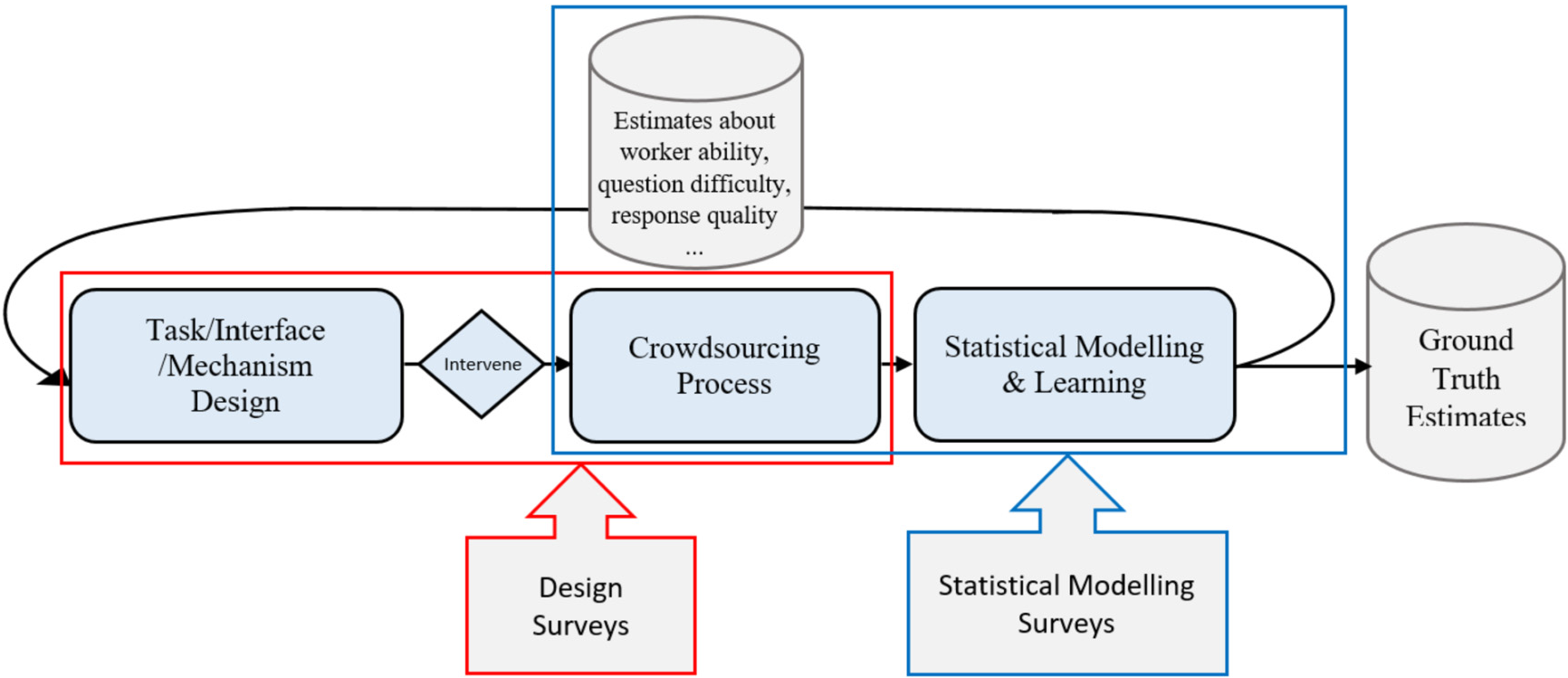 Figure 2: Key aspects and attributes utilized by QCC research.
Experiments and Theoretical Bounds
The survey doesn't just list methods; it analyzes their Minimax Error Rates.
- Spectral Methods: Provide provably optimal initializations for EM to prevent getting stuck in local optima.
- Deep Learning (BCCNet): Uses CNNs/FNNs to extract features from items (like images), using these features as "priors" to guide the labeling process when worker responses are sparse.
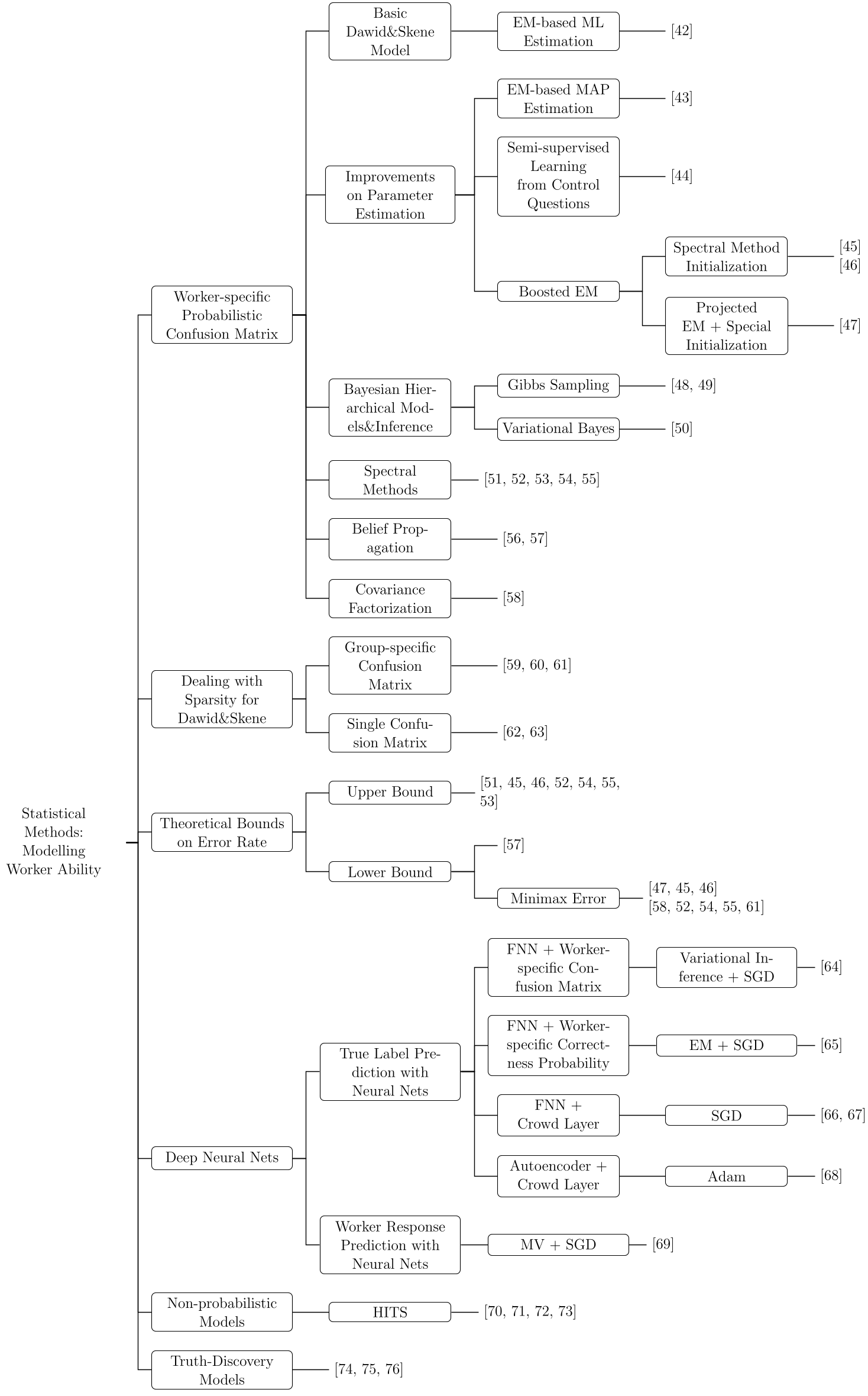 Figure 3: Taxonomy of worker ability modeling and inference methods.
Critical Insight: The "Subjectivity" Frontier
One of the survey's most profound critiques is the industry's failure to handle Subjectivity. Most models assume there is one "True North" for every question. However, in tasks like "Is this outfit fashionable?", there are "Schools of Thought."
The authors argue that future models must distinguish between Difficulty (the inability to find the answer) and Subjectivity (the existence of multiple valid answers). Failing to do so penalizes workers who belong to a valid minority opinion.
Conclusion: Toward Large-Scale, Sparse QCC
The survey concludes by identifying a major gap: Sparse Data. In real marketplaces like Amazon Mechanical Turk, most workers only answer a few questions.
- Solution: We need Transfer Learning (applying knowledge of worker reliability from Task A to Task B) and Hierarchical Bayesian Models to smooth out noise.
- The Future: Integration of Reinforcement Learning for "Adaptive Teaching," where the system identifies a worker’s weak points and injects "Training Sessions" mid-task to improve overall data quality.
This paper is an essential read for AI practitioners who realize that "Data is the new code," and therefore, the quality of our labels is the ultimate ceiling for our model performance.