
Steganographer Detection: Identifying Hidden Communicators in Social Networks via Ensemble Clustering
Steganalysis Over Large-Scale Social Networks With High-Order Joint Features and Clustering Ensembles
This paper introduces a novel steganalysis framework specifically designed for detecting steganographers in large-scale social networks. It combines 250-dimensional high-order joint features from JPEG DCT coefficients with a clustering ensemble mechanism to identify suspicious actors, achieving a significant accuracy improvement over previous state-of-the-art methods.
TL;DR
Researchers have shifted the steganalysis focus from "Is this image a secret?" to "Is this user a steganographer?" By utilizing 250-D high-order joint features and a clustering ensemble method, this paper provides a robust solution for pinning down suspicious actors in massive social media datasets, outperforming traditional single-model detection by up to 10%.
Problem & Motivation: The Needle in the Social Media Haystack
In the era of Flickr and Instagram, checking every single image for hidden payloads is a computational nightmare. Traditional steganalysis—identifying if an image is a "cover" or a "stego"—fails at scale.
The real-world challenge is the Steganographer Detection Problem. Unlike simple classification, this involves thousands of innocent users and perhaps only one or two culprits. Existing methods, like simple hierarchical clustering or outlier detection, are often "brittle"; they fail when the image content is diverse or when a steganographer mixes hidden messages among innocent photos to dilute the statistical signal. The authors' insight is that diversity (via ensembles) and higher-order correlations are key to separating the "culprit" signal from the "innocent" noise.
Methodology: High-Order Features and Consensus Decisions
The proposed framework relies on two core innovations:
1. High-Order Joint Features (250-D)
Standard features often look at simple transitions between neighboring DCT coefficients. The authors go further by calculating second-order joint density matrices.
- Intra-block dependencies: Capturing how coefficients relate within the same 8x8 block.
- Inter-block dependencies: Capturing how coefficients relate across adjacent blocks. By merging 125 dimensions from each, they create a 250-D profile that is more sensitive to the subtle disruptions caused by embedding algorithms like F5 or nsF5.
2. The Clustering Ensemble
Instead of trusting one "perfect" ranking, the authors use a "wisdom of the crowd" approach:
- Random Cropping: Multiple subsets of images are created by randomly cropping the originals. This acts as a form of "data sampling" to ensure diversity.
- Hierarchical Sub-clustering: The system performs multiple rounds of hierarchical clustering on these subsets.
- Majority Voting: An actor is flagged as the final culprit only if they are identified as the most suspicious across the majority of sub-clustering rounds.
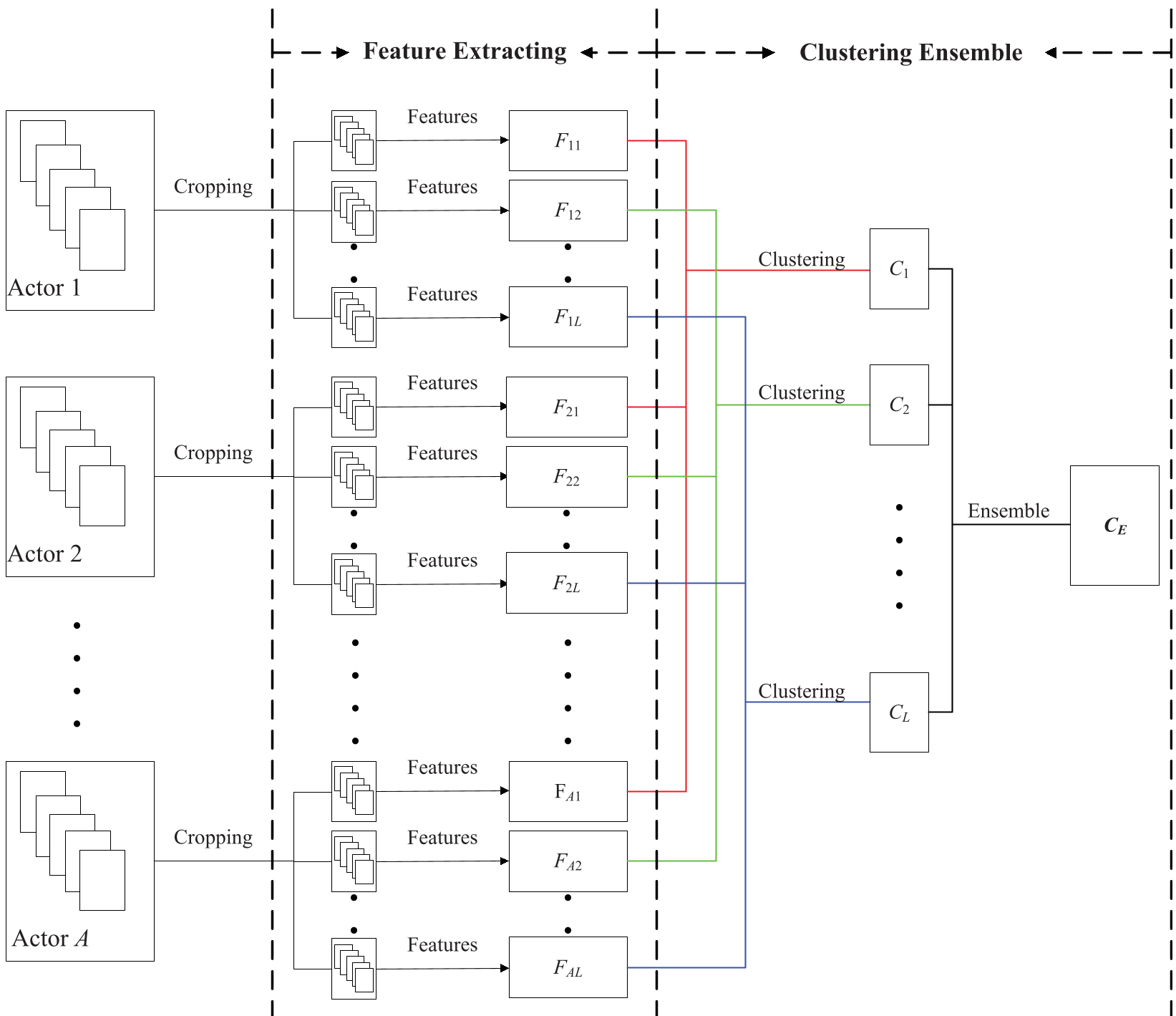 Figure 1: The proposed steganalysis framework showing the pipeline from image extraction to ensemble decision.
Experiments & Results: SOTA Comparison
The authors benchmarked their method against known features (PEV-274, LIU-144, DCTR, PHARM) and different steganographic algorithms (StegHide, F5, nsF5).
- Feature Superiority: The 250-D high-order features consistently outperformed rich features like DCTR or PHARM in a clustering context. While rich features excel in supervised learning, they often contain too much noise for unsupervised clustering.
- Ensemble Gain: Using the ensemble method (with an optimal crop size of 192x192) provided a 5-10% accuracy boost over single-round hierarchical clustering.
- Payload Sensitivity: At a payload of 0.20 bpnc (bits per non-zero coefficient), the detection accuracy reached near 100%.
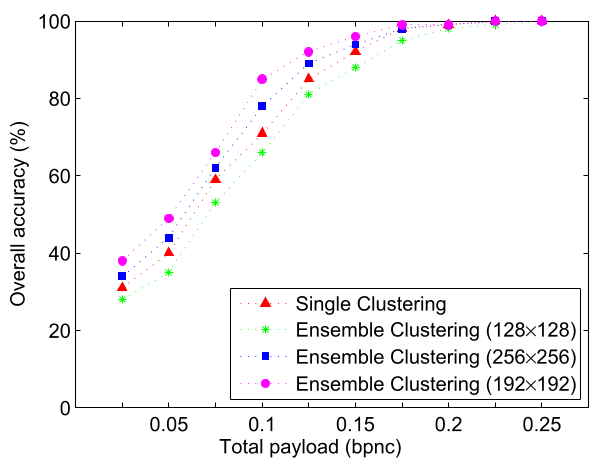 Figure 2: Accuracy comparison highlighting how High-Order features (red line) dominate earlier feature sets.
Depth Insight: Why It Works (and When It Doesn't)
The brilliance of this work lies in its Inductive Bias: it assumes that steganographic changes are statistically consistent even across cropped portions of an image set. By using majority voting, it filters out the "random noise" of image content that might accidentally make an innocent user look like an outlier in a single run.
Limitations: The system is sensitive to Quality Factor (QF) variations. If different users use vastly different JPEG compression levels, the features might flag a user for their compression settings rather than their steganography. This remains an "open challenge" for the field.
Conclusion
This paper shifts the paradigm by demonstrating that ensemble methods are not just for supervised classification—they are powerful tools for unsupervised forensic discovery. For digital investigators, this method offers a scalable way to monitor social networks and narrow down investigation targets with high confidence.
Takeaway for Practitioners: When dealing with heterogeneous data where you don't have "ground truth" labels, don't look for one perfect feature. Use a robust, high-order feature and let an ensemble of mini-decisions provide the consensus.