
3I/ATLAS: A Chemical Time Capsule from the Galactic Deep
分析星際訪客3IALTAN的彗星特徵(林煒青陳怡霖)
This research investigates 3I/ATLAS, the third confirmed interstellar comet discovered in 2025. By utilizing comparative analysis and multi-wavelength spectroscopy (from JWST, Hubble, and SPHEREx), the study characterizes its unique chemical composition—notably its CO2 dominance and nickel vapor—positioning it as a critical relic from a primordial extrasolar system.
Executive Summary
TL;DR: 3I/ATLAS, the third interstellar visitor ever recorded, is rewriting our understanding of extrasolar chemistry. Unlike its predecessors, this comet features a bizarrely high CO2 concentration, nickel vapor emissions, and a "delayed-release" mechanism for deep-seated organic ice, suggesting it originates from a cold, ancient planetary system potentially older than our Sun.
Academic Positioning: This work serves as a comprehensive synthesis of the 2025-2026 observation campaign, transitioning from initial discovery to high-resolution chemical mapping. It establishes 3I/ATLAS as the new SOTA (State-of-the-Art) benchmark for interstellar object (ISO) studies.
Problem & Motivation: Beyond 'Oumuamua
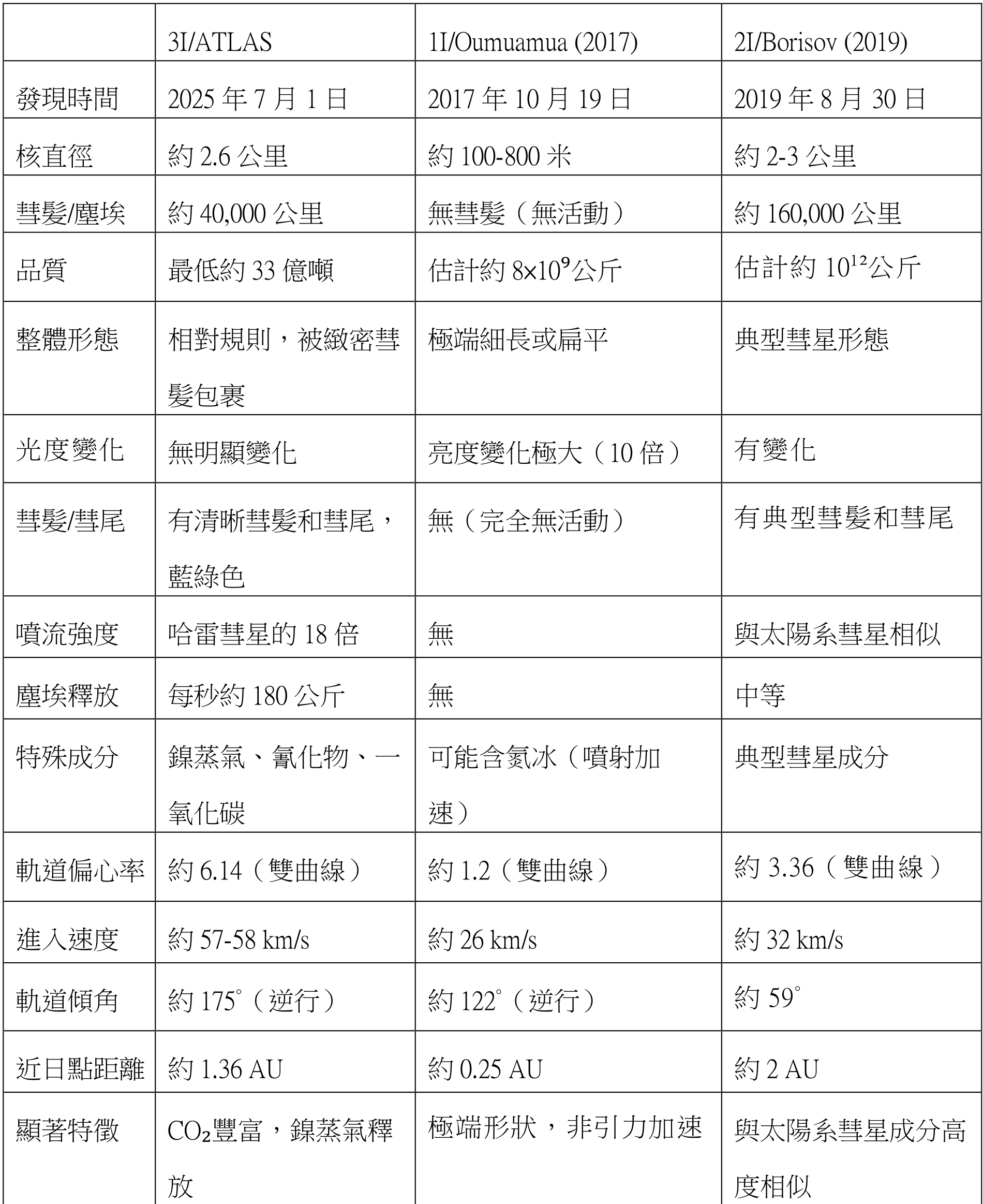
The scientific community was left "hungry" after 1I/'Oumuamua (too fast, no dust) and 2I/Borisov (too similar to local comets). We needed an outlier—an object that was clearly "alien" in composition but active enough to be studied via spectroscopy.
3I/ATLAS filled this gap. Its retrograde orbit (175°) and extreme velocity (58 km/s) immediately signaled an origin far beyond our local neighborhood, likely the Galactic thick disk. The researchers' intuition was that its late-stage brightening (post-perihelion) hidden a secret: a protective "radiation crust" formed by eons of cosmic ray exposure.
Methodology: Deciphering the Light
The authors utilized a multi-platform observational framework:
- JWST/NIRSpec: Used for mapping the CO2-to-water ratio.
- SPHEREx: Provided wide-field imaging to detect methane and complex organics.
- Comparative Dynamics: Juxtaposing 3I/ATLAS against the physical profiles of previous ISOs.
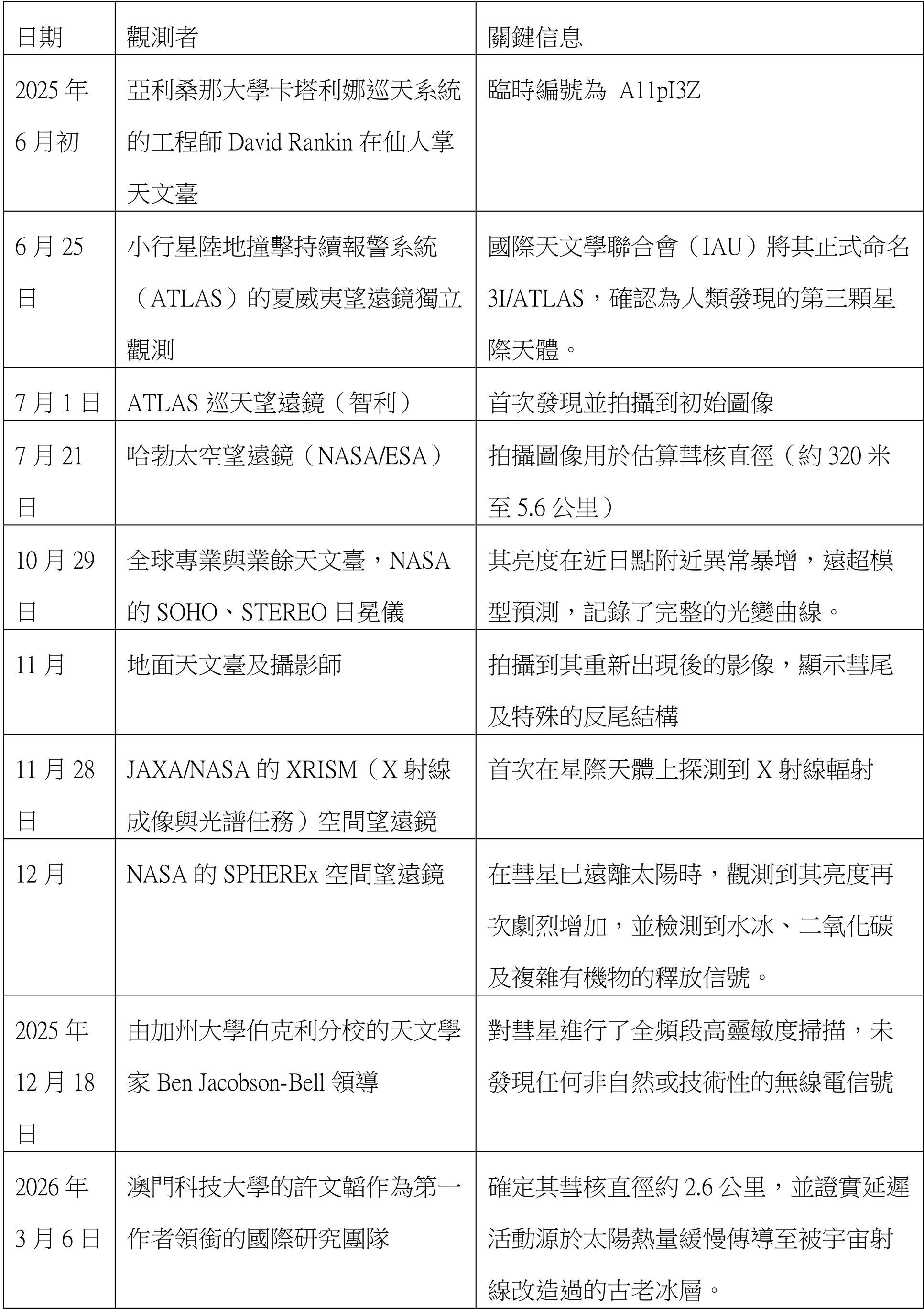
The Core: A Three-Layered Sublimation Reality
The most profound contribution of this research is the definition of the Triple-Layer Emission Structure:
- Layer 1 (Surface): Immediate sublimation of H2O and CO2 ice.
- Layer 2 (Extended Source): Secondary sublimation of ice grains suspended in the coma, accounting for nearly 50-80% of total water vapor.
- Layer 3 (Deep Primordial): This is the "treasure chest." Only after months of solar heating did 3I/ATLAS release CH4 and heavy metals like Nickel, indicating these materials were shielded by a thick, dark carbonaceous mantle.
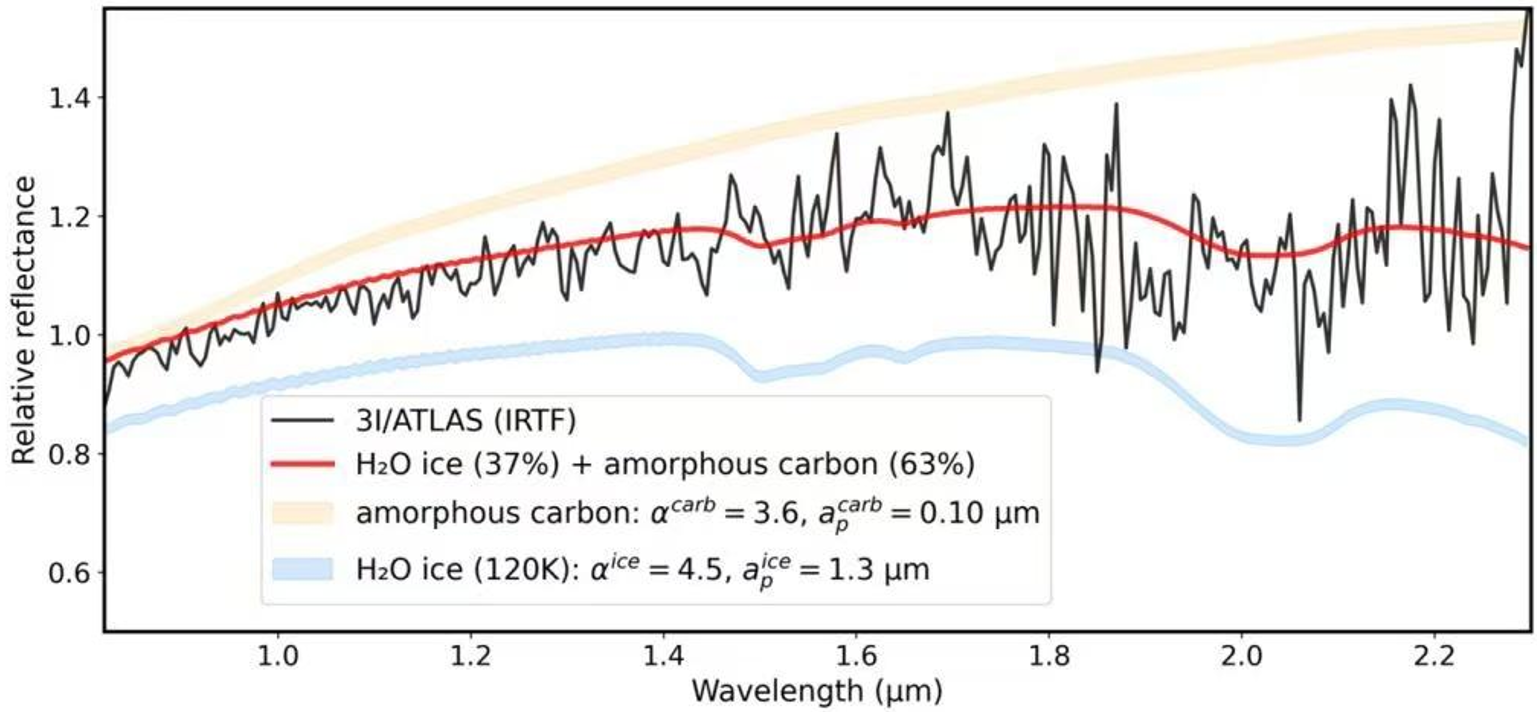
Comparative Results: Why 3I/ATLAS is Unique
When compared to 2I/Borisov, 3I/ATLAS is a different beast entirely:
- Jet Intensity: 18 times stronger than Halley’s Comet.
- Chemistry: While Borisov was "Solar-like," ATLAS is "CO2-dominant," suggesting its home system was much colder or had a unique photochemical environment.
Critical Analysis & Conclusion
Takeaway: 3I/ATLAS proves that the chemical diversity of the Milky Way is far greater than our local "sample size" of one solar system suggests. The presence of Nickel and high CO2 levels points to a formation environment in a low-metallicity or ancient protoplanetary disk.
Limitations: Despite the wealth of data, the exact "parent star" remains unidentified due to the chaotic nature of galactic orbits over billions of years. Additionally, the rapid movement towards the "unobservable zone" means our window into its deep-core chemistry is now closing.
Future Work: This study sets the stage for the ESA Comet Interceptor mission, providing the spectral "fingerprints" needed to identify similar objects before they enter the inner solar system.