
To Stick or Not to Stick: Why Social Capital is the Secret Gravity of SNS
To stick or not to stick: The social response theory in the development of continuance intention from organizational cross-level perspective
This study proposes a "Social Network Site Stick Model" based on Social Response Theory to explain users' continuance intention on SNSs. It employs an organizational cross-level perspective to demonstrate how group-level social capital (interaction, trust, and shared codes) triggers individual arousal, leading to sustained usage through social behaviors.
TL;DR
Why do we stay on Facebook or Twitter long after the novelty wears off? This study argues it's not the technology, but a Social Response triggered by the "group tone." By treating the collective social capital of a group as a "social cue," the research proves that group-level trust and interaction create emotional arousal, which compels us to share knowledge and support others—eventually making the platform impossible to leave.
Beyond TAM: The Missing Social Context
For years, Information Systems (IS) research treated users as rational individuals making decisions based on utility (Technology Acceptance Model - TAM) or satisfaction. However, Social Network Sites (SNS) are inherently collective. The authors argue that existing models suffer from a "one size fits all" individualistic bias. They pose a critical question: How does the environment of the group itself shape the individual’s desire to stay?
Methodology: The Cross-Level "Trickle Down" Model
The core of this paper is its cross-level approach. Instead of looking at individual perceptions of trust, the researchers aggregated data to define "Group-Level Social Capital." They utilized Social Response Theory, suggesting that users treat the computer screen not just as a tool, but as a social actor responding to environmental "cues."
The Three Cues of Social Capital:
- Structural (Social Interaction): The frequency and closeness of communication within the group.
- Relational (Social Trust): The collective belief in promise-keeping and consistency.
- Cognitive (Shared Codes): The "slang" or unique language patterns shared by the group.
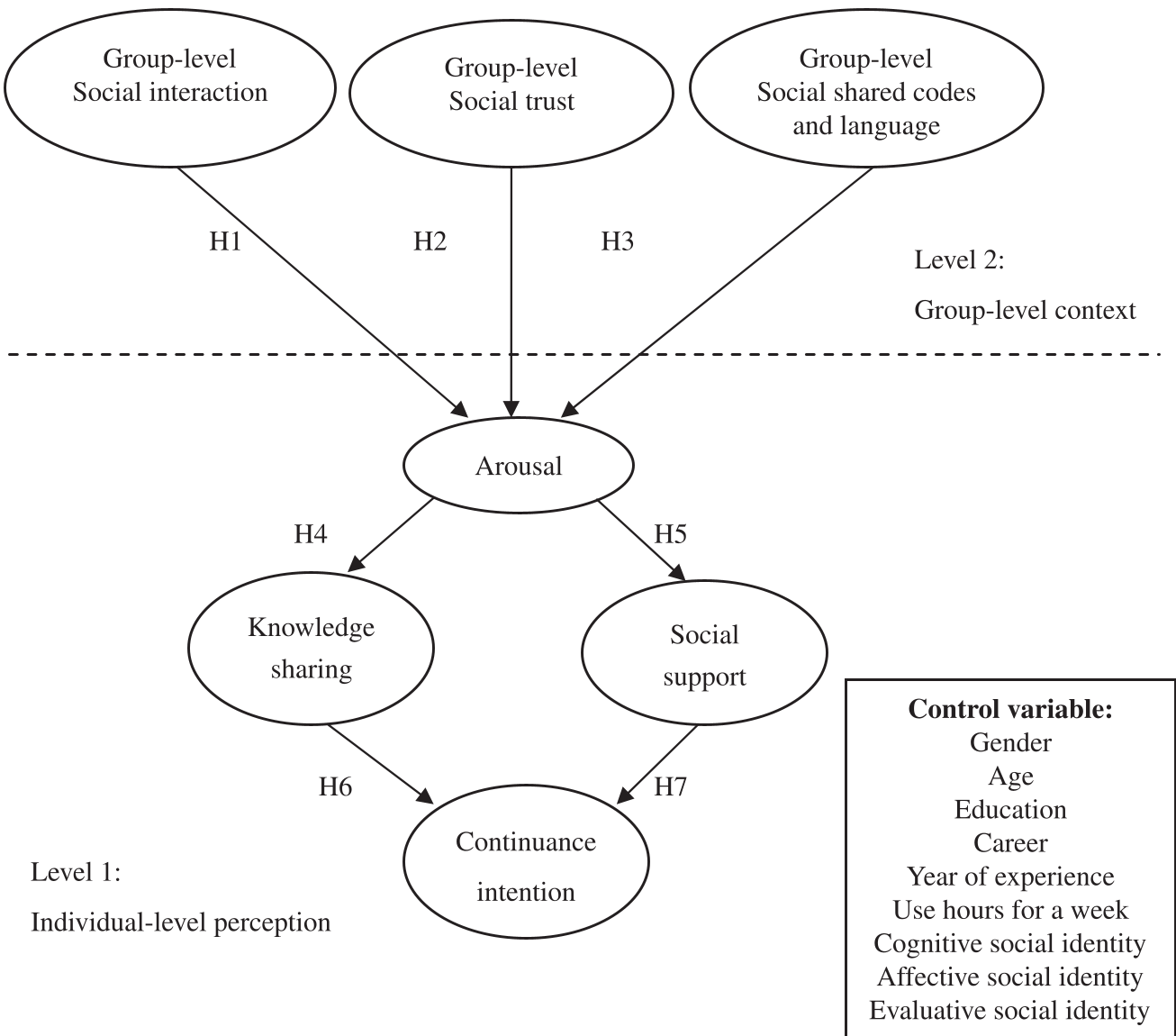 Figure 1: The hypothesized trickle-down mechanism from group-level cues to individual intention.
Experiments and Results: The Power of Arousal
The study analyzed 1,101 participants across 101 distinct groups using Hierarchical Linear Modeling (HLM). This statistical method allows researchers to see how group-level variables (Level 2) influence individual-level responses (Level 1).
Key Findings:
- The Stimulus: All three dimensions of group-level social capital significantly boosted Individual Arousal.
- The Response: This emotional "frenzy of joy" or excitement directly led to two types of social behaviors: Knowledge Sharing (giving advice) and Social Support (showing compassion).
- The Stickiness: These social behaviors are the ultimate predictors of Continuance Intention. If you feel supported and useful within a group, your intention to stay is remarkably high (explaining 68% of the behavior).
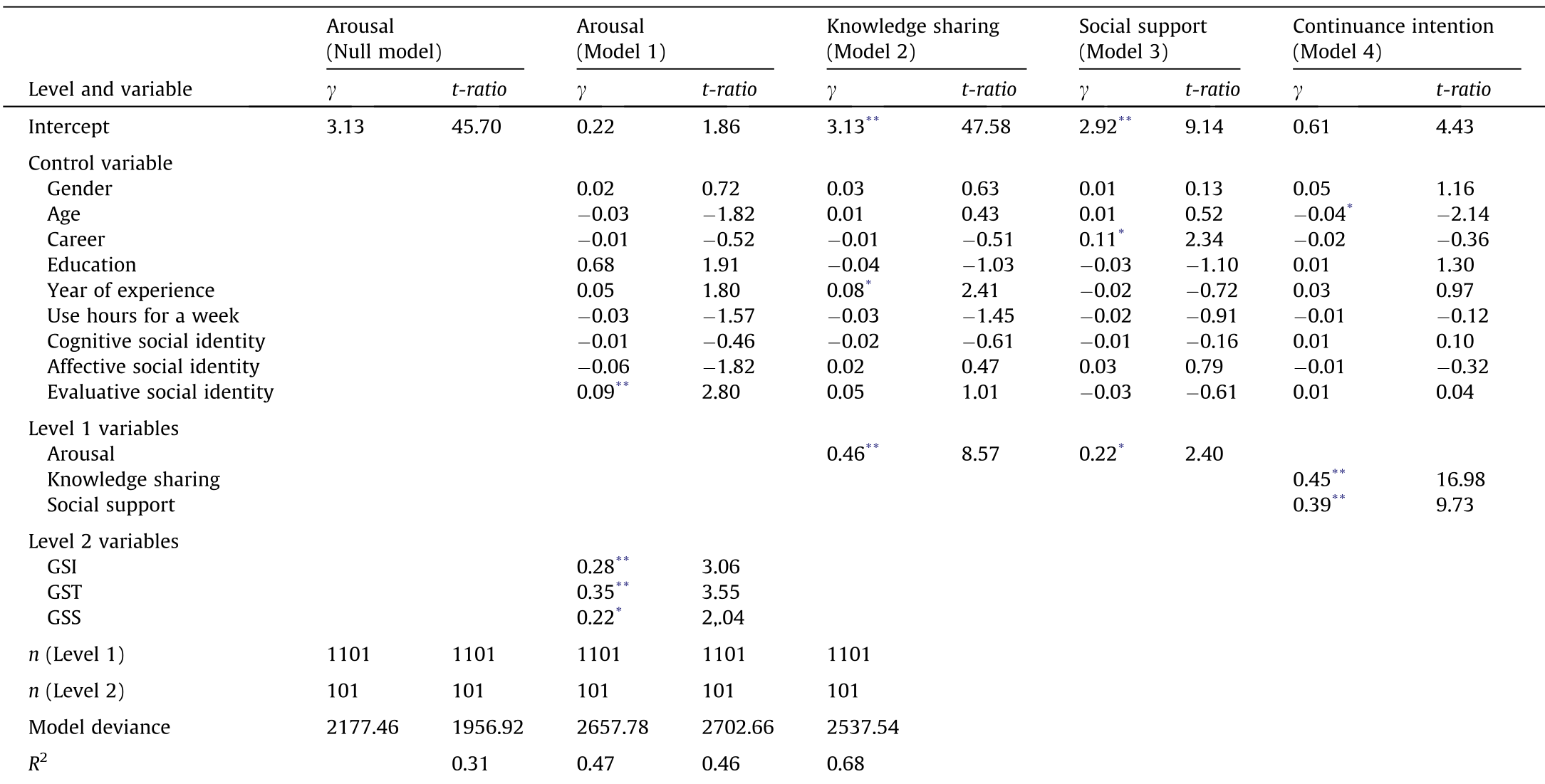 Table 2: HLM results showing the significant impact of level-2 social cues on level-1 outcomes.
Critical Insight: Managerial Implications
The takeaway for platform designers is clear: Stop obsessing over features and start obsessing over "Climate."
- Foster the "Slang": Encourage shared language and meaningful niche communication.
- Gamify Interaction: Services like "FarmVille" (cited in the paper's era) or modern community challenges aren't just games; they are engines for generating the social cues that trigger user arousal.
- Focus on Support: If a platform makes it easy to give/receive social support, users view their time spent as a "psychological investment," raising the transaction cost of leaving.
Conclusion & Future Outlook
While the study is a milestone in cross-level IS research, it acknowledges limitations like its cross-sectional design (a "snapshot" in time). Future research should explore how these social responses evolve in the era of AI-mediated communication. Does a bot's "support" trigger the same arousal as a human friend's?
Ultimately, this research reminds us that SNS stickiness is a human phenomenon, not a technical one. We stick because our social nature is "activated" by the trust and interaction of the digital tribes we join.