
GPCA: Improving Pediatric Multiple Sclerosis Diagnosis through Stochastic Gradient-Based Feature Extraction
Application of the Stochastic Gradient Method in the Construction of the Main Components of PCA in the Task Diagnosis of Multiple Sclerosis in Children
This paper introduces Gradient Component Analysis (GPCA), a novel feature extraction method for diagnosing Multiple Sclerosis (MS) in children. By integrating the Stochastic Gradient Descent (SGD) optimization into the construction of principal components, the method achieves superior classification accuracy compared to traditional PCA and its variants across multiple machine learning classifiers.
TL;DR
Diagnosis and prognosis of Multiple Sclerosis (MS) in children are notoriously difficult due to high-dimensional clinical data and subtle symptoms. This paper presents Gradient Component Analysis (GPCA), an evolution of PCA that uses Stochastic Gradient Descent (SGD) to refine feature extraction. The result is a statistically significant improvement in classification accuracy (up to ~8.3% for KNN), outperforming traditional methods like ICA and standard PCA.
The Curse of Dimensionality in Medical Diagnostics
Medical researchers often face the "small , large " problem: too many features (attributes) but too few patients (samples). Richard Bellman first described this as the Curse of Dimensionality. In MS diagnosis, including irrelevant or noisy features doesn't just waste computation—it actively confuses classifiers like SVMs and Random Forests, leading to the Hughes Phenomenon, where accuracy drops as dimensionality increases.
Traditional Principal Component Analysis (PCA) is the "go-to" solution, yet it has a blind spot: it is an unsupervised linear transformation that doesn't consider class labels or non-linear relationships effectively.
Methodology: Introducing GPCA
The core innovation of this work is re-imagining the construction of principal components as an optimization task rather than a pure matrix decomposition.
1. The Stochastic Gradient Approach
Instead of simply calculating the covariance matrix and its eigenvectors, GPCA defines an objective function (a regression-style error function) and uses SGD to minimize the error in estimating the factor loadings ().
The update rule follows:
abla_{L} (\boldsymbol{\omega}_{k - 1})$$ This iterative refinement allows the algorithm to find "directions" in the data that are more representative of the underlying structure than standard algebraic PCA might reveal. ### 2. Implementation Architecture 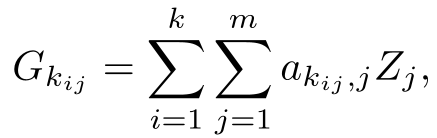 *The model represents principal components as linear combinations of standardized variables, optimized via the gradient flow.* ## Experimental Evaluation The author tested the method on a real-world dataset of 230 children with MS, categorized into "poor prognosis" and "good prognosis." ### Experiment 1: The Variance Threshold The study found that the "sweet spot" for explained variance is around **70%**. At this threshold, the number of features was reduced from 20 to just 3 principal components, effectively filtering out noise while retaining the signal. ### Experiment 2: Benchmark Results The proposed GPCA was compared against a suite of methods: PCA, Kernel PCA (KPCA), Centroid Class PCA (CCPCA), Factor Analysis (FA), and ICA. | Method | SVM Accuracy | KNN Accuracy | | :--- | :--- | :--- | | Raw (No Extraction) | 0.791 | 0.750 | | Standard PCA | 0.798 | 0.770 | | **GPCA (Proposed)**| **0.826** | **0.833** | 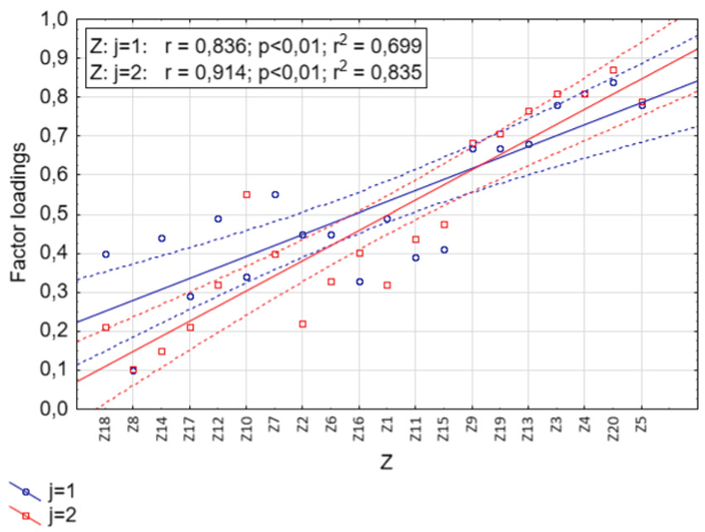 *The chart illustrates that GPCA (c) provides a smoother and more robust accuracy curve across varying variance thresholds compared to standard PCA.* ## Deep Insights & Conclusion The success of GPCA lies in its **stochastic nature**. By updating based on subsets of data, the model avoids local minima and finds a more generalized projection of the feature space. Notably, GPCA identified that 6 out of the 20 features (including $Z_7, Z_8, Z_{10}$) contributed almost nothing to the diagnostic quality and could be safely discarded. **Takeaway**: For medical practitioners and data scientists, this research suggests that standard PCA is no longer the "ceiling" for dimensionality reduction. Moving toward gradient-based extraction techniques can provide the edge needed for high-precision diagnostic systems. **Limitations**: The primary challenge remains the selection of the learning rate ($\alpha$)—a classic SGD problem. Future work will likely explore automated step-length adjustment to make the algorithm more accessible for clinical software deployments.