
Hybrid Simulation: Bridging the Gap Between Clinic Operations and Public Health
Stochastics and Statistics Combining discrete-event simulation and system dynamics in a healthcare setting: A composite model for Chlamydia infection
The paper introduces a novel composite simulation model combining Discrete-Event Simulation (DES) and System Dynamics (SD) to manage Chlamydia infection. It links a micro-level DES model of hospital clinic operations with a macro-level SD model of community disease transmission, marking a first-of-its-kind automated hybrid application in a healthcare setting.
TL;DR
Researchers at the University of Southampton have developed a "Composite Model" that links Discrete-Event Simulation (DES) with System Dynamics (SD). By automating the communication between these two paradigms, they’ve proven that what happens at a clinic's reception desk directly influences the infection rate of an entire city. This study demonstrates that fixing a bottleneck in a hospital isn't just about saving time—it's about stopping a disease in its tracks.
Background: The Operational vs. Strategic Divide
In health services research, we usually pick one of two paths:
- Macro/Strategic (SD): Focusing on "stocks" and "flows." How many people are infected? How fast is the virus spreading?
- Micro/Operational (DES): Focusing on "entities" and "queues." How many chairs are in the waiting room? Is the nurse overworked?
The problem is that in the real world, these two scales are inextricably linked. If a Chlamydia clinic is so overcrowded that patients walk out before being treated (DES), they return to the community and continue to spread the infection (SD). Standalone models miss this "vicious cycle."
The "Vicious Cycle" of Healthcare Delivery
The authors' core insight was that Chlamydia is often asymptomatic. If the National Health Service (NHS) successfully screens more people (increasing the "Strategic Demand"), but the local clinic doesn't have enough doctors to treat them (the "Operational Bottleneck"), the screening program effectively fails.
The Methodology: A Truly Integrated Approach
Unlike previous efforts that manually passed data between models, this study used a fully automated Excel/VBA backbone to connect Simul8 (the DES engine) and Vensim (the SD engine).
The Workflow:
- SD Component: Models the community. It calculates how many people need treatment this month.
- The Bridge: Excel converts this monthly demand into daily/hourly arrival patterns for the clinic.
- DES Component: Simulates the clinic. It counts how many people are actually treated and how many "walk out" due to long waits.
- The Feedback: The number of successfully treated patients is sent back to the SD model to "drain" the infected stock.
Key Findings: The Receptionist is a Public Health Hero
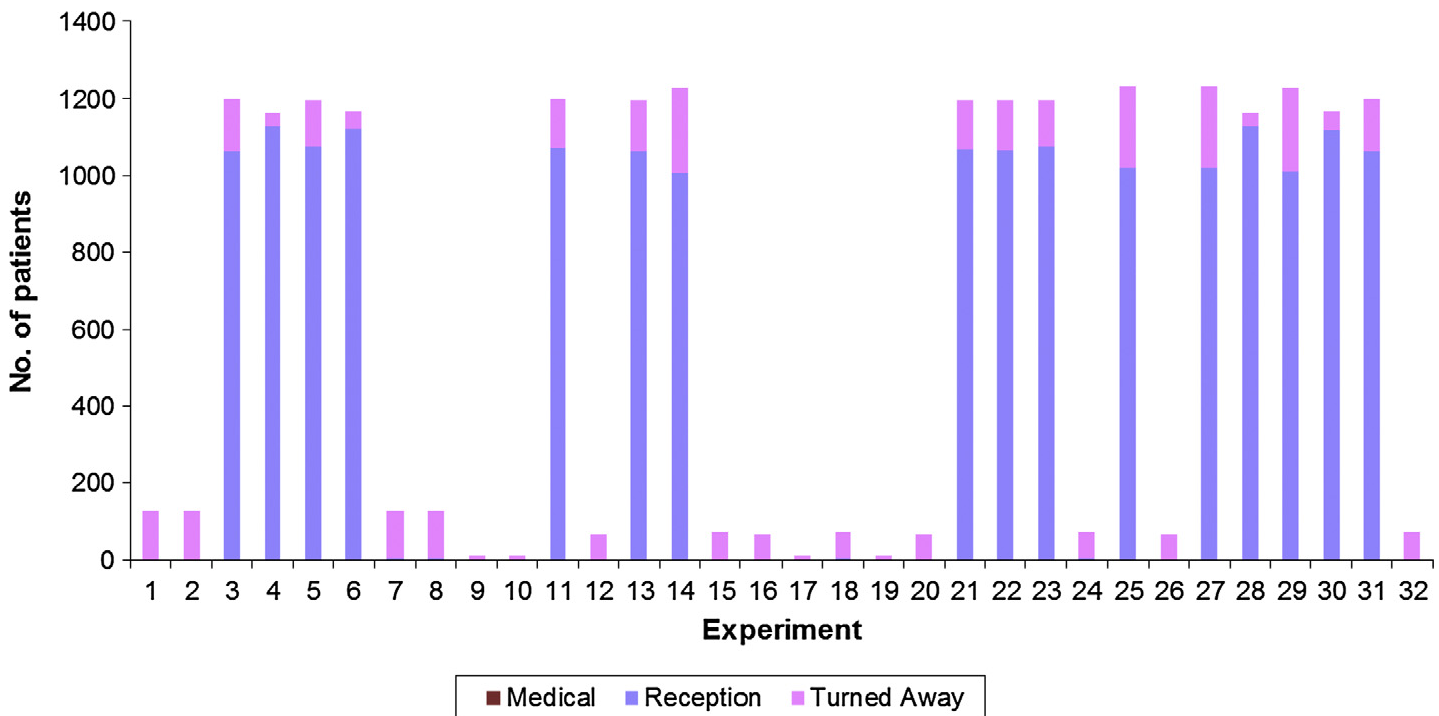
The experiments yielded a surprising but logical result: the number of reception staff was the most critical bottleneck.
- The Bottleneck: When reception staff levels were low, patients couldn't even enter the medical system. They waited at the door, grew frustrated, and left—becoming "lost" to the medical community but "active" in the infectious community.
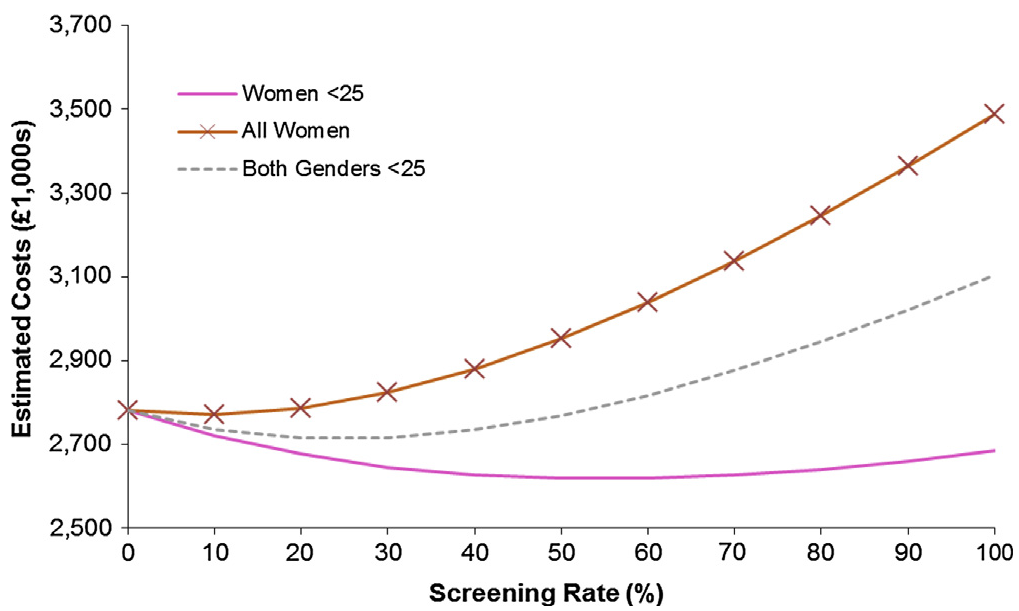
- The "SD-Only" Error: A standalone SD model assumes anyone who needs treatment gets it. The authors' results showed that the SD-only model underestimates total costs, because it ignores the long-term expenses of treating "sequelae" (complications like infertility) resulting from patients who walked out of the clinic.
Deep Insight: Why This Matters for the Future
This paper isn't just about Chlamydia; it's a proof of concept for Multi-Scale Modeling. In an era of data-driven healthcare, we can no longer afford to simulate hospital clinics in a vacuum.
The Technical Takeaway: While modern software like AnyLogic allows for multi-method modeling in one package, this research shows that we can leverage existing, specialized tools (like Vensim and Simul8) through intelligent automation.
Limitations & Moving Forward
The authors acknowledge that the model hasn't been fully implemented for real-time hospital scheduling yet. Furthermore, the future of this field lies in adding Agent-Based Modeling (ABM) to the mix to better represent individual social networks—turning a "Composite Model" into a "Triple-Hybrid" system.
Conclusion
The study proves that healthcare systems are "wholes." You cannot improve community health without looking at the queueing time for a blood test. By bridging the gap between the board room (SD) and the waiting room (DES), we gain the "Holy Grail" of simulation: a truly holistic view of human health.