
From Intimidation to Insight: Teaching AI to Non-Technical Professionals via Agile Storytelling
Effectiveness of Story-based Visual and Agile Teaching Method for Non-technical Adult Learners who want to understand Artificial Intelligence
This study proposes a "Story-based Visual and Agile" teaching method tailored for non-technical adult learners, often termed "conversational programmers." The method uses real-world storytelling, visual code-concept mapping, and agile trial-and-error practices to successfully teach core AI concepts and basic programming within a single day.
TL;DR
Artificial Intelligence is no longer just for engineers, yet most AI education assumes a mathematical or CS background. This research by Keio University introduces a "Story-based Visual and Agile" method that allows "conversational programmers"—business professionals who need to discuss but not necessarily write production code—to build a neural network in a single day. The result? A statistically significant leap in confidence and a total reversal of negative attitudes toward tech.
The Problem: The Mismatch in Tech Education
The rise of the Conversational Programmer has created a gap in academia. These are managers, marketers, and HR professionals who must participate in technical discussions but find standard resources either too "kiddy" (Gamification) or too "dry" (Traditional CS).
The authors identify three fatal friction points:
- Syntax Blindness: Code looks like gibberish without a narrative context.
- The Abstraction Gap: The leap from a mathematical sigma () to a
sum()function is non-trivial for novices. - The Failure Penalty: Large tasks lead to frustration; if one doesn't complete the task, they lose the motivation to continue.
Methodology: The Three Pillars of "Social-Technical" Learning
1. Story-based Programming
Instead of abstract "Hello World" exercises, the method uses real-life metaphors (like tax payments or history) to wrap around the code. By making code readable like a story, learners can "guess" the logic before they even execute it, fostering a self-directed learning attitude.
2. The Visual Bridge
To solve the Abstraction Gap, the researchers used Visual Clues. They provided uncompleted code blocks where mathematical symbols were visually linked to variable names. This "fill-in-the-blank" approach reduces cognitive load and allows the learner to focus on the relationship between math and logic rather than syntax errors.
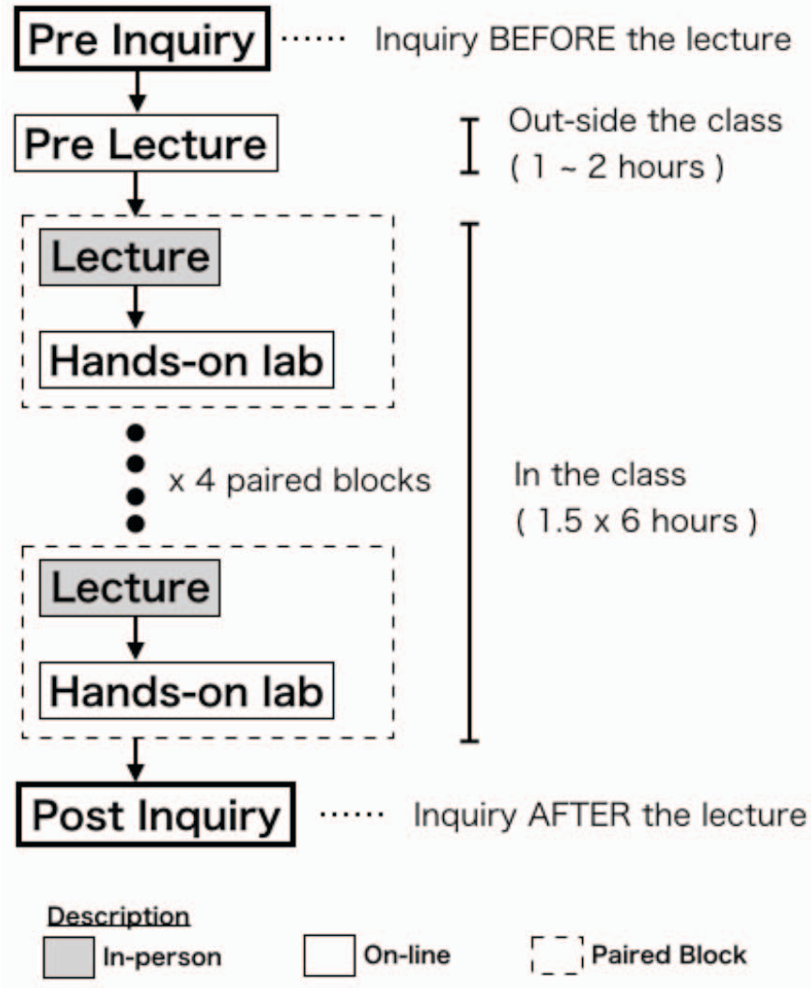 Fig 1: Using visual bridges to connect high-level mathematical formulas to low-level implementation elements.
3. Agile Learning Cycles
Borrowing from the Agile Manifesto, the course used Jupyter Notebooks to facilitate "small trials." Instead of a single final project, the curriculum consisted of six paired "Lecture + Hands-on" blocks. Learners could run snippets of code instantly, get feedback, and iterate—turning a daunting AI lecture into a series of achievable, "game-like" wins.
Experiments & Results: Quantitative Transformation
The study sampled 75 non-technical professionals (averaging 40-50 years old).
SOTA Comparison of Attitudes
The most striking result was not just that they learned to code, but how their Expectation of Success changed. Using the Expectancy-Value Theory, the researchers found that learners moved from "I can't do this" to "I can explain AI to others" with overwhelming statistical significance ().
| Metric | Pre-Lecture (Mean) | Post-Lecture (Mean) |
|---|---|---|
| Can explain AI to others | -2.01 | +1.37 |
| Can program AI personally | -2.84 | -1.09 |
Note: Even though they didn't become expert coders (remaining negative on self-programming), the massive jump indicates a breakdown of the "fear factor" associated with AI.
Qualitative Insights (Open Coding)
When asked why the method worked, 34 sentences in the feedback specifically cited that actual programming improved their understanding of the subject, and 27 highlighted that the immediate transition from lecture to lab was crucial.
Critical Insight: Why This Matters
This paper shifts the focus from computational thinking (how to think like a computer) to computational literacy (how to use code as a medium for understanding).
The Takeaway: For the corporate world, the goal isn't to turn every manager into a Python dev. It is to give them the Success Expectancy—the belief that they can understand tech. By using Agile cycles, we aren't just teaching AI; we are providing a psychological intervention that enables lifelong learning in a digital-first economy.
Limitations: The study was conducted in a blended (online/offline) environment. Future work should investigate if this "storytelling" magic holds up in purely asynchronous, online-only formats where the "human" element of the story might be diluted.
Final thought: If you can map a neural network back to a real-life story, you haven't just taught a professional a tool—you've given them a seat at the technical table.