
The Scientist as Storyteller: Revolutionizing Thesis Writing through Narrative and Agile Methods
Using storytelling methods to improve emotion, motivation and attitude of students writing scientific papers and theses
This paper proposes a novel framework for academic writing by integrating Storytelling Techniques into the production of scientific papers and theses. It introduces a dual-hypothesis approach—addressing both the Structural (A) and Procedural (B) aspects of writing—to transform a traditionally dry process into a narrative-driven journey.
TL;DR
Writing a thesis is often a lonely, demotivating uphill battle. This paper argues that the solution lies in Storytelling. By treating a scientific paper as a work of fiction—complete with plot arcs, characters, and dramatic tension—and using Agile methodologies for the writing process, we can improve student motivation and the readability of academic work.
Problem & Motivation: The "Triple L" of Academic Writing
As students transition from term papers to full-length theses, they hit a wall defined by Length, Level, and Loneliness.
- The Struggle: Current support systems are either too theoretical or too generic.
- The Insight: The author suggests that scientific writing is an "act of ego" similar to fiction. If fiction writers have used storytelling for centuries to manage complex narratives and engage audiences, why shouldn't scientists? The core motivation is to move from "consuming results" to "joyful creation."
Methodology: Drafting the "Scientific Plot"
The paper breaks the intervention into two distinct hypotheses:
1. Structural Storytelling (The "What")
The author aligns theoretical components with narrative devices. By answering "Who," "How," and "Why," students build a story arc rather than just a data dump.
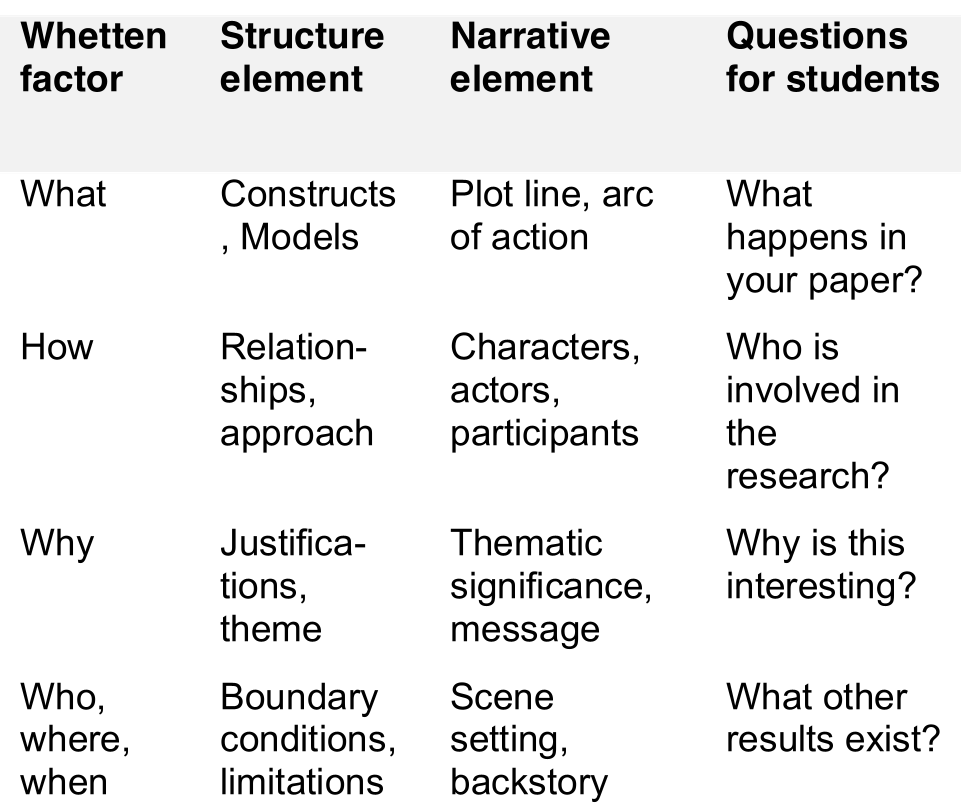
- Plot line: Represents the constructs and models.
- Characters: The actors and participants involved in the research.
- Theme: The "Why" or the message that justifies the work.
2. Procedural Storytelling (The "How")
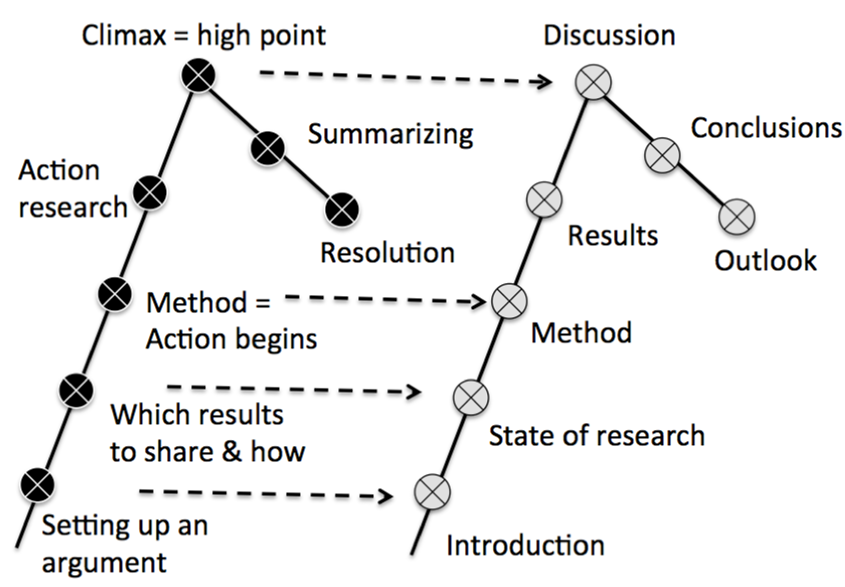
The writing process is redesigned using Agile Management. Instead of a single final submission, students work in "sprints" (weekly blog entries), receiving continuous formative feedback. This shifts the focus from a "dry report" to an unfolding story.
Experiments & Results: Testing the Narrative
The author implemented these ideas across various platforms (Moodle, Wikis, and Blogs):
- Blogging as Term Papers: Students wrote sections (Intro, Methods, etc.) weekly. This "chunking" reduced the fear of the blank page.
- Agile Wikis: Using a simplified Scrum methodology helped overcome the isolation of traditional systems.
- SWOT Findings:
- Strengths: High flexibility and better time management through reader-focused writing.
- Threats: A significant hurdle is the Scientific Community's acceptance. A paper that is "too interesting" might be perceived as lacking rigor by traditionalists.
Critical Analysis & Conclusion
The core takeaway is that readability and scientific rigor are not mutually exclusive. In fact, a paper that follows a clear narrative tension (inspired by Freytag's Pyramid) is more likely to be understood and cited.
Limitations & Future Work
- Confusing Mix: Combining agile, blogging, and storytelling might overwhelm some students initially.
- Supervisor Burden: The method requires a high level of engagement from the supervisor (acting as a "Product Owner").
- Next Steps: The author plans to further evaluate this in a Business Informatics Masters course to provide more quantitative proof of concept.
In a world of information overload, the researchers who can "tell the story" of their data will be the ones who truly make an impact.