
Strange Ontologies: Hacking the Data Structures of Reality
Strange ontologies in digital culture
The paper "Strange Ontologies in Digital Culture" explores the convergence of philosophical and computational ontologies within digital media, specifically game art and generative systems. It introduces "Strange Ontologies"—formal computational structures that intentionally deviate from real-world logic or conventional software standards to reshape human subjectivity and experience.
TL;DR
"Strange Ontologies in Digital Culture" is a seminal exploration into how the formal data structures of our digital worlds—databases, 3D engines, and social graphs—dictate our sense of being. By examining "glitches" and intentional artistic interventions in games and generative art, the authors argue that we can transcend conventional reality through "Strange Ontologies": systems where the rules of existence are subtly, and often subversively, rewritten.
Background: When Philosophy Meets Code
In the academic landscape, this work acts as a bridge between Information Science and Continental Philosophy. It posits that every digital system is a world-building exercise. If philosophical ontology asks "What is?", then a computational ontology (the code) definitively answers "This is." This paper positions itself as a critique of the "neutrality" of software, urging us to see data structures as the new boundaries of human subjectivity.
The Problem: The Tyranny of the Conventional
The authors identify a stagnation in digital culture. Most software acts as a "transparent" mirror of real-world conventions:
- Social Flattening: Social networks like Facebook boil complex human bonds down to a binary "Friend" status, limiting the nuance of human interaction.
- The Cartesian Trap: 3D engines default to a standard perspective that reinforces a specific, "post-human" but rigid way of seeing space.
- The Illusion of Choice: Most games simulate reality only to make it "playable," sacrificing the profundity of concepts like death or space for the sake of standard UI patterns.
Methodology: The Power of the "Tweak"
The core insight is that you don't need a total systemic overhaul to create a new reality; you only need a "tweak" in the relations.
1. Remapping the Z-Buffer
Mark Guglielmetti’s Laboratories of Thought offers a masterclass in this. In standard 3D graphics, the Z-buffer manages the stacking order of objects based on distance. Guglielmetti unpinned this from geometry and remapped it to emotional valence.
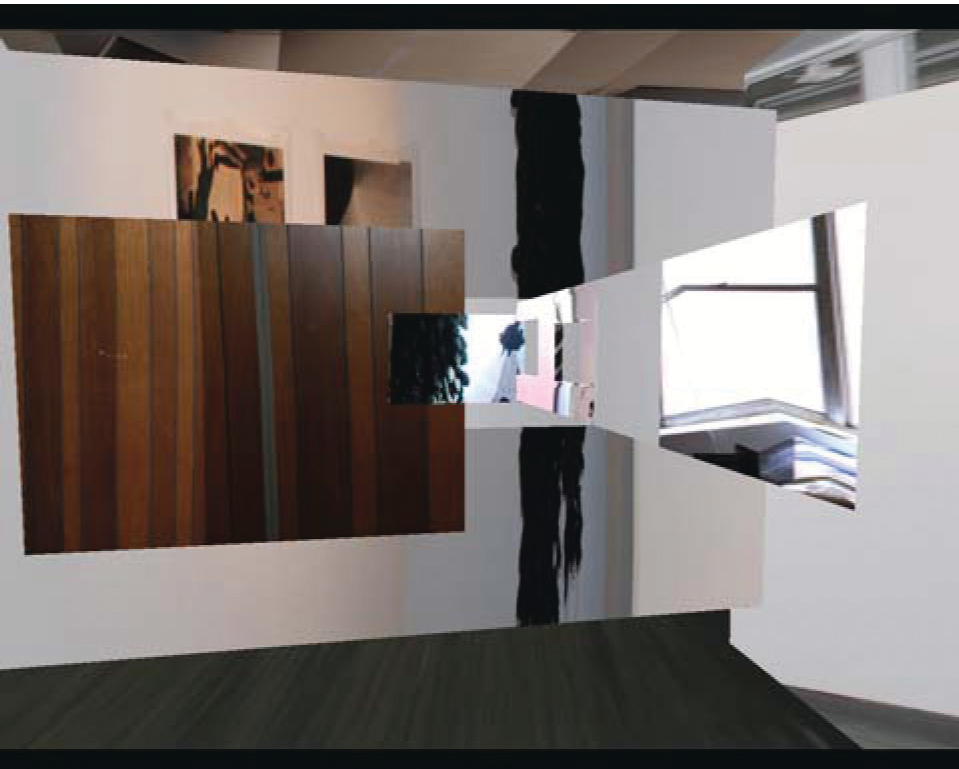 Fig 1: By reordering the Z-buffer based on the artist’s emotional connection to specific spaces, the world becomes a navigable subjective collage.
2. Relational Transposition
Julian Oliver’s Second Person Shooter creates a "ontological entanglement" by swapping the POVs of two players. You can only see yourself if your opponent is looking at you. This minimal change to a spatial relation (the POV) destroys the traditional "I" of the First Person Shooter.
Experiments and Case Studies: From Portals to Corpse Graffiti
The paper cites Portal as a prime example of a "wormhole" entity that reveals the fragility of conventional physics. It merges the subjective and objective; players often see themselves through the portals, creating a "vision machine" paradox.
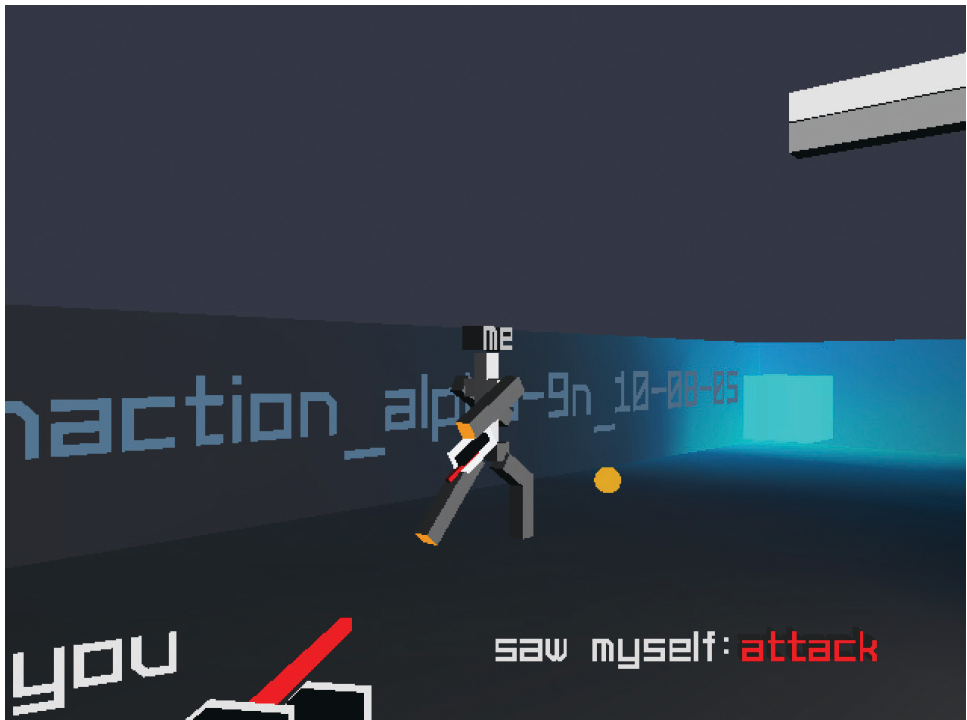 Fig 2: In Portal, the player character (Chell) becomes both the observer and the observed, shattering the standard first-person narrative.
Furthermore, the authors highlight Corpse Graffiti in World of Warcraft. Here, a "strange ontology" emerges not by design, but through use. Players realized that a dead body (a formal entity with a name and location) could be used as a pixel to spell out messages, turning a "failure state" into a "discursive medium."
Critical Analysis & Conclusion
Takeaway
The ultimate value of this work is its insistence that digital systems are generative. While a designer may build an ontology for a specific representational task, the system's inherent combinatorics often allow for alternative worlds to remain "latent" within the code.
Limitations
While the paper is brilliant in its philosophical depth, it remains largely within the realm of Media Art. It does not address how "Strange Ontologies" could scale to functional applications (e.g., productivity or scientific visualization) without causing cognitive overload or "unplayability."
Future Outlook
As we move toward more immersive "Metaverses," the ability to craft "Strange Ontologies" will be what differentiates a truly new digital experience from a mere 3D skin of our current reality. The "world-designers" of tomorrow must be part-coder, part-philosopher, looking for the "loopholes" in the data that allow for new ways of being.