
Strategic Social Team Crowdsourcing: Aligning Honesty with Efficiency
Strategic Social Team Crowdsourcing: Forming a Team of Truthful Workers for Crowdsourcing in Social Networks
This paper introduces the Strategic Social Team Crowdsourcing (STCP) problem and proposes two truthful mechanisms, OPT-Tree and Greedy, to form collaborative, professional teams in social networks. The study achieves truthfulness and individual rationality while maximizing social welfare across varying application scales.
TL;DR
As crowdsourcing shifts from simple image labeling to complex software engineering, forming a "dream team" requires both professional skills and social synergy. This paper tackles the Strategic Social Team Crowdsourcing (STCP) problem, providing two novel mechanisms—OPT-Tree (for small tasks) and Greedy (for large-scale tasks)—that force selfish workers to report their true costs while ensuring the team can actually work together.
Background: The Cost of Dishonesty
In traditional crowdsourcing, a requester hires individuals. In social crowdsourcing, the requester hires a connected subgraph of a social network. The pain point is simple: workers are strategic. If they think they can get paid more by lying about their expertise or padding their costs, they will. Most existing algorithms focus on the "How" of team formation but ignore the "Why" of worker motivation. Applying a standard VCG (Vickrey-Clarke-Groves) auction is the theoretical gold standard for honesty, but it is computationally explosive (NP-hard).
Methodology: Two Paths to Truthfulness
1. Small-Scale: The Power of Trees
For tasks requiring a limited number of skills (), the authors use a "Tree Extraction" strategy.
- Insight: Social networks are messy, but if you can extract a high-closeness "skeleton" (a tree) that preserves the most important connections, you can solve the optimization problem using Dynamic Programming.
- Binary Transformation: The tree is further transformed into a binary tree to keep the DP complexity managed at .
 Figure 1: The framework of social team crowdsourcing, showing the flow from task announcement to social network-based team formation.
2. Large-Scale: Greedy but Monotone
When is large, DP fails. The authors propose a Greedy Social Team Formation algorithm.
- The Logic: It starts with a "root" worker who has the best skill-to-cost ratio and then iteratively adds neighboring workers who provide the most "marginal contribution-per-cost."
- Threshold Payment: To guarantee truthfulness, they use a payment rule where a worker is paid the maximum they could have bid while still being selected for the team.
Experimental Insights: SOTA Results
The authors tested their methods on a real-world dataset from Guru.com, involving over 28,000 workers.
- Social Welfare: In Random, Small-World, and Scale-Free networks, the OPT-Tree method stayed remarkably close to the theoretical optimum while being significantly faster.
- Scalability: The Greedy algorithm showed its strength as task complexity increased, outperforming the Steiner-Tree baseline because it better integrates social connectivity with cost-efficiency.
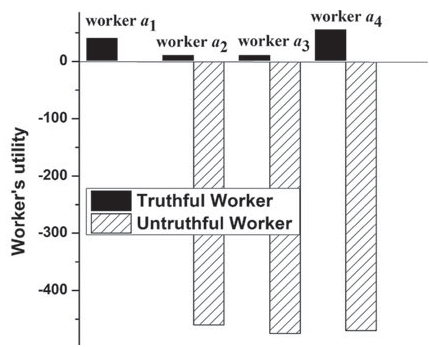 Figure 2: Requester’s utility across different network types, showing the effectiveness of OPT-Tree and Greedy methods compared to Steiner-Tree.
Critical Analysis & Conclusion
Takeaway
The core contribution here is proof that social connectivity is not just a constraint, but a structural advantage. By restricting the search space to connected components and using tree-based approximations, the authors solved a strategic game theory problem that was previously considered too slow for practical use.
Limitations & Future Work
The current model assumes a worker's cost is flat, regardless of which skills they use. In reality, a developer might charge more for "Architecture Design" than for "Documentation." Future research into cost-skill interdependence and preventing worker collusion (where groups of friends lie together to rig the auction) is the next frontier for this field.
Overall, this work moves crowdsourcing from a simple "gig economy" model toward a sophisticated "collaborative economy" model.