
The Invisible Hand of Social Capital: Why Organizational SNS Adoption is a Power Struggle
Strategies and symbolism in the adoption of organizational social networking systems
This paper investigates the adoption of Organizational Social Networking Systems (SNS) through a dual case study of two French public administrations. It explores how these systems make previously invisible social capital visible, transforming it into "symbolic capital" that actors strategically manipulate to influence power dynamics and organizational standing.
TL;DR
Implementing a Social Networking System (SNS) within a company does more than just "connect people"—it maps out the hidden anatomy of influence. By making informal relationships visible, SNS transforms social capital into symbolic capital. This research reveals that employees don't just "use" these systems; they strategically manipulate them to protect their status, monitor subordinates, or challenge existing hierarchies.
Problem: The Visibility Trap
In modern organizations, work happens through informal networks—who you know often matters more than where you sit on the chart. However, this Social Capital is usually invisible. When a company introduces an SNS (like Yammer, Jive, or specialized SAP systems), it signals that these informal links are now a "measurable resource."
The problem? Visibility isn't neutral. For a manager, a transparent network might seem like an efficiency win. For an employee, it might feel like a surveillance tool (the "Panopticon" effect) or a way for rivals to signal unearned prestige.
Methodology: A Tale of Two Cities
The researchers looked at two French public sector offices:
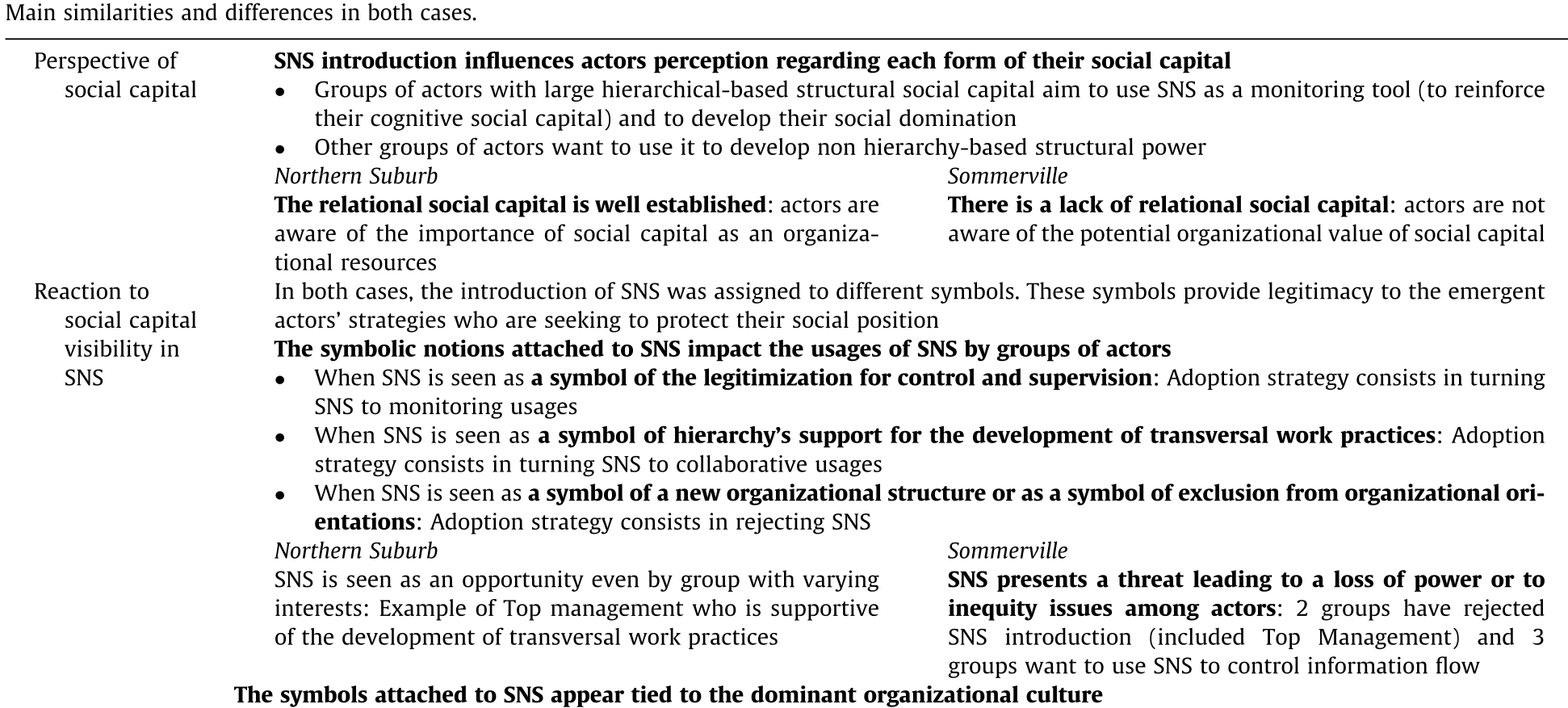
- Northern Suburb: A high-trust environment where collaboration was valued.
- Sommerville: A low-trust, competitive environment with significant geographical and cultural silos.
By interviewing everyone from Mayors to administrative assistants, they mapped out how different "social fields" interpreted the arrival of the SNS.
Core Insight: SNS as a Symbolic Artifact
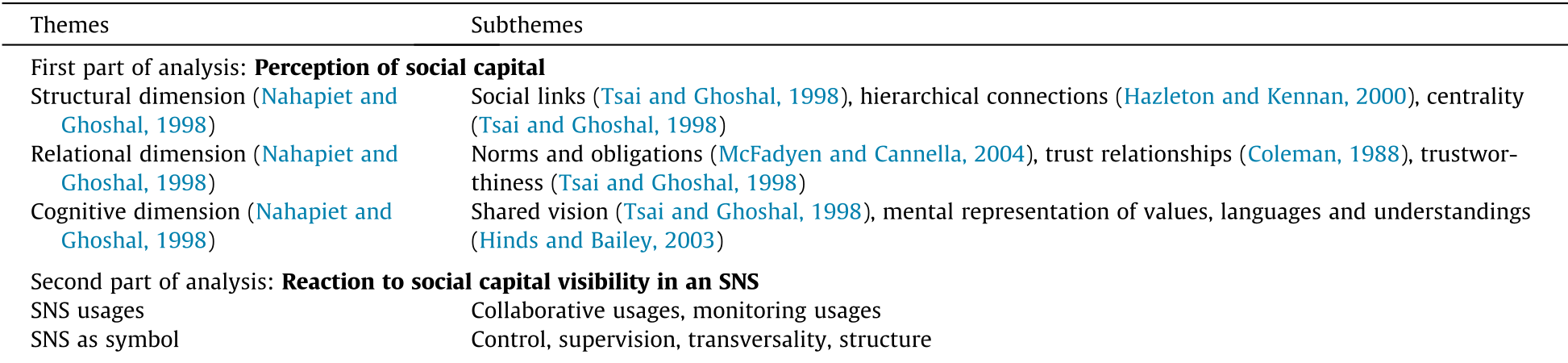
Drawing on the sociology of Pierre Bourdieu, the study argues that social capital (connections, trust, shared vision) becomes Symbolic Capital the moment it is recognized as legitimate by others.
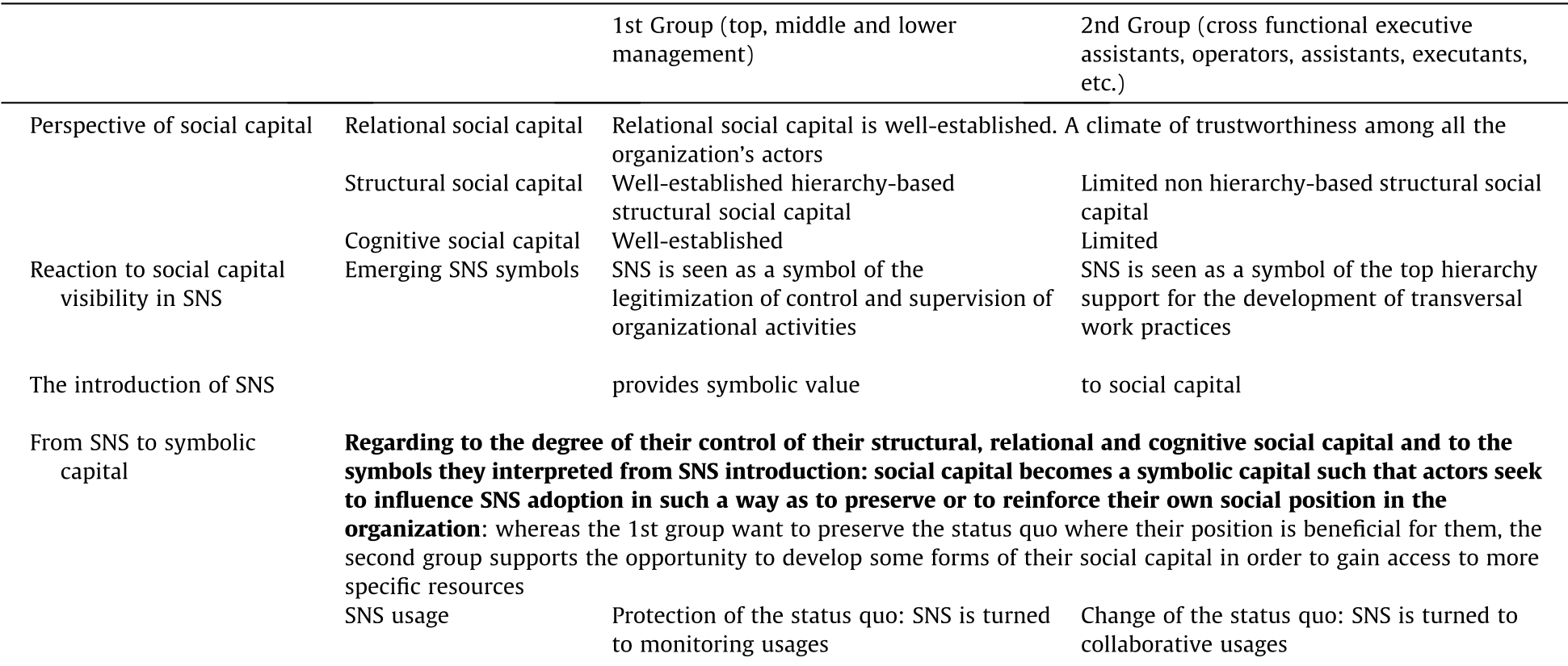
- For Management: The SNS was a symbol of Control. They wanted the system to display budgets and formal project progress alongside social links to reinforce their oversight.
- For "Referents" (Cross-functional players): The SNS was a symbol of Transversality. It was their chance to make their lateral influence visible to the bosses, potentially leading to career advancement.
- For the Isolated: The SNS was a symbol of Exclusion. To those without many links, the system was just a digital reminder of their lack of influence.
Why Adoption Fails (The Sommerville Case)
In Sommerville, the culture of "mistrust" turned the SNS into a weapon. Middle managers feared that if subordinates could collaborate freely, management would become "unneeded." Consequently, they tried to restrict access or turn the system into a rigid monitoring tool for equipment and budgets. This strategic "sabotage" or redirection ensures the system never achieves its collaborative potential.
Takeaways for Tech Leaders
- Culture Over Code: An SNS will amplify existing cultural trends. In a toxic environment, it becomes a surveillance tool; in a healthy one, a bridge.
- Impression Management: Be aware that users are "playing a role" on the platform. They may add connections just to appear "indispensable" rather than to actually collaborate.
- Boundary Objects: View the SNS as a "boundary object" that helps different departments speak the same language—but only if the power dynamics allow for it.
Conclusion
This paper reminds us that IS adoption is a deeply political act. When we "map the network," we aren't just drawing dots and lines; we are redistributing the symbolic power of the organization. As an editor, I find this work a vital corrective to the "techno-optimism" that assumes connectivity automatically leads to productivity. In reality, connectivity leads to strategy.