
Piercing the Shadows: An AI-Driven Shield Against Dark Web Threats for SMEs
On Strengthening SMEs and MEs Threat Intelligence and Awareness by Identifying Data Breaches, Stolen Credentials and Illegal Activities on the Dark Web
This paper introduces a specialized Threat Intelligence framework designed to protect Small and Medium-sized Enterprises (SMEs) by crawling and analyzing the Dark Web. Utilizing a microservices architecture, the system employs Machine Learning (K-means clustering) and NLP (TF-IDF, NER) to identify data breaches, stolen credentials, and illicit cyber-activities in real-time.
TL;DR
As cybercrime shifts toward the "as-a-service" model, Small and Medium-sized Enterprises (SMEs) are increasingly targeted. This paper presents a scalable Cyber Threat Intelligence (CTI) framework that crawls the Dark Web, uses Machine Learning to filter through the noise, and provides SMEs with real-time alerts on data breaches and stolen credentials.
The Visibility Gap: Why SMEs are Losing the Dark Web War
For most SMEs, the Dark Web is a "black box." While large corporations have dedicated security centers (SOCs) to monitor onion sites for leaked data, smaller players are often blindsided by:
- Resource Asymmetry: Lack of budget for expensive CTI feeds.
- Anonymity Barriers: The technical difficulty of navigating TOR and I2P networks without falling into "spider traps."
- Data Overload: The inability to distinguish between a script-kiddie's boast and a legitimate sale of corporate credentials.
The authors argue that a proactive approach—integrating Situation Awareness (SA) into risk management—is the only way to safeguard corporate reputations.
Methodology: A Scalable Intelligence Pipeline
The proposed framework isn't just a simple crawler; it is a sophisticated microservices-oriented architecture designed for high-performance information retrieval.
1. The Adaptive Crawler
Starting from seed URLs, the crawler expands its search space using a breadth-first search algorithm. It bypasses common Dark Web obstacles (CAPTCHAs, login walls) and uses a SOCKS proxy to rotate identities.
2. Intelligent Categorization
To avoid "irrelevant content" (the biggest challenge in Dark Web mining), the system uses K-means clustering. By training on thousands of documents, the model can automatically categorize a page:
- Cluster 1 (Cyber-Attacks): DDoS services, SQL injection kits, phishing tools.
- Cluster 2 (Irrelevant): Multimedia illicit content that does not affect enterprise security.
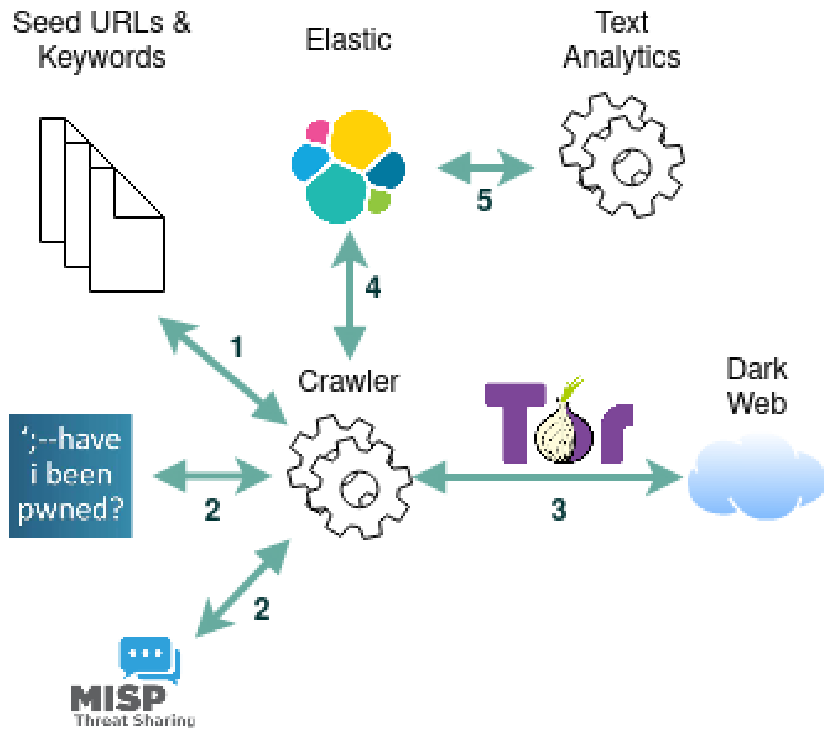 Figure 1: The framework's modular design, connecting the Dark Web Crawler to the Text Analytics engine.
Turning Text into Intelligence
The core "magic" happens in the Text Analytics and Business Intelligence module. Using TF-IDF Vectorization and Named Entity Recognition (NER) via the spaCy library, the system extracts critical entities like:
- Pawned email accounts (identifying
@enterprise.comleaks). - Specific attack signatures (Backdoors, XSS, CSRF).
The system calculates a Criticality Score for each page based on keyword frequency and weight. For example, a page selling a "Zero-day exploit" receives a higher score than one discussing general hacking tips.
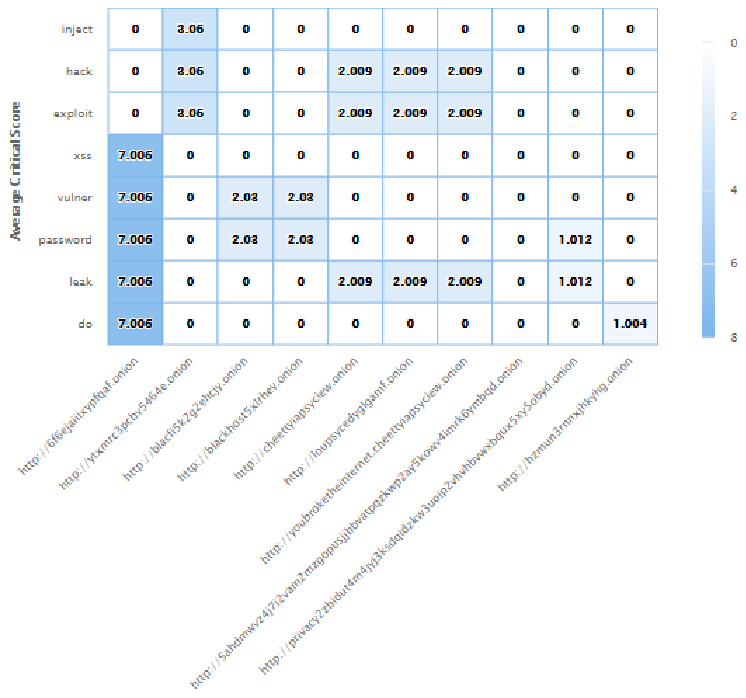 Figure 2: A heatmap correlating root URLs with specific cyber-concepts (Criticality vs. Frequency).
Key Findings & Impact
The researchers demonstrated the tool's efficacy during major real-world events, such as the 2021 Facebook data breach. They identified that stolen data (including phone numbers and physical addresses) were being pawned for as little as $1,000 on Dark Web forums.
By visualizing "Significant Text" connections (Fig. 6), the system reveals how different attack vectors are bundled together—for instance, how "backdoor" mentions are highly correlated with "XSS" and "CSRF" in illicit marketplaces.
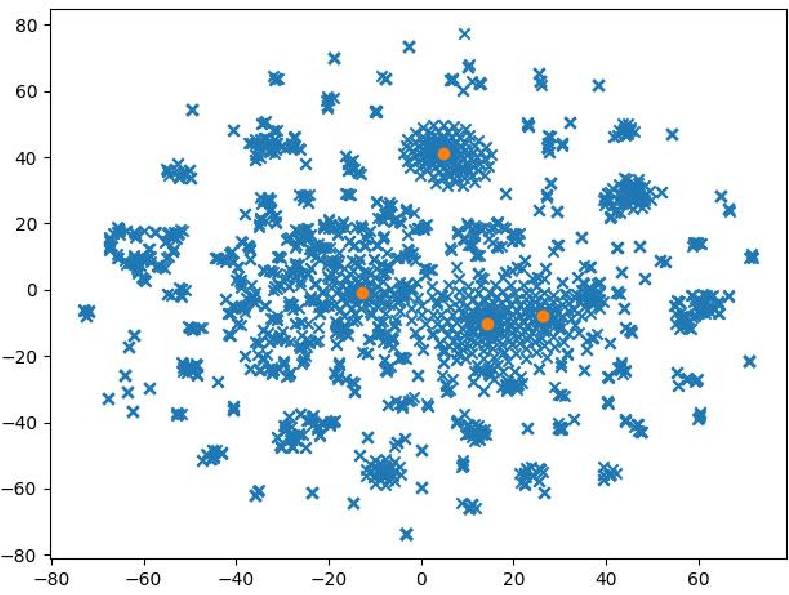 Figure 3: K-means clustering results showing the separation of cyber-threat content from baseline noise.
Critical Insight & Conclusion
The true value of this work lies in its interoperability. By providing RESTful APIs, the framework allows SMEs to integrate Dark Web alerts directly into their existing security dashboards.
Takeaway: The Dark Web is no longer an untouchable realm. With scalable ML pipelines, we can automate the detection of "digital smoking guns," allowing even the smallest enterprises to defend themselves against the evolving cyber-black market.
Limitations: The study notes that content on the Dark Web evolves rapidly. Future work will need to incorporate deeper qualitative metrics and potentially leverage transformer-based models (like BERT or GPT) to understand the nuanced "slang" used by hackers more accurately than traditional TF-IDF approaches.