
Empowering Women in STEM: How Social Networks and Role Models are Closing the Leadership Gap
Strengthening of Women’s Leadership in STEM Educational Environment through Social Networks: Case of Success with International Network
This paper presents a successful intervention program to strengthen women's leadership in STEM education by leveraging social networks and international partnerships. Developed by Tecnológico de Monterrey (MIC) and LACCEI, the project utilizes webinars featuring female role models to inspire teachers across Latin America, achieving over 22,000 views and impacting over 700 participants.
TL;DR
To address the persistent gender gap in STEM, researchers at Tecnológico de Monterrey launched a digital initiative combining international cooperation and social media broadcasting. By showcasing successful female educators as "Role Models" through webinars and platform-specific content, they reached tens of thousands of viewers across Latin America, providing the necessary visibility to inspire the next generation of female leaders.
Background: The Invisible Barrier
In the global high-tech economy, STEM skills are the primary currency. However, statistical data (as seen in the paper's comparison of degrees by gender) shows a stark reality: while women dominate fields like Education and Health, they remain a minority in Engineering and Science.
The problem isn't just about student recruitment; it starts with the educators. The authors argue that without visible female leadership in the classroom, young girls lack the "Female Hero" archetype—characterized by Confidence, Control, and Courage—needed to break through gendered barriers.
Methodology: A Two-Stage Strategy for Visibility
The researchers moved beyond traditional physical workshops, adopting a "Digital First" approach through a partnership between MIC (Mujeres en Ingeniería y Ciencias) and LACCEI (Latin American and Caribbean Consortium of Engineering Institutions).
1. The Webinar Program
The program selected "Role Model" professors—women with consolidated academic careers—to present topics ranging from mathematics to sustainability. These weren't just technical lectures; they were narratives of lived experience designed to humanize the STEM career path.
2. Social Media Ecosystem
Recognizing that different demographics inhabit different digital spaces, the team utilized:
- Facebook: Broad reach for alumni, parents, and older teachers.
- Instagram & YouTube: Focused on students and providing an "on-demand" repository of knowledge.
- LinkedIn: For professional networking and institutional visibility.
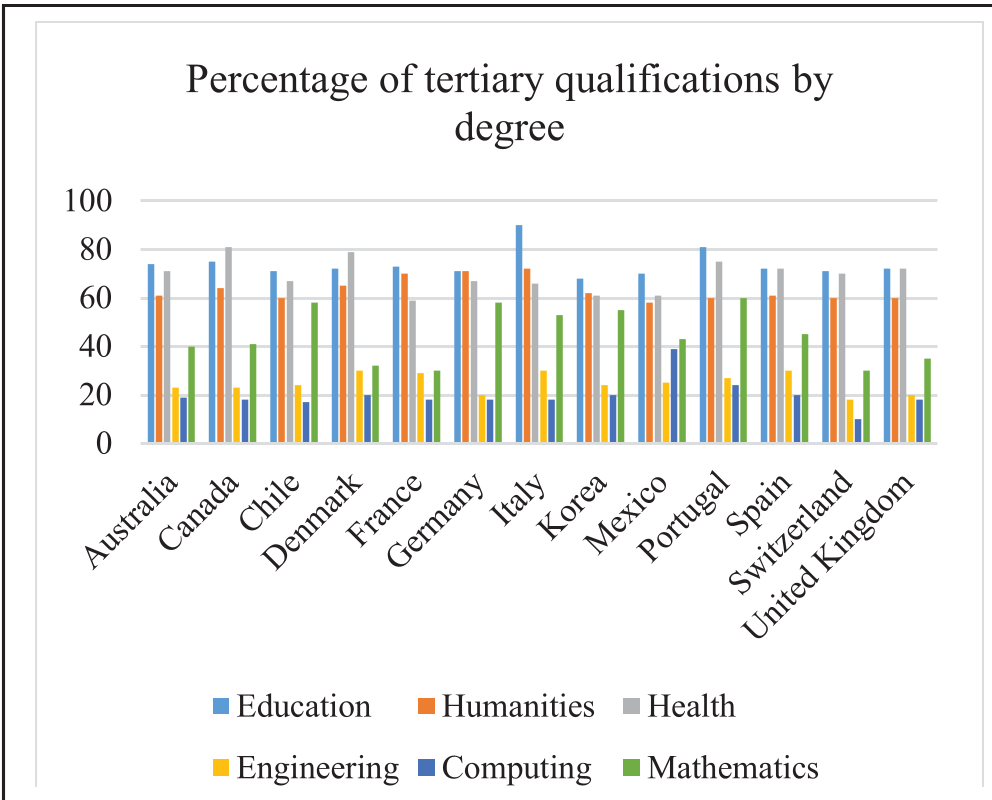 Above: The percentage of tertiary qualifications awarded to women by major highlights the urgent need for intervention in STEM sectors.
Results: Quantifying the Impact
The shift to 100% online activities during the COVID-19 pandemic acted as an unintended catalyst for the program. The reach was unprecedented:
- W2 Event: Focused on sustainability, it attracted 581 live viewers and over 22,000 reproductions.
- Geographic Reach: Participation spanned 8 countries, including Mexico, Colombia, Peru, and Argentina.
- Audience Insights: A critical finding was that many teachers (primarily in elementary/middle school) wanted to promote STEM to girls but did not know how. The webinars served as essential training for these gatekeepers.
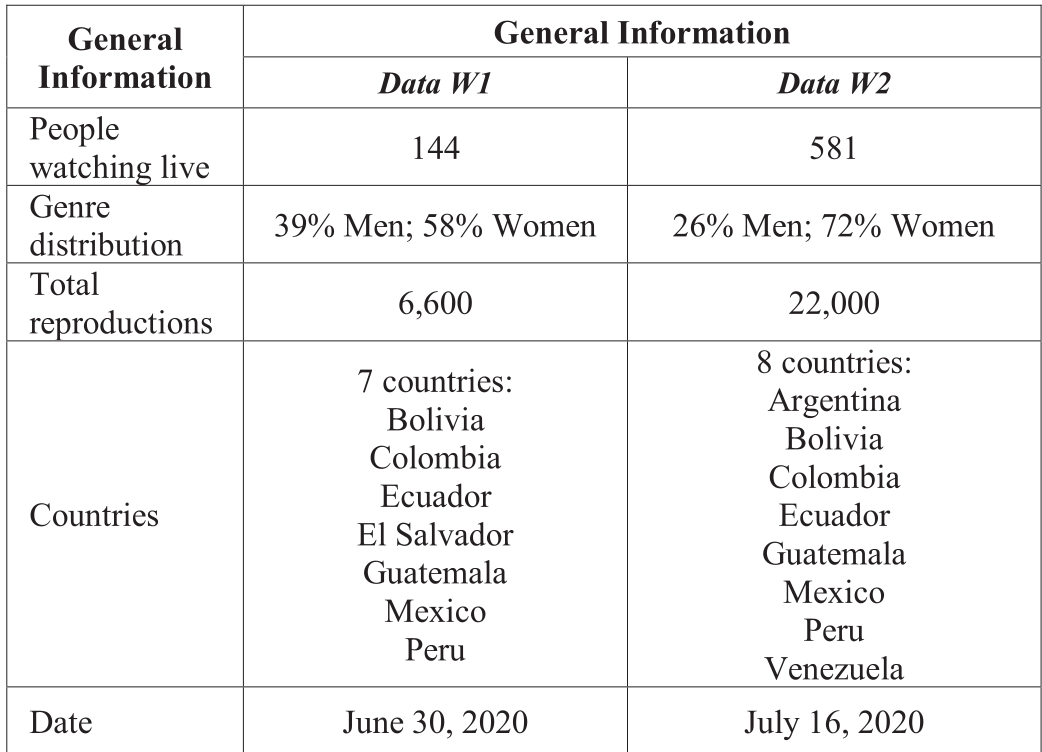 Performance metrics for W1 and W2 demonstrate the effectiveness of combining expert content with social media distribution.
Critical Insight: The "Role Model" Effect
The paper confirms a vital psychological mechanism: exposure to successful female leaders directly correlates with increased aspirations in STEM.
One of the most striking outcomes was the engagement level across various seniority brackets. Teachers with 5-15 years of experience were the most active participants, suggesting that even mid-career professionals are seeking these leadership "Role Models" to navigate their own institutional challenges.
Future Outlook and Limitations
While the reach of this program is impressive, the authors acknowledge a hurdle: many educators still lack the specific training to actively promote STEM to female students. The study suggests that future work must move from "inspiration" to "practical pedagogy," providing teachers with concrete tools to dismantle stereotypes in the classroom.
Conclusion
By leveraging the scale of social networks and the power of international alliances, Tecnológico de Monterrey has created a blueprint for strengthening women's leadership. The project proves that visibility is the first step toward equality; if you can see it, you can be it.
Takeaway for Institutions: To fix the STEM pipeline, look at your faculty. Provide them with the digital platforms and international networks to become the role models your students are searching for.