
Gender Dynamics in Digital Stress: Beyond Subjective Feedback
Stress recognition in human-computer interaction using physiological and self-reported data: a study of gender differences
This study explores gender differences in stress recognition during Human-Computer Interaction (HCI) using both objective skin conductance (GSR) data and subjective self-reported metrics. By applying seven machine learning classifiers to data from 31 participants performing subtle HCI tasks, the researchers achieved a peak stress recognition accuracy of 98.9% for females and 94.8% for males using Linear Discriminant Analysis (LDA).
TL;DR
Can a computer tell how stressed you are regardless of your gender? This research proves that while men and women might describe their stress differently, their bodies—specifically their skin conductance—tell a remarkably similar and highly predictable story. Using Linear Discriminant Analysis (LDA), the researchers achieved up to 98.9% accuracy in detecting stress caused by common technical annoyances like slow internet and pop-up ads.
Background: The Subjectivity Trap
In the world of User Experience (UX), we usually ask users how they feel. However, users often lie, forget, or simply struggle to quantify their frustration. This paper identifies a critical "Gender Bias" in self-reporting: women and men communicate emotional arousal differently on standardized scales, even when their physiological responses are identical. To solve this, the authors look toward Galvanic Skin Response (GSR) as the "truth serum" of HCI.
Methodology: Simulating Real-World Frustration
Instead of using extreme "lab" stressors like loud noises, the authors interviewed actual users to identify five everyday tech-terrors:
- Missing Files: Remotely deleting a file just as the user tries to email it.
- Hardware Failure: Artificially slowing the mouse cursor to a crawl.
- The 56Kbps Nightmare: Simulating prehistoric dial-up speeds.
- Ad Interruptions: Triggering intrusive pop-ups every 15 seconds.
- Bad UX: Navigating a library website known for its terrible architecture.
The Signal Pipeline
The researchers used a Mindfield eSense sensor (5Hz) and a sophisticated smoothing process.
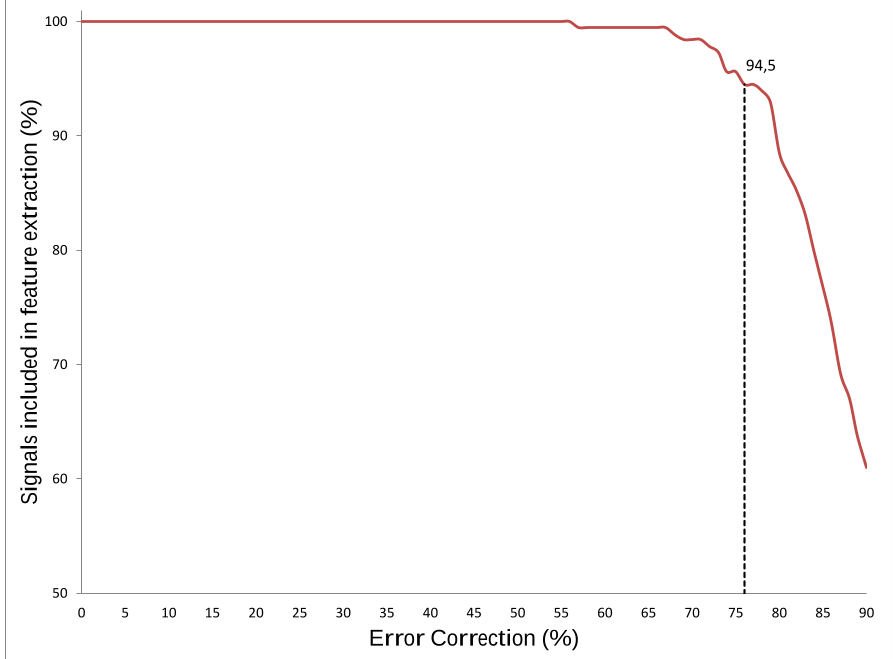 Figure 1: The Adaptive Error Correction process used to clean the GSR signals without losing vital peaks.
The Core Insight: LDA Dominance
The team tested seven classifiers, including SVMs and k-NN. However, Linear Discriminant Analysis (LDA) was the clear winner.
| Classifier | Male Accuracy | Female Accuracy |
|---|---|---|
| LDA | 94.8% | 98.85% |
| Linear SVM | 91.2% | 96.88% |
| Decision Tree | 86.4% | 95.0% |
The higher accuracy in females suggests that physiological stress markers may be slightly more distinct or consistent in female populations, though the performance for both genders is high enough for commercial application.
The "Arousal" Paradox
The most striking finding wasn't in the electronics, but in the psychology. Using MANOVA, the authors found a significant difference () in how genders utilized the Arousal Scale.
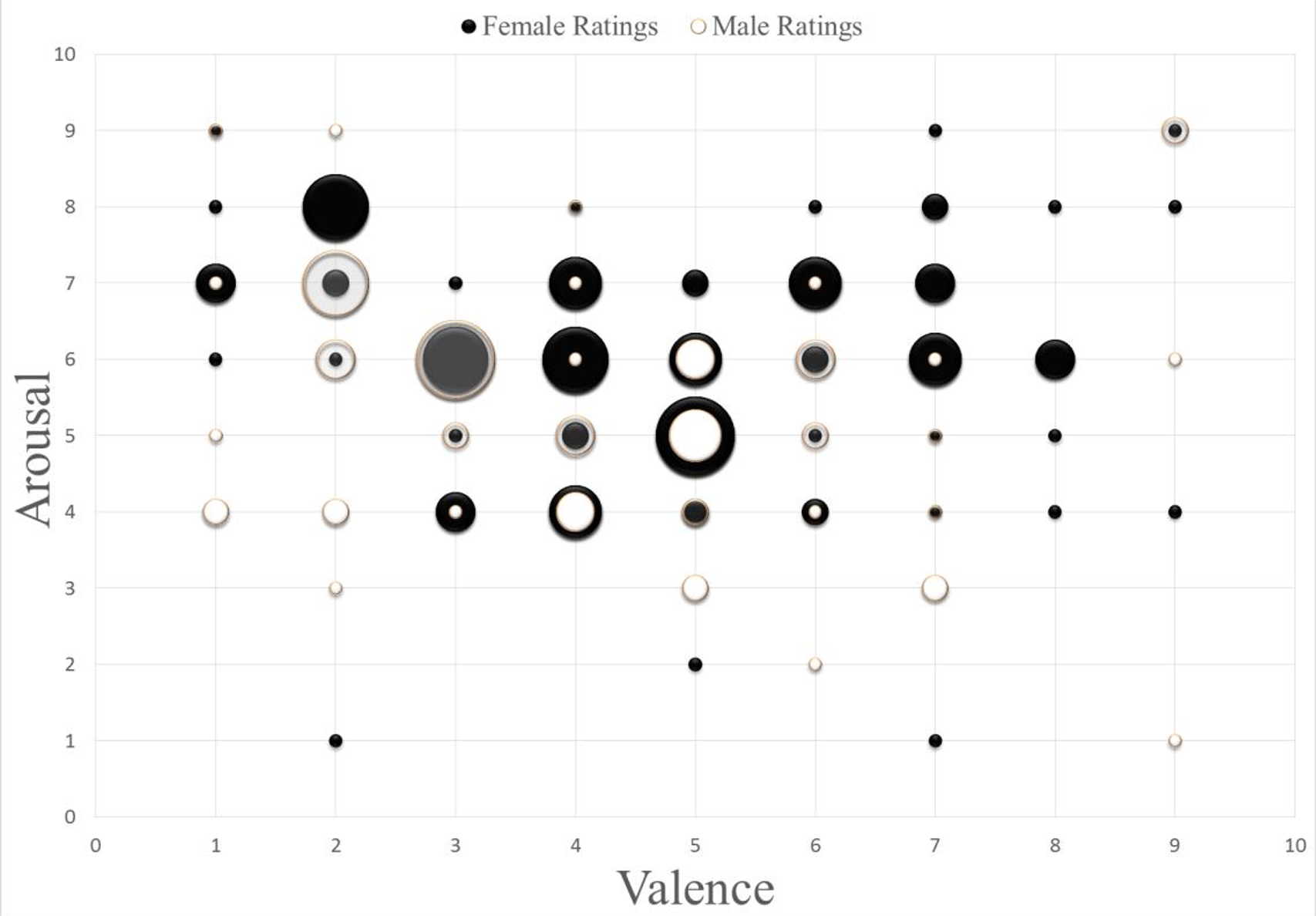 Figure 2: The "Bubble Chart" showing that while stress levels (Skin Conductance) were high for both, the way individuals plotted their feelings on the VA grid varied significantly by gender.
Critical Analysis & Takeaways
Why this matters
This paper shifts the focus from "extreme" stress to "subtle" stress. If an algorithm can detect the slight irritation of a slow mouse, it can be used to build Adaptive User Interfaces that simplify themselves the moment they sense a user is struggling.
Limitations
- Sample Size: 31 participants is a solid start but small for deep learning approaches.
- Signal Variety: The study relies purely on skin conductance. Adding Heart Rate Variability (HRV) might provide a 3D view of the user’s "fight or flight" response.
Conclusion
Gender does not fundamentally change how our sweat glands respond to a crashing computer, but it does change how we talk about it. For future HCI design, the message is clear: Trust the physiology, but calibrate the questionnaires.