
Strobilurin Fungicides: From Forest Fungi to Global Food Security
Review: The strobilurin fungicides
This seminal review details the development and profile of Strobilurin fungicides, a major class of agricultural chemicals inspired by natural fungal metabolites. It covers the discovery of key compounds like Azoxystrobin and Kresoxim-methyl, their mitochondrial mode of action, and their global SOTA status in controlling a broad spectrum of plant pathogens.
TL;DR
Strobilurins represent perhaps the most significant breakthrough in agricultural chemistry of the late 20th century. Inspired by wood-rotting mushrooms, these compounds revolutionized disease management by targeting fungal respiration. This review explores their chemistry, biological efficacy, and the persistent challenge of resistance.
The Leap from Natural Intuition
The story of Strobilurins began with a simple observation: some fungi produce substances to kill off competitors. Species like Strobilurus tenacellus produce Strobilurin A, a potent antifungal. However, the natural molecule was useless in the field because it degraded in light within hours.
The academic and industrial challenge was to preserve the toxophore (the specific chemical group that kills the fungus) while re-engineering the rest of the molecule for stability and "systemicity"—the ability to move through the plant's veins.
Methodology: Inhibiting the Breath of the Pathogen
The core innovation lies in the Biochemical Mode of Action. Strobilurins are site-specific inhibitors that bind to the Qu site of cytochrome bc1.
This binding halts the electron transport chain in the mitochondria. By stopping the production of ATP, the fungus essentially "suffocates" at a cellular level. High selectivity was achieved because the synthetic analogs were designed to be metabolized differently or absorbed at different rates by plants and mammals compared to fungi.
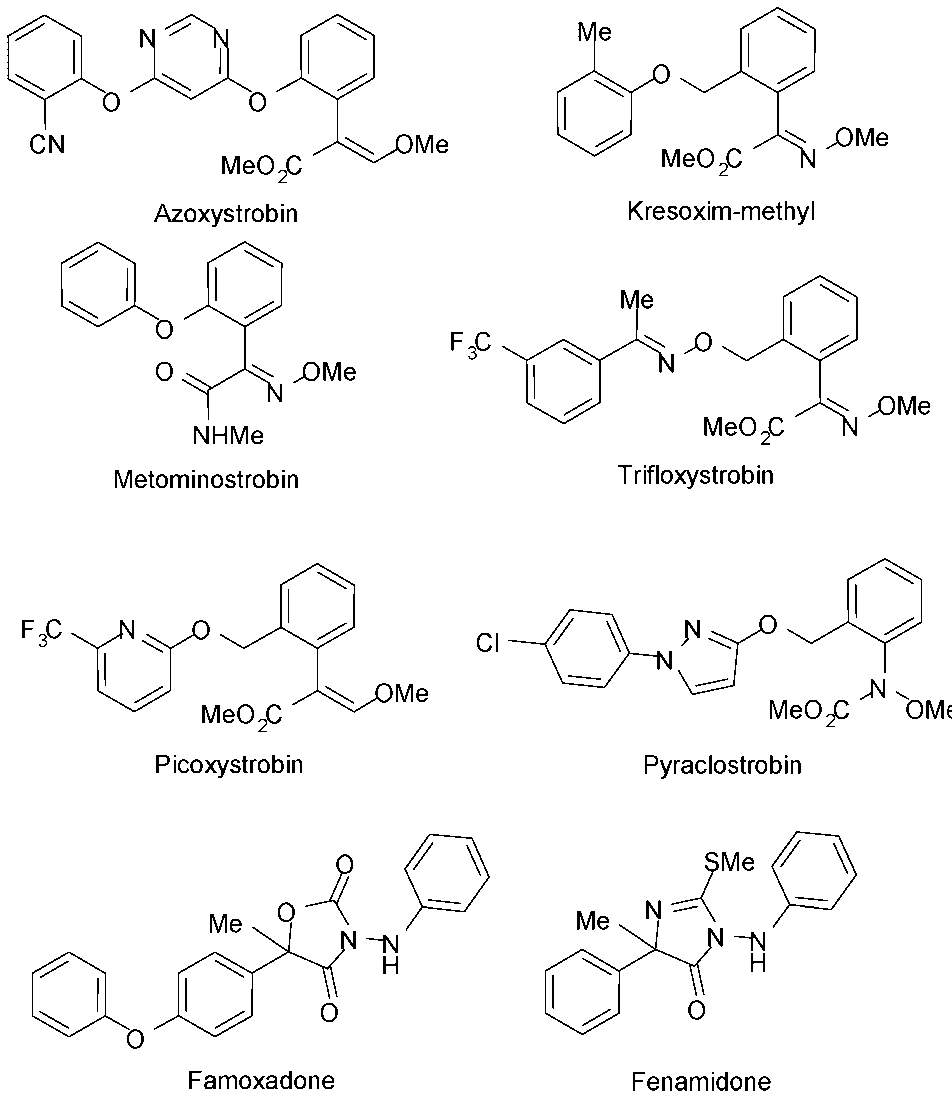 Figure 1: Comparison of commercial strobilurin structures and their synthetic origins.
Key Performance Attributes
- Broad Spectrum: Unlike many fungicides that only target one class of fungi (e.g., Oomycetes), Strobilurins like Azoxystrobin are effective against all four major groups: Ascomycetes, Basidiomycetes, Deuteromycetes, and Oomycetes.
- Xylem Systemicity: Some Strobilurins (Azoxystrobin, Picoxystrobin) move via the xylem, protecting new growth that emerges after the spray application.
- The Greening Effect: Beyond killing fungi, these chemicals influence plant physiology, reducing ethylene production and prolonging photosynthesis, which directly translates to higher yields.
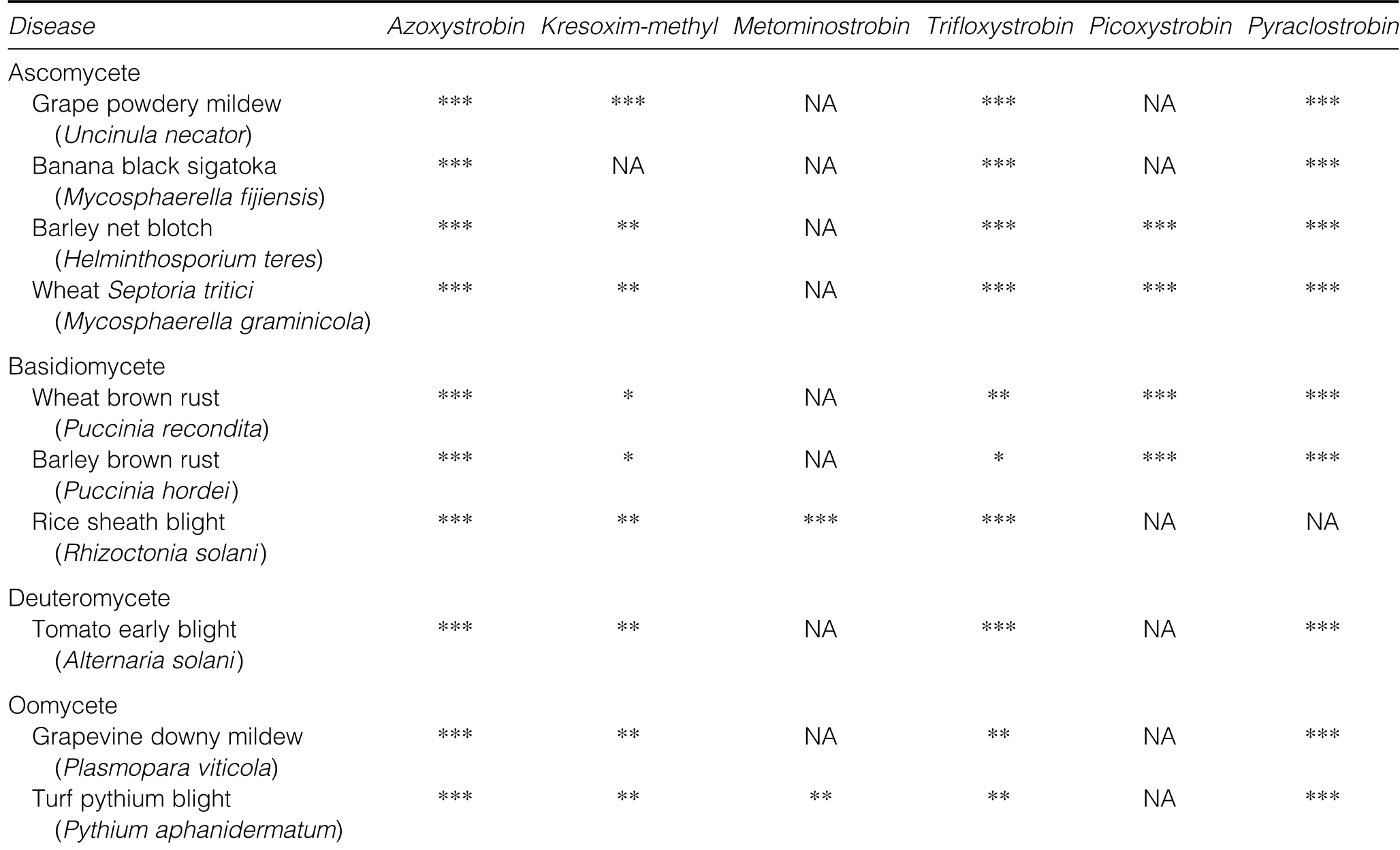 Table: Comparative efficacy of different strobilurins across various fungal diseases.
The Achilles' Heel: Resistance
Because Strobilurins target a very specific point (single-site), fungi have evolved. The most notorious change is the G143A mutation in the cytochrome b gene. A single amino acid swap from glycine to alanine prevents the fungicide from binding, rendering it ineffective. This has necessitated the use of mixtures and strict "anti-resistance" strategies by the Fungicide Resistance Action Committee (FRAC).
Conclusion and Future Outlook
The Strobilurins remain a SOTA benchmark in agrochemistry. While resistance remains a hurdle, their ability to increase food production through both disease control and physiological enhancement is unparalleled. Future research is now shifting toward finding the "next Strobilurin"—molecules with the same broad-spectrum power but with multi-site targets to circumvent the resistance trap.
Takeaway: The success of this class proves that looking to natural "chemical warfare" in the forest provides the most robust blueprints for modern agricultural technology.