
Not All Networks Are Created Equal: Mapping Structural Heterogeneity in Word-of-Mouth Marketing
Identifying Structural Heterogeneities between Online Social Networks for Effective Word-of-Mouth Marketing
This paper investigates structural heterogeneities across four distinct product-category online social networks (Electronic Products, Cosmetics, Travel, and Movies/Music) using Social Network Analysis (SNA). By analyzing blog interactions on Taiwan's Wretch platform, it identifies significant variations in network density and connectivity, establishing that product category fundamentally dictates the topology of Word-of-Mouth (WOM) dissemination.
TL;DR
Marketers often treat all social networks as the same "crowd," but this paper proves that different product communities have radically different "skeletons." Using SNA, the authors reveal that a Cosmetics social network is a tightly-knit web where information flies instantly, while an Electronic Products network is a sparse, fragmented landscape. Understanding these structural differences is the secret to effective Word-of-Mouth (WOM) marketing.
The "One-Size-Fits-All" Marketing Trap
In an era where digital ad spending is soaring, word-of-mouth remains the holy grail of marketing. However, the authors argue that the industry has a blind spot: Network Structure. Most strategies focus on who is talking (influencers) rather than how the room is shaped (topology).
Why does this matter? If you spark a conversation in a dense network, it becomes a wildfire; in a sparse network, it dies out in a corner. The authors set out to prove that the "shape" of these virtual communities depends heavily on the product category being discussed.
Methodology: The Anatomy of a Digital Community
The research analyzed data from Wretch, once Taiwan’s most popular social networking site, focusing on four sectors:
- Electronic Products
- Cosmetics
- Travel
- Movies/Music
By using Social Network Analysis (SNA) and the UCINET software, they mapped three types of connections: responses, citations, and recommendations. They looked for the "DNA" of these networks through metrics like Density (how many people are connected), Cohesion (the strength of those bonds), and Centrality (who holds the power to mediate information).
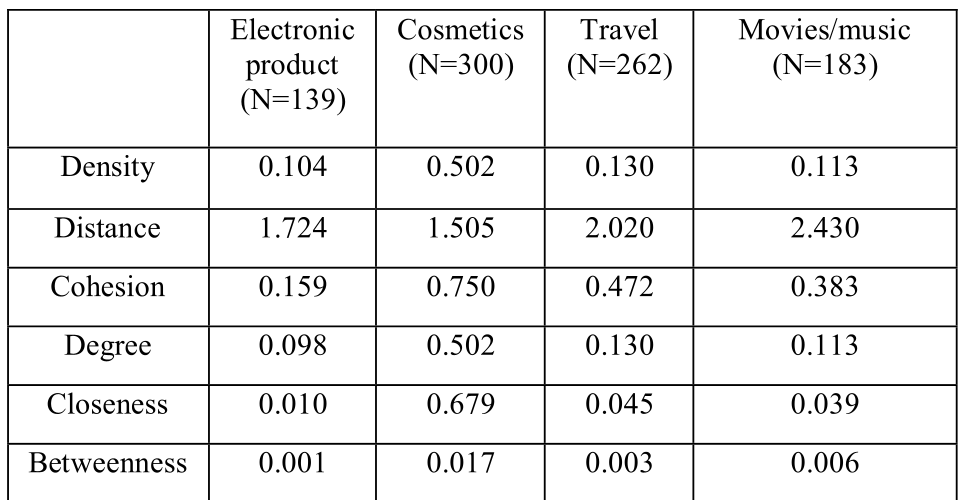 Table 1: Quantifying the vast structural differences between product categories.
Key Insights: Cosmetics vs. Electronics
The results revealed a fascinating structural divide:
- The Cosmetics "Powerhouse": This network is a model of high efficiency. With a Density of 0.502, over half of all possible connections are active. Its Cohesion (0.750) and high Closeness Centrality (0.679) suggest that members don't just know each other; they are "close" enough to transmit information with minimal lag.
- The Electronic Fragment: Surprisingly, the electronics community was the most disconnected. Its Density (0.104) is 5x lower than cosmetics. It lacks a cohesive center, meaning information travels slowly and often fails to bridge different sub-groups.
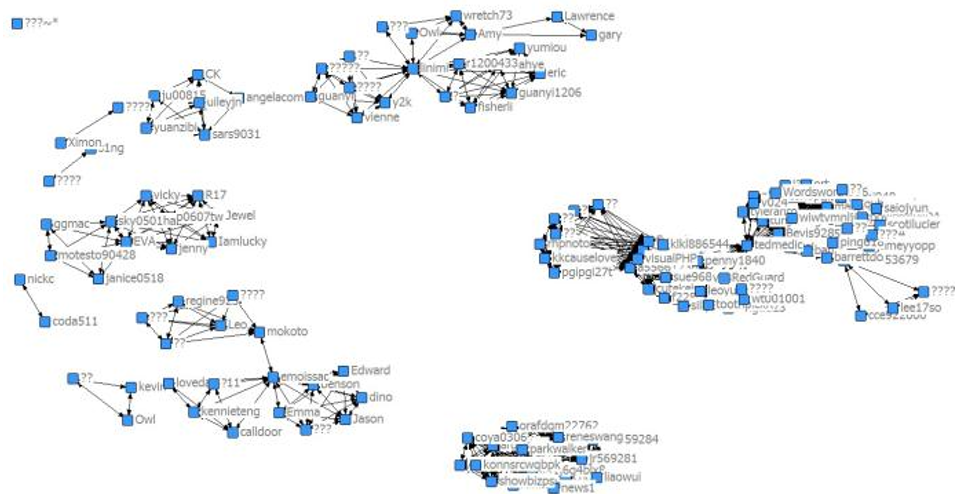 Figure 1 & 2: A visual comparison shows the sparse "forest" of electronics (left/top) vs. the dense "supercluster" of cosmetics (right/bottom).
Strategic Implications
The "Structural Heterogeneity" identified here means that your viral marketing playbook must change based on what you sell:
- For High-Cohesion Networks (Cosmetics/Travel): Focus on widespread community engagement. Because the network is so tight, a single influential seed can reach the entire cluster rapidly.
- For Sparse Networks (Electronics/Movies): Focus on Betweenness. You need to find the "bridge" nodes—the rare individuals who connect two separate islands of users. Without these mediators, your marketing message remains trapped in a single silo.
Critical Perspective & Future Outlook
Takeaway: This work is a crucial reminder that the "Social" in Social Media is governed by the Product. Consumers interact differently when discussing a smartphone versus a lipstick.
Limitations: The study uses data from a specific 2010 Taiwanese blog context. In today's algorithmic environment (TikTok, Instagram), the network structure is often "artificial" or algorithm-driven rather than purely organic social ties.
Future Research: A modern extension of this work would be to look at how AI recommendation engines alter these natural structural heterogeneities. Do algorithms force a "sparse" electronics network to become "dense," or do they further fragment it into echo chambers?
Conclusion
Effective WOM marketing isn't just about the message; it's about the medium's architecture. By identifying structural heterogeneities, marketers can move from "spraying and praying" to precision-engineered viral campaigns that respect the unique topology of their target community.