
Decoding Sobriety: A Structured Machine Learning Approach to AUD Recovery
A Structured and Linguistic Approach to Understanding Recovery and Relapse in AA
This paper presents a unified unified modeling framework using Hinge-Loss Markov Random Fields (HL-MRFs) to predict recovery and relapse in Alcoholics Anonymous (AA) members. By analyzing Twitter social networks and Reddit recovery forums, the authors achieve SOTA predictive performance (AUC-ROC up to 0.903 on Twitter and 0.836 on Reddit) using a combination of structural dependencies and fine-grained linguistic features.
Executive Summary
Alcoholism, or Alcohol Use Disorder (AUD), remains a global crisis, but the road to recovery is often hidden in plain sight—within the digital footprints of social media. This research presents a sophisticated framework using Hinge-Loss Markov Random Fields (HL-MRFs) to predict recovery and relapse among Alcoholics Anonymous (AA) participants. By synthesizing social network structures from Twitter with deep linguistic patterns from Reddit, the authors developed a model that doesn't just count keywords, but understands the social and contextual "why" behind a user's journey.
The Problem: Beyond the 'Bag of Words'
Traditional sentiment analysis or keyword-based models fail in addiction research because recovery language is inherently contradictory. A user might say, "I thought about drinking yesterday," which contains "drinking" and "yesterday" but signifies a successful resistance. Similarly, social support is a dual-edged sword; being "active" on Twitter matters less than who you are interacting with. Prior work lacked the relational logic to distinguish between a supportive sober community and a toxic "pro-drinking" social circle.
Methodology: The Power of Structured Logic
The researchers chose Probabilistic Soft Logic (PSL) to build their HL-MRFs. Unlike deep learning "black boxes," PSL allows for the creation of human-readable logical rules that the model uses to reason.
1. The Interaction Model (Twitter)
On Twitter, the model looks at friendship dyads. It posits that if an AA member retweets a friend’s post about "shots" or "bars," their own probability of recovery drops.
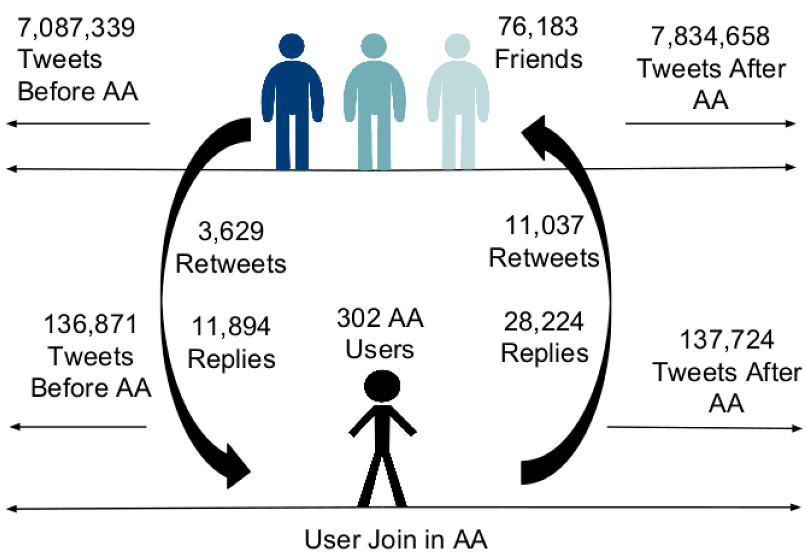 Fig 1: Capturing the transition from alcohol-heavy social circles to sober-heavy circles.
2. The Sentence-Level Context (Reddit)
For verbose Reddit posts, the authors used a dependency parser to extract:
- Perspective: Is the user talking about themselves (1st person) or giving advice (2nd person)?
- Tense/Temporal Context: Is the "relapse" happening now, or was it 10 years ago?
- Modifiers: Distinguishing "not drinking" from "started drinking."
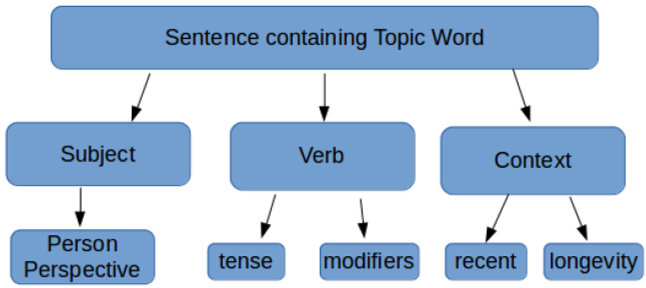 Fig 2: How the model deconstructs a sentence to find the true intent.
Experiments & Key Findings
The results confirm that context is king. In the Twitter dataset, the PSL model achieved an AUC-ROC of 0.903, a massive leap over the 0.711 achieved by standard Logistic Regression.
One of the most profound insights was the 90-day milestone. The researchers found that training the model on data from the first 90 days after joining AA was a better predictor of 1-year sobriety than using the full year's data. This suggests that the "digital signals" of success or failure are most concentrated in the early, fragile stages of recovery.
| Metric | Logistic Regression | PSL-Twitter (Proposed) |
|---|---|---|
| AUC-ROC | 0.711 | 0.903 |
| AUC-PR (Recovery) | 0.580 | 0.755 |
In the Reddit analysis, the "fine-grained" approach proved essential for the "Relapse" (Negative) class. Standard models often misclassify "advice-givers" (who use words like 'relapse' to warn others) as relapsing themselves. The PSL-Reddit-2 model, by using dependency parsing, correctly identified these users.
Critical Insight & Future Outlook
This work demonstrates that Interpretability and Performance are not mutually exclusive. By using HL-MRFs, the authors created a model that Clinicians could actually use—because it explains its reasoning (e.g., "This user is at risk because their recent retweets have shifted toward pro-alcohol sentiment").
Limitations: The study relies on self-disclosure, which may suffer from social desirability bias (users lying about their sobriety). Future iterations could integrate "stealth" markers—changes in sleep patterns, linguistic entropy, or cognitive complexity—to detect relapse even when the user isn't mentioning it explicitly.
Conclusion: This is a blueprint for the next generation of digital health interventions. By moving from "mention counting" to "structured reasoning," we can provide a safety net for those in the most vulnerable stages of their recovery journey.