
The Celebrity Next Door: How Student Athletes Navigate the Facebook Fishbowl
Student athletes on facebook
This study investigates the distinct social media behaviors of student athletes on Facebook, treating them as a "lead case" for high-visibility users. It compares their network size, usage patterns, and impression management strategies against the general student population at a large university.
TL;DR
Student athletes occupy a unique middle ground between average citizens and public celebrities. A study by Michigan State University researchers reveals that while athletes manage much larger social networks and face intense surveillance from coaches and fans, their digital lives are surprisingly similar to those of regular students. They serve as a "lead case" for how we all might behave when our private social lives are subjected to professional scrutiny.
Background: Athletes as Digital Pioneers
In the hierarchy of campus life, student athletes are often the most visible representatives of their institution. They aren't just students; they are brand ambassadors bound by "good behavior" pledges and strict conduct codes. This study positions them as a proxy for any high-status user—like a CEO or a public official—who must balance personal connection with professional risk.
The Visibility Paradox: Larger Networks, Similar Habits
The research highlights a fascinating contrast. Student athletes have significantly more "Friends" than the average student, yet they don't spend more time on the site.
Key Statistical Differences
| Metric | Student Athletes | General Population |
|---|---|---|
| Average Friend Count | 565 | 333 |
| Daily Usage (Minutes) | 88 | 94 |
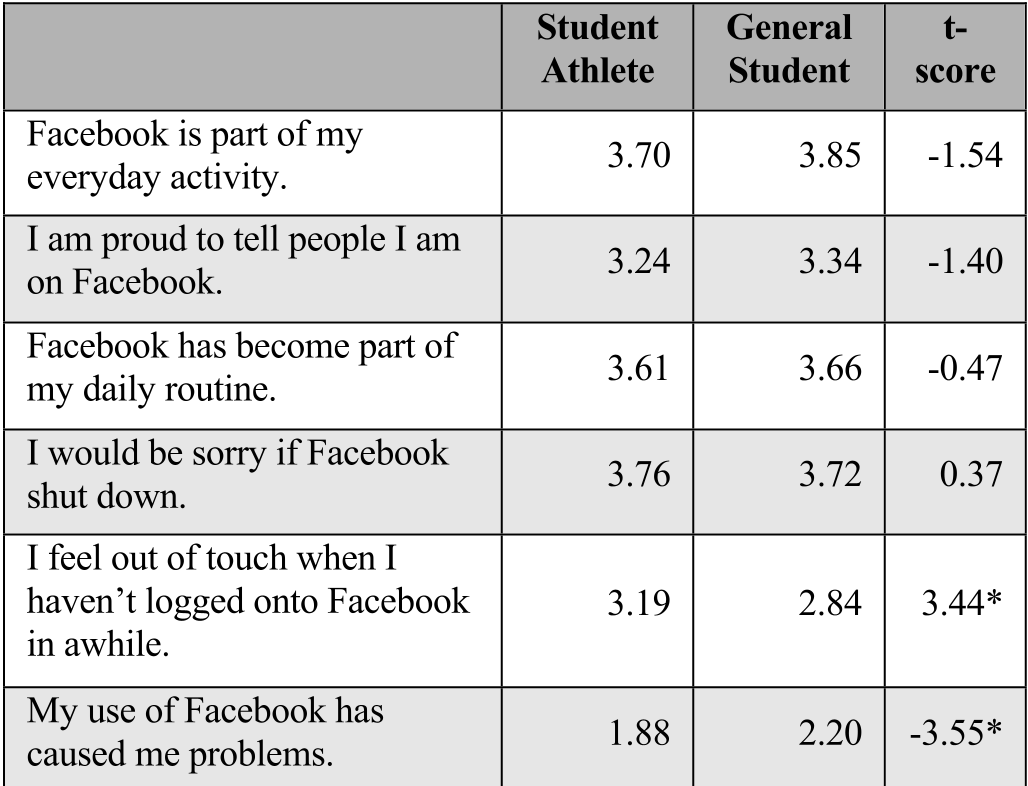
The t-test results () prove that while their reach is wider, their engagement depth is normalized. Interestingly, athletes were less likely to report that Facebook had caused them problems, suggesting that the "horror stories" shared by coaches effectively act as a preventative measure.
Methodology: Surveillance and Norms
The researchers didn't just look at what athletes did; they looked at who they thought was watching.
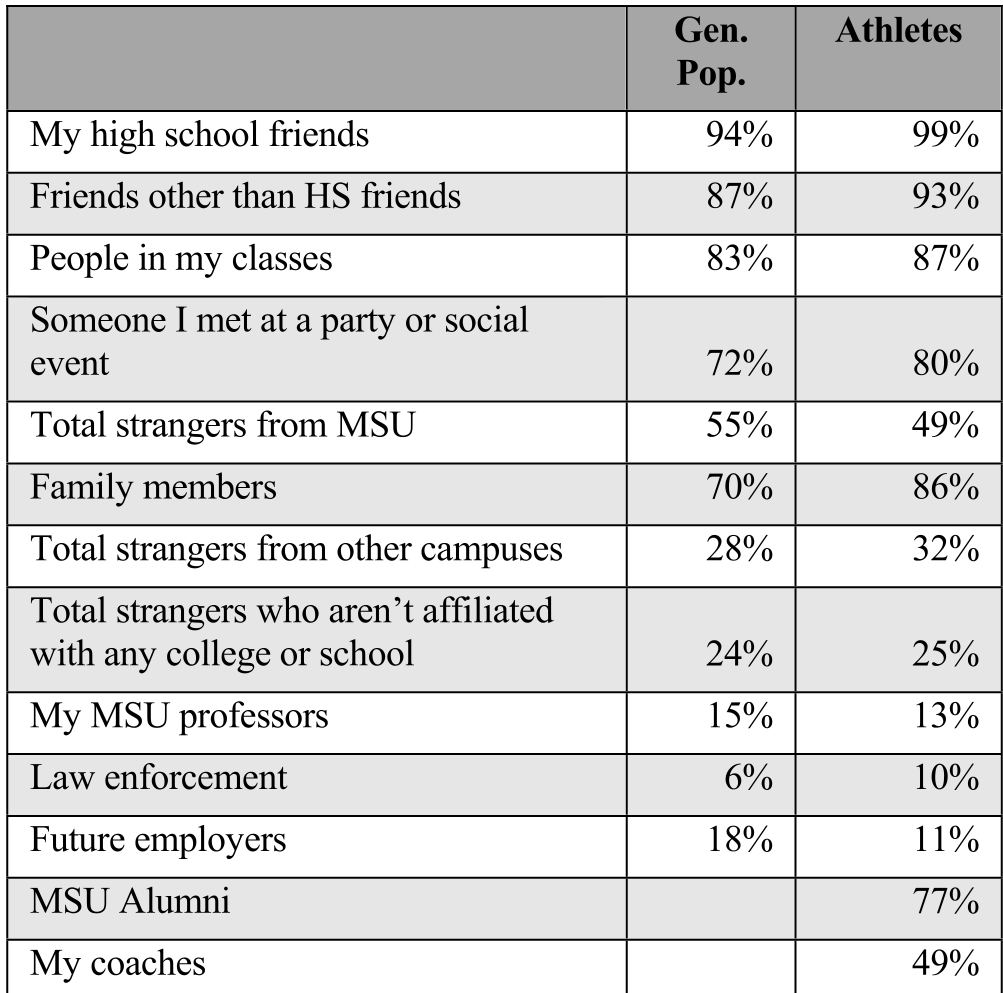
- The Coaches' Shadow: 49% of athletes reported their coaches had viewed their profile.
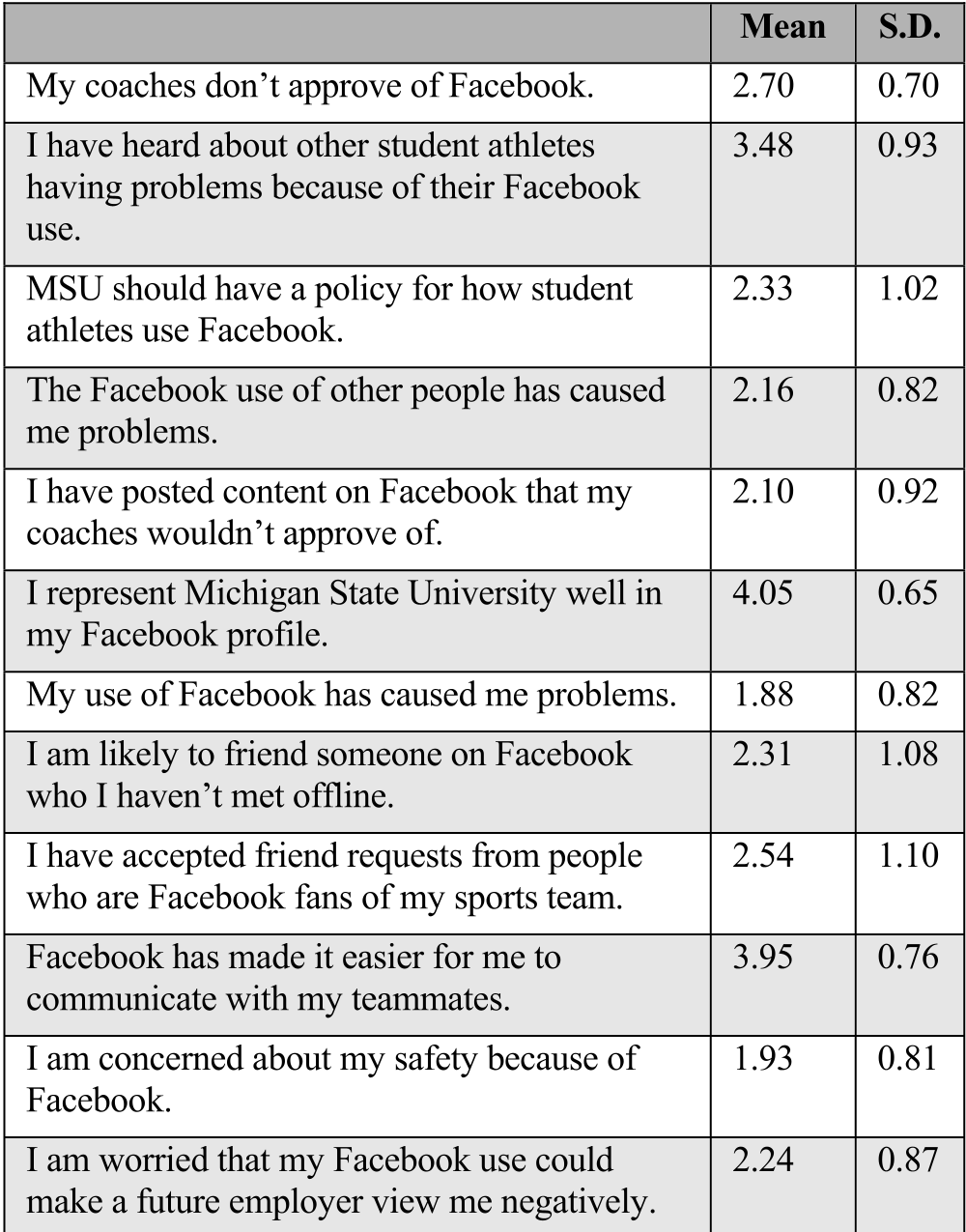
- The "Smart" Strategy: Athletes developed "smart" behaviors, such as scrubbing "party pictures" and using privacy settings to compartmentalize their audience.
- Team Building: Beyond risk, the study found some teams used Facebook strategically—coordinating off-season workouts or mentoring younger recruits.
Methodology and Team Influences
One of the most profound insights is the role of Group Norms. Different sports had vastly different cultures. For example, men and those in "popular" sports (Football/Basketball) were more likely to accept friend requests from total strangers or fans. Meanwhile, some teams utilized Facebook for competitive motivation (e.g., the rowing team posting workout results).
Deep Insight: Are We All Celebrities Now?
The study concludes with a thought-provoking observation: despite the intense pressure on athletes, most of their attitudes toward Facebook mirrored the general population.
The authors suggest that "everyone, to some extent, is a celebrity in their own social network." In the age of digital footprints, the impression management strategies once reserved for the "campus famous" are becoming survival skills for everyone. Whether you are an athlete worried about a coach or a regular student worried about a future employer, the challenge is the same: managing a multi-faceted identity in a single, collapsed digital context.
Conclusion & Future Outlook
While this study was conducted in the Facebook era (2010), its lessons on managed visibility are more relevant than ever in the age of LinkedIn "personal branding" and Instagram "curation."
- The Takeaway: High status doesn't change why we use social media; it just raises the stakes of doing it wrong.
- Limitations: The study is localized to one university and a specific era of Facebook's privacy architecture.
- Future Work: How do these dynamics change on platforms like Snapchat or "Finstas" (fake Instagrams), where anonymity and ephemerality are built-in features?