
MUSKUP: Unveiling Student Success Patterns through Integrated Knowledge Discovery
A new student performance analysing system using knowledge discovery in higher educational databases
This paper introduces MUSKUP (Mugla University Student Knowledge discovery Unit Program), an integrated KDD system designed to analyze student performance in higher education. Using Microsoft Decision Trees (MDT) on demographic and academic data from Mugla University, the study identifies key success predictors and achieves significant predictive capacity (Lift values of 1.74 and 1.36).
TL;DR
Researchers have developed MUSKUP, a specialized software system that integrates the entire Knowledge Discovery in Databases (KDD) pipeline with SQL Server to analyze student performance. By applying Microsoft Decision Trees to university demographic data, the study identifies that a student's registration type and family income level are the strongest predictors of whether they will graduate with honors or meeting minimum GPA requirements.
Background & Positioning
In the landscape of educational technology, we are moving from "Data Recording" to "Data Intelligence." Universities sit on goldmines of administrative data that are rarely used for strategic academic consulting. This paper occupies a critical spot in Educational Data Mining (EDM), transitioning from purely theoretical KDD frameworks to a functional, integrated software implementation (MUSKUP) that bridges the gap between database management and predictive modeling.
The Problem: The Hidden Intelligence in Administrative Silos
Most academic data is used for simple record-keeping: transcripts, registration, and financial aid. However, the complex interplay between a student's background (high school type, family income, entrance exam scores) and their final GPA remains opaque to administrators. Traditional statistics often fail to capture the non-linear relationships in these large, heterogeneous datasets. The authors argue that a structured, automated KDD process is required to move from raw data to "meaningful and operational information."
Methodology: The MUSKUP Architecture
The core innovation is the MUSKUP (Mugla University Student Knowledge discovery Unit Program). Unlike general-purpose DM tools, MUSKUP is tailored for the educational domain, streamlining three main phases:
- Preparation: Cleaning records with >80% null values and performing "Type 1" (categorization) and "Type 2" (feature engineering, e.g., calculating Age from birthdate/registration date) transformations.
- Modeling: Utilizing the Microsoft Decision Trees (MDT) algorithm. The choice of Decision Trees is strategic—it produces interpretable rules that human counselors can actually understand and act upon.
- Validation: Using Lift Charts to measure how much better the model performs compared to a random guess.
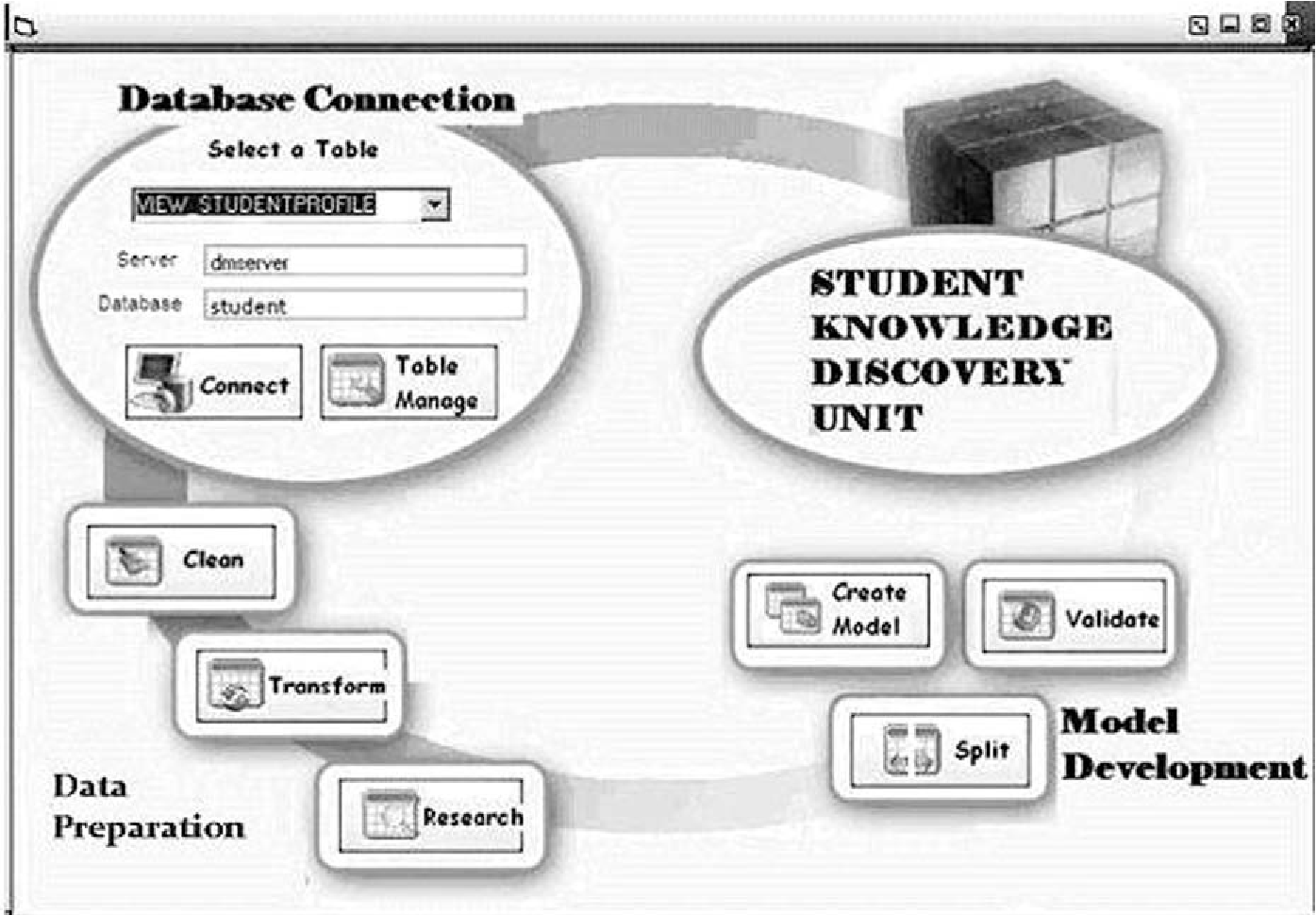 Figure: The MUSKUP interface showing the sequential KDD workflow from table management to validation.
Key Insights: What Truly Drives Success?
The study generated two distinct models based on GPA thresholds (GPA ≥ 2.0 for Model I and GPA ≥ 3.0 for Model II).
Model I: Minimum Graduation Criteria
The most influential columns were YEARECNO (years spent at school) and REGTYPE (registration type). Interestingly, students who transferred from other universities or had specific intensive language prep (English) showed significant differences in success probabilities, likely due to the rigorous adaptation training required for such tracks.
Model II: Achieving Honors (GPA ≥ 3.0)
When shifting the focus to high achievers, FMINCOME2 (Family Income) emerged as the dominant factor. The model specifically identified that students from middle-income families (400–600 TL) had a higher correlation with academic success compared to both the very low and very high-income brackets.
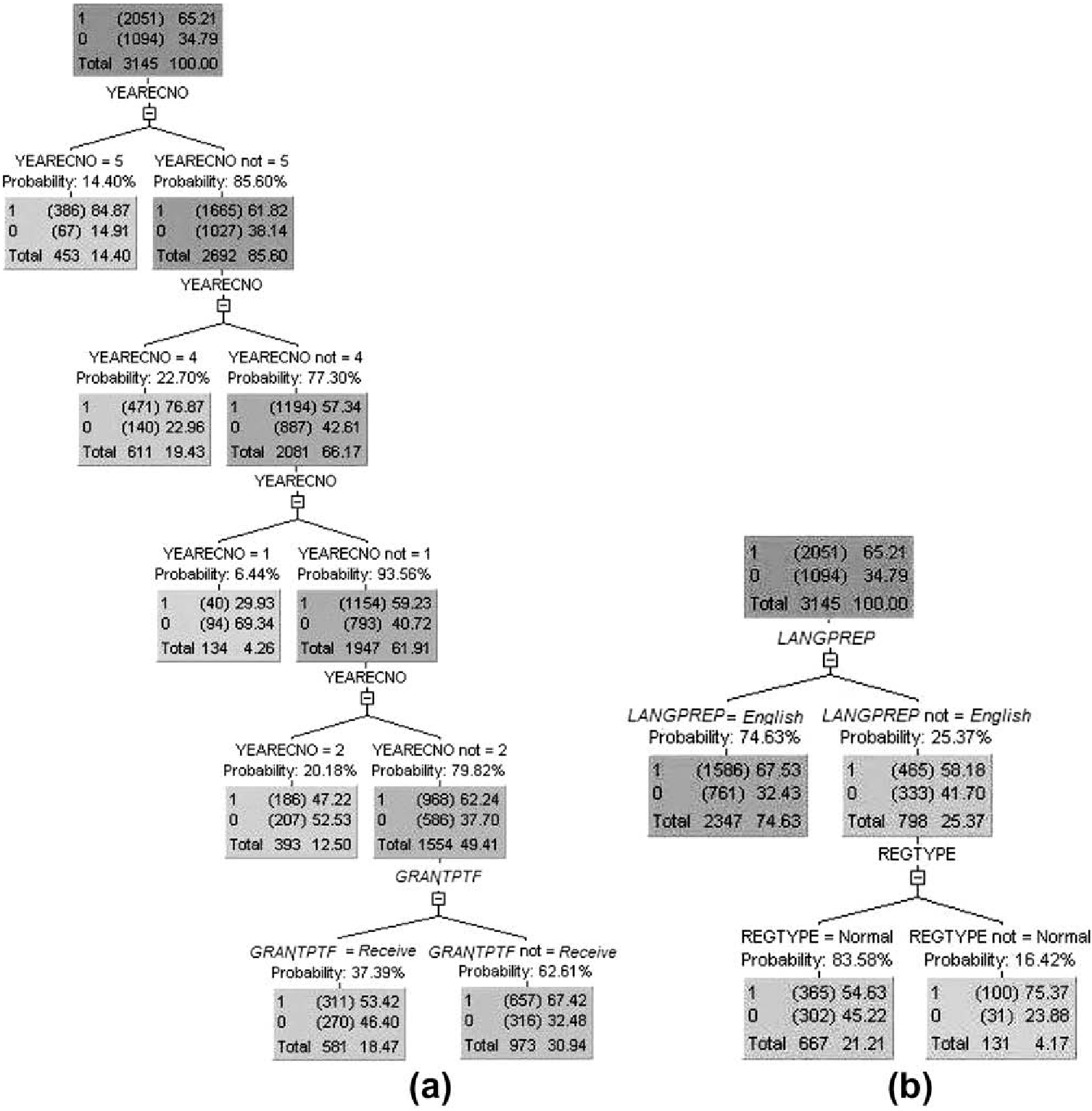 Figure: Success indicators mapped through the Decision Tree algorithm.
Experimental Validation
To verify the model's reliability, the authors used Lift Graphics.
- Model I (GPA ≥ 2.0): Achieved a Lift of 1.74. This means that by using the model, the university can identify 87% of successful students by only looking at 50% of the population.
- Model II (GPA ≥ 3.0): Achieved a Lift of 1.36. The lower lift is attributed to the "class imbalance" problem—only 11% of students achieved honor degrees, making it harder for the algorithm to extract patterns compared to the 65% success rate in Model I.
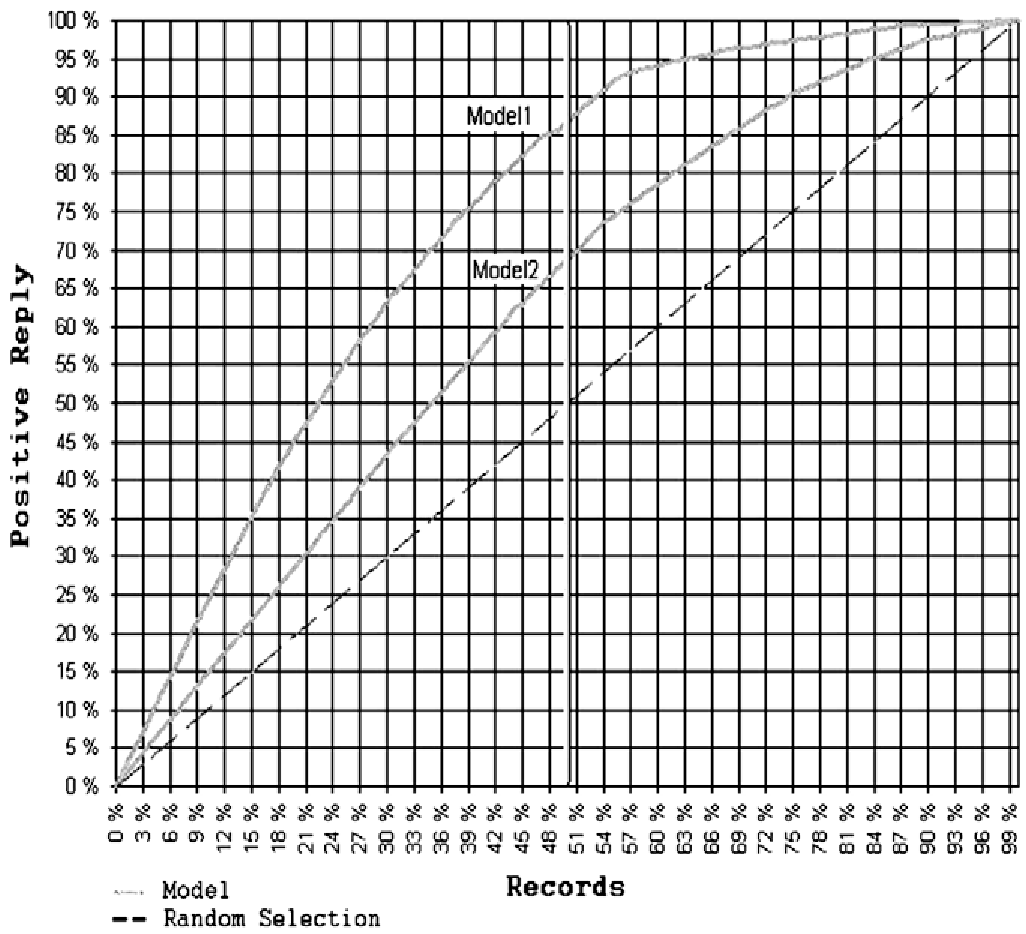 Figure: Lift Charts indicating the predictive capability of the two models compared to a random baseline.
Critical Analysis & Conclusion
Takeaway
MUSKUP proves that a consolidated KDD software can effectively turn university databases into predictive assets. By identifying that socio-economic factors (income) and administrative factors (registration type) dictate performance, universities can provide targeted support to "at-risk" groups before their grades drop.
Limitations
- Data Quality: The authors noted that missing data in several columns limited the system's accuracy.
- Algorithm Scope: While MDT is interpretable, newer ensemble methods (Random Forest, XGBoost) might offer higher accuracy, albeit with less visual simplicity.
Future Outlook
The integration of KDD with DBMS is a blueprint for the future of "Smart Campuses." Future iterations should incorporate real-time data feeding to provide dynamic academic counseling dashboards for both students and advisors.