
Beyond Utility: Why Students Actually Use Facebook for Learning
Understanding students’ behavioural intention to use facebook as a supplementary learning platform: A mixed methods approach
2021-05-15
Summary
Problem
Method
Results
Takeaways
Abstract
This study investigates the determinants of university students' intention to use Facebook as a supplementary learning platform using an exploratory sequential mixed methods design. By integrating pedagogical, social, and technological affordances into an extended Technology Acceptance Model (TAM), the authors demonstrate that perceived enjoyment and ease of use are the primary drivers of adoption.
## TL;DR
Does a student use Facebook for a course because it's "useful" or because it’s "fun"? A new study by Hoi and Hang (2021) reveals a surprising truth for educators: in the digital classroom, **enjoyment and ease of use outweigh perceived academic utility**. By applying a mixed-methods approach to 407 students, the research suggests that the "social" and "pedagogical" affordances of Facebook drive adoption by making learning feel less like a chore and more like a community experience.
## The Motivation: The LMS Engagement Gap
University lectures have long been criticized for their one-way delivery. While traditional platforms like Moodle or Blackboard are functional, they often lack the "stickiness" of social media. The authors noticed that while Facebook is ubiquitous, its transition into a *supplementary learning platform* is often rocky due to privacy concerns and distractions. They sought to find the missing link: what actually makes a student *want* to join a course-based Facebook group?
## Methodology: Marrying Qualitative Intuition with Quantitative Rigor
The researchers didn't just guess which factors mattered. They used a two-phase **Exploratory Sequential Mixed Methods** design:
1. **Qualitative Phase**: Interviews with 11 students identified three pillars—**Pedagogical** (sharing resources), **Social** (building relationships), and **Technological** (interface ease) affordances.
2. **Quantitative Phase**: They built an extended Technology Acceptance Model (TAM) and tested it on 407 participants. Distinctively, they used **Rasch Analysis** to ensure their survey data was statistically "clean" before running Path Modeling.
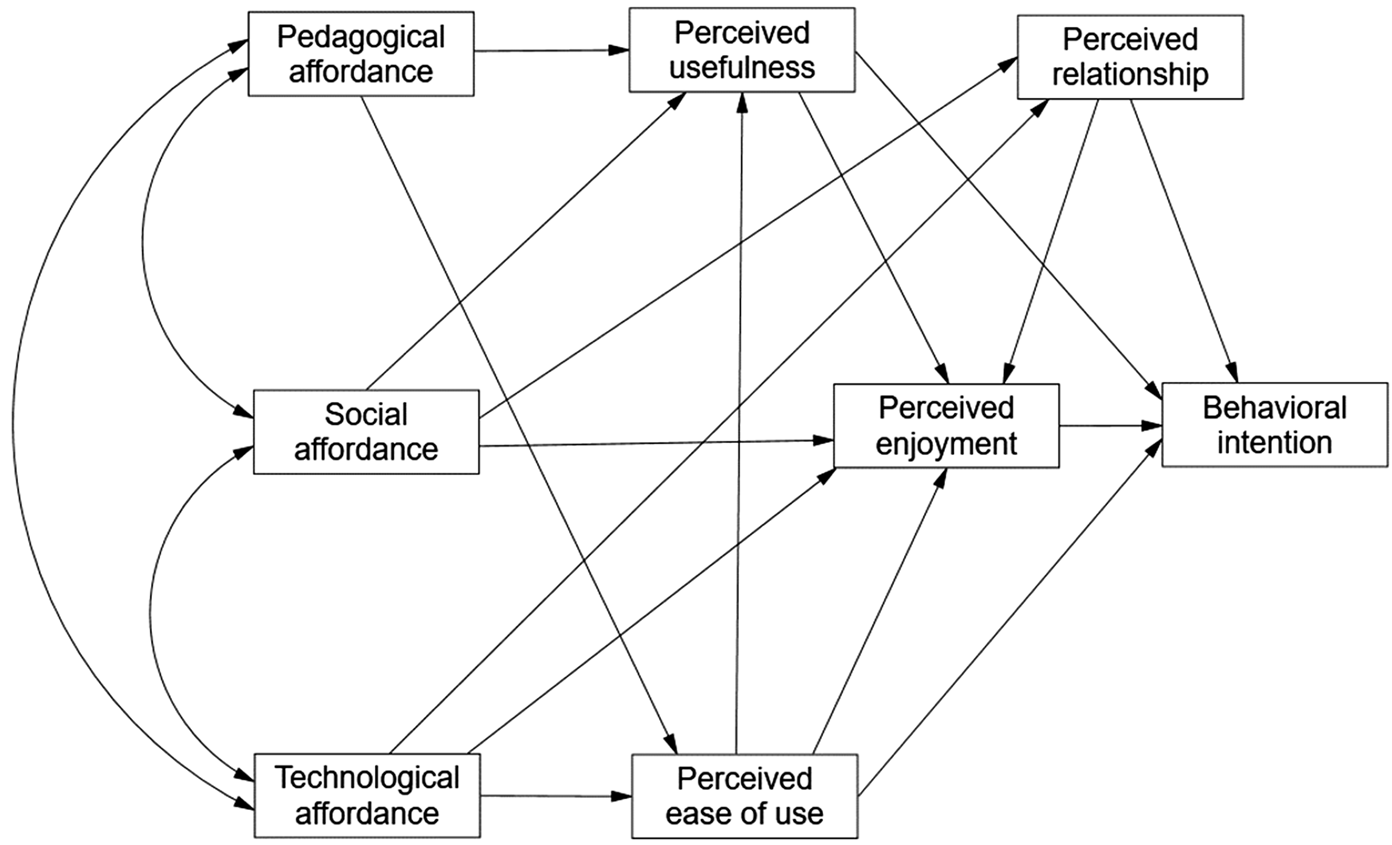
*Figure 1: The hypothesized structural model integrating Facebook affordances into the TAM framework.*
## Key Insights: The "Enjoyment" Factor
The most striking finding was the total mediation of **Perceived Enjoyment**.
* **The Usefulness Paradox**: In many tech-adoption models, "Perceived Usefulness" is king. Here, it had **no significant direct effect** on intention. Students didn't use the Facebook group because they thought it would objectively make them smarter; they used it because the interface was seamless (Ease of Use) and the environment was safe and interactive (Enjoyment).
* **Social Affordances as a Bridge**: The ability to view profiles and chat informally reduced the "power distance" between teachers and students, creating a "social constructivist" community where learning happened organically.
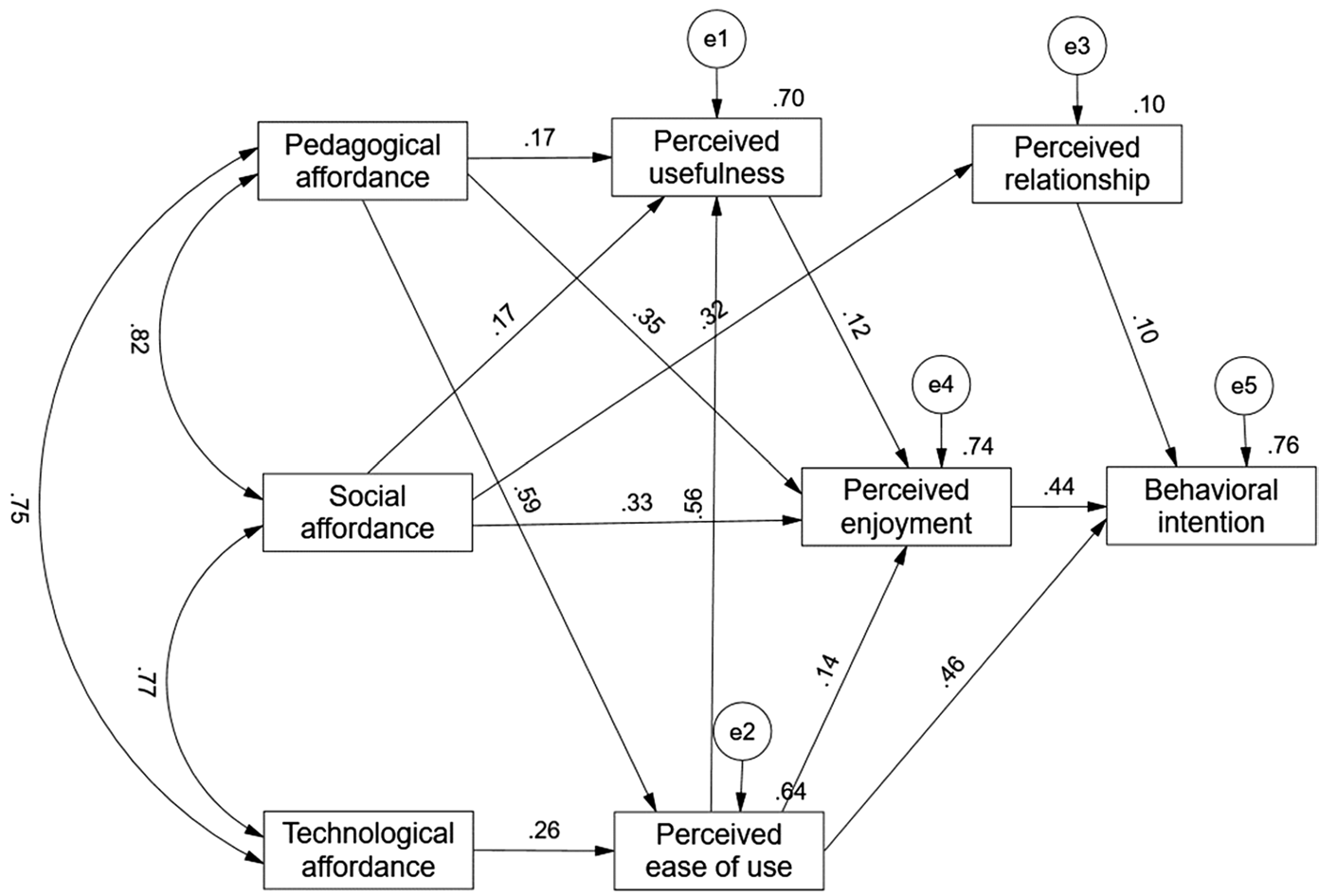
*Figure 2: The final validated path model. Note the strong coefficients for Ease of Use (0.46) and Enjoyment (0.44) leading to Intention.*
## Critical Analysis & Conclusion
This research provides a reality check for "EdTech" developers and teachers. If a platform is useful but "heavy" or socially isolating, students will resist it.
**Limitations to Consider**:
* **The Honeymoon Effect**: This study was cross-sectional and conducted early in the semester. It is possible that as exams approach, "Usefulness" might take over as the primary motivator once the novelty of "Enjoyment" wears off.
* **Contextual Specificity**: Conducted in Vietnam, cultural factors regarding student-teacher hierarchies might influence how "Social Affordances" are perceived compared to Western contexts.
**The Takeaway for Educators**:
Don't just post PDFs. Use emoticons, encourage peer-to-peer chat, and leverage the "hedonic" side of technology. If you make the learning environment enjoyable and easy to navigate, engagement will follow naturally.