
Personalized Affective Learning: The Power of Voluntary Self-Labels
Students' emotional self-labels for personalized models
The paper investigates the use of students' emotional self-labels to build personalized AI models for emotional engagement in digital learning. By comparing voluntary and mandatory self-reporting methods against human-expert labels, it identifies voluntary self-labels as a more accurate proxy for Ground Truth in Intelligent Tutoring Systems (ITS).
TL;DR
To create Truly Intelligent Tutoring Systems (ITS), we must move beyond generic "one-size-fits-all" emotion models. This research from Intel and its partners demonstrates that voluntary student self-reports are a surprisingly reliable source of truth for personalizing AI models, outperforming mandatory "pop-up" checks and aligning closely with expensive human-expert analysis.
Background: Why Generic AI Fails Students
Current AI models used in digital learning struggle with accuracy. A model might detect "confusion" in one student that is actually "deep concentration" in another. To fix this, we need personalized models. However, personalizing a model requires data labeled specifically for that individual. If we can't afford to have experts watch every student, how do we get those labels? The answer lies in the students themselves.
Motivation: The Human-in-the-Loop Challenge
The researchers identified a critical gap: generic models aren't accurate enough to trigger interventions (like changing the difficulty of a math problem). They hypothesized that if students could label their own emotions ("Satisfied", "Bored", "Confused"), this data could be used to train personalized engagement models. The challenge was determining how to collect these labels without disrupting the learning process or skewing the data.
Methodology: Voluntary vs. Mandatory Reporting
The study involved 17 students in a 9th-grade math course. The researchers compared two distinct ways of collecting emotional data:
- Mandatory Labels: The system interrupted students at random intervals with a pop-up window.
- Voluntary Labels: A persistent, non-intrusive window allowed students to report their feelings whenever they chose.
To verify the accuracy of these reports, the team used the Human Expert Labeling Process (HELP), where five experts painstakingly reviewed 113 hours of video footage to create a "Ground Truth" baseline.
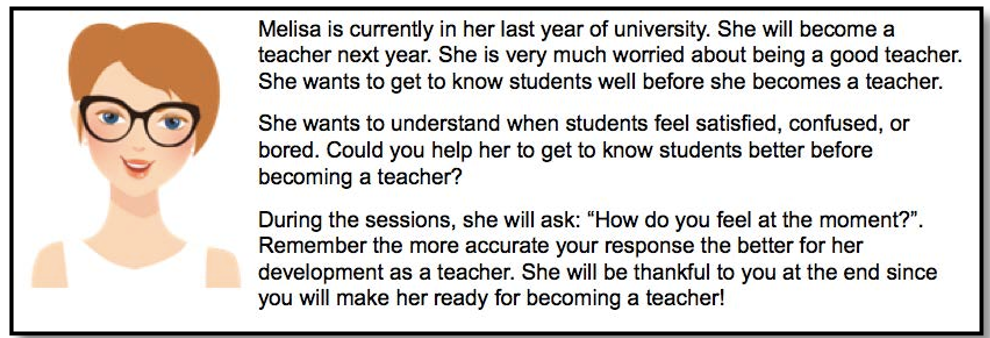 Figure 1: The scenario-based approach used to encourage honest student participation.
Key Results: Truth in Volition
The findings revealed a stark contrast in data quality:
- The Contentment Bias: Under mandatory prompts, students reported being "Satisfied" 39% of the time. However, experts found that students were actually "Bored" much more frequently.
- The Voluntary Advantage: Voluntary self-labels had a 65% overlap with expert labels. Mandatory prompts dropped that agreement to 46%.
- The Boredom Signal: In voluntary mode, students reported being "Bored" (68% of the time), which closely matched the distribution observed by human experts.
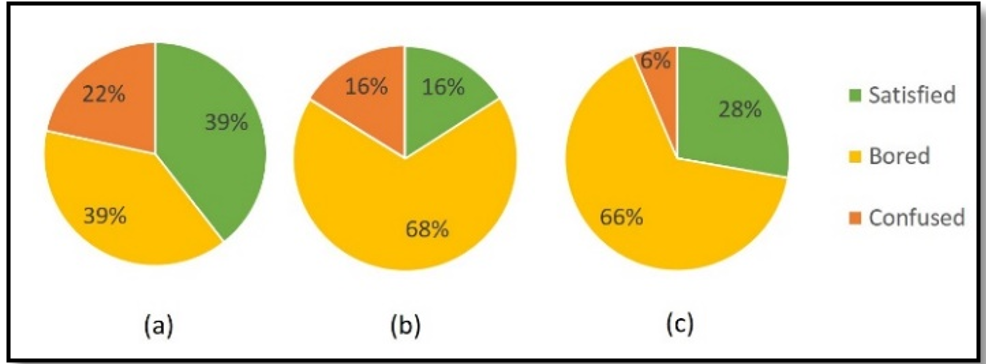 Figure 2: Distribution of states across mandatory, voluntary, and expert labeling.
Critical Analysis & Conclusion
The core takeaway is profound: Students are remarkably good at identifying their own affective states when they aren't being forced to do so.
Why this matters:
- Lowering Barriers: We can train high-performing personalized models without thousands of hours of expert video review.
- System Design: Developers should favor "always-on" but "passive" UI elements for emotion reporting rather than intrusive pop-ups which lead to "form-filling fatigue" or social desirability bias.
Limitations & Future Work:
The study was conducted with a relatively small sample size (17 students). Future research needs to explore if these "self-labels" can be used as the sole training signal for a deep learning model. Can the AI eventually learn to predict these self-labels using only the camera feed (Intel RealSense)? If so, we are one step closer to an AI tutor that truly "understands" how its student feels.
Takeaway
By leveraging voluntary self-reports, we can bridge the gap between "generic" and "personalized" AI, creating educational tools that respond to the student's heartbeat and mindset, not just their test scores.