
Beyond the Label: How Age and Education Shape the "Digital Native" Identity
Do studies level and age matter in learning and social relationship in the assessment of web 3.0? A case study for ‘digital natives’ in Spain
This study investigates how education level and age influence the assessment of "Web 3.0" (Social and Semantic Web) among digital natives in Spain. Using structural equation modeling (SEM) on a sample of students and non-students, it identifies distinct behavioral patterns in how youth utilize social networks and evaluate Internet reliability for academic vs. social purposes.
TL;DR
Is every young person inherently a "tech pro" just because they were born after 1983? This study challenges the myth of the homogeneous "Digital Native." By analyzing Spanish youth, the research reveals that Higher Education is the "secret sauce" that shifts Internet use from simple socializing to sophisticated knowledge gathering, even in regions with lower technological development.
The "Net Generation" Myth
The term "Digital Native" (coined by Marc Prensky) often suggests a monolithic block of tech-savvy youth. However, this paper argues that the reality is far more nuanced. While most young people are comfortable with the "Expressive Internet" (socializing), many struggle with the "Instrumental Internet" (selective searching and identifying reliable sources). The core problem is the processing gap: the difficulty in selecting truthful information amidst the noise of Web 3.0.
Methodology: The SEM Framework
The researchers didn't just look at how much time kids spend online. They built a structural model to see how certain factors influence the final assessment of Web 3.0.
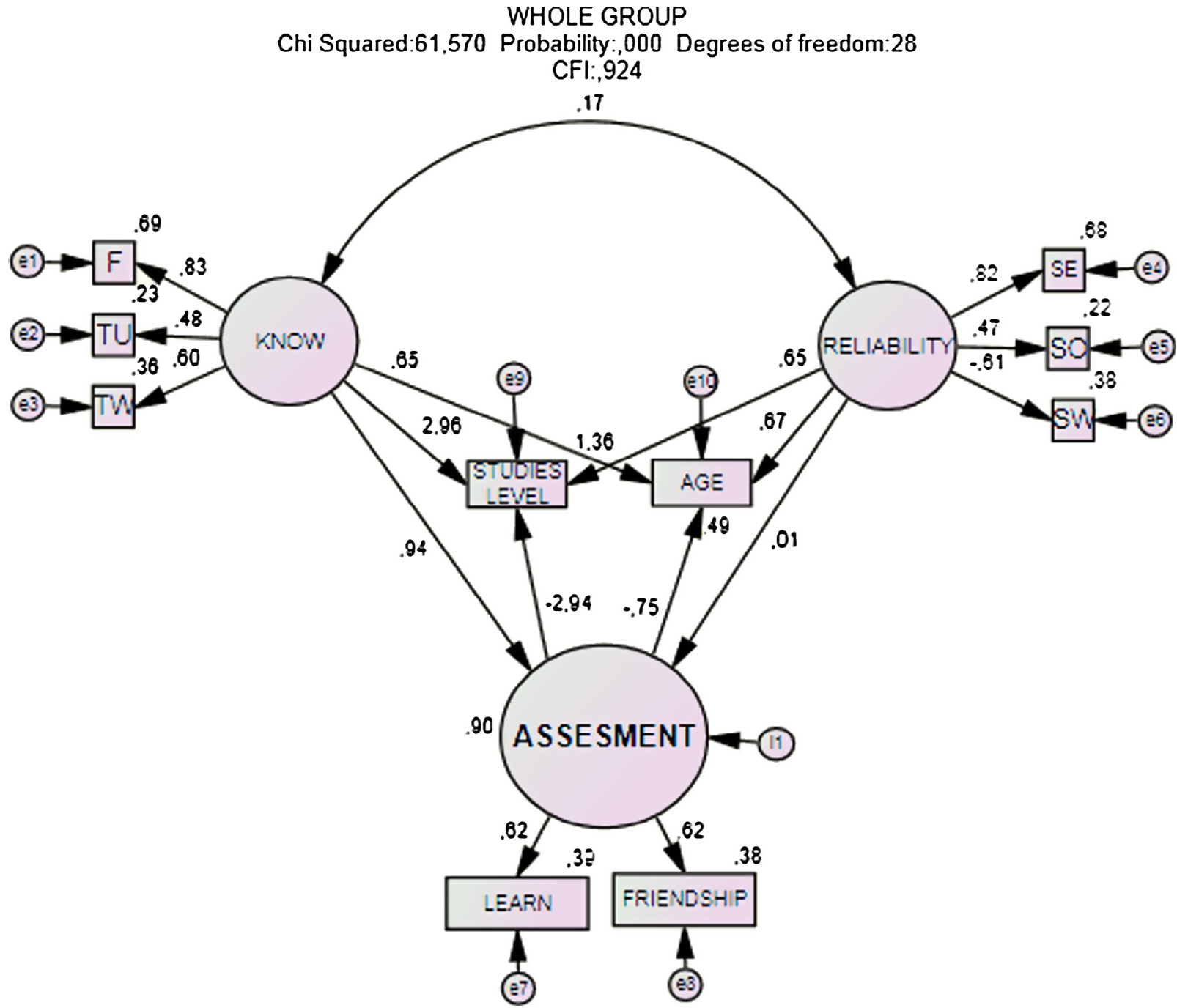
They measured three core dimensions:
- SNS Knowledge: Usage patterns of Tuenti, Facebook, and Twitter.
- Internet Reliability: Efficiency in searches and trust in the Semantic Web.
- End Utility: Is the web for "Friends" or "Knowledge"?
Key Insights: The University Effect
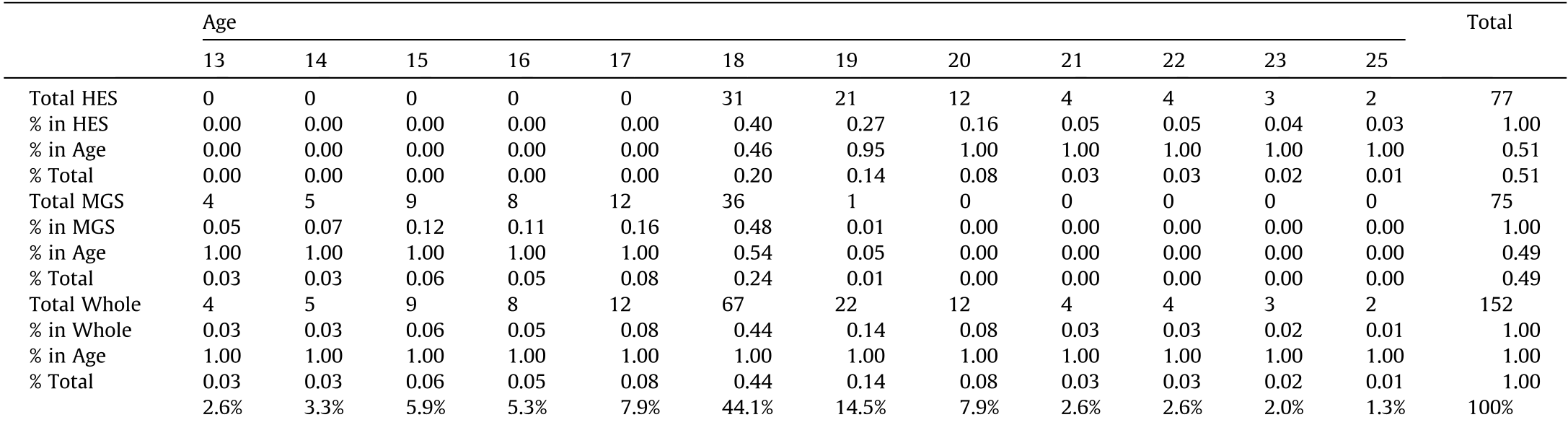
The data shows a fascinating divergence between the Control Group (MGS) and Higher Education Students (HES).
1. The Social Network Shift
Younger teens were heavily reliant on Tuenti (a local Spanish favorite at the time). However, as students entered university, they migrated toward Facebook. The authors suggest that university life demands a more "universal" and "complete" platform that bridges the gap between recreation and organized study groups.
2. Search Efficiency vs. Source Knowledge
One of the most striking findings was the "Reliability Gap":
- University Students prioritized Searcher Efficiency (finding what they need quickly).
- Control Group Users focused more on the Semantic Web but had lower efficiency scores.
- The Paradox: Despite being more tech-literate, university students were more critical and cautious, leading to a "negative" impact of education level on the raw assessment of web reliability—essentially, the more they knew, the more they realized the web's limitations.
Critical Analysis & Conclusion
The study concludes that education level matters more than age. A 20-year-old in university uses the web fundamentally differently than a 20-year-old not in higher education.
The Takeaway for Educators: We cannot assume students know how to use "Web 3.0" for learning just because they can post a selfie. There is a "deep informal learning" happening in social networks that schools need to capture and formalize.
Limitations: The study was conducted in Galicia, one of the less technologically developed regions of Spain. The authors admit this "geographical effect" might explain why "Internet Reliability" didn't correlate as strongly with the overall web assessment—the infrastructure simply wasn't fully there yet in 2012.
Future Outlook: In the age of AI and LLMs (the true Web 3.0/4.0), the need for the "selective judgment" identified in this paper's university group will only become more vital. The ability to filter signal from noise remains the ultimate skill of the modern digital native.