
Unveiling the Digital Shadow: How Your Public Profiles Are Being Linked Across the Web
Studying User Footprints in Different Online Social Networks
This paper introduces an automated framework for cross-platform user identity linkage, specifically focusing on Twitter and LinkedIn. By extracting publicly available digital footprints and employing supervised machine learning classifiers, the authors demonstrate that users can be uniquely identified across diverse social networks with high precision.
TL;DR
In an era of fragmented digital identities, staying anonymous across platforms is harder than it seems. Researchers Anshu Malhotra and team have developed an automated system that links profiles across platforms like Twitter and LinkedIn with 98% accuracy. By analyzing "digital footprints"—public data like usernames, locations, and profile images—the system can deanonymize users even without access to private data like emails or phone numbers.
Background: The End of Platform Silos
Historically, Social Media platforms were seen as isolated silos. What you posted on a professional network like LinkedIn was considered separate from your micro-blogging persona on Twitter. However, this paper demonstrates that the "inter-platform gap" is narrowing. The study is a critical benchmark in Identity Disambiguation, proving that our supposedly disparate online lives are tied together by subtle, public threads.
The Motivation: Why Linkage Matters
The authors identify a dual-edged sword:
- The Benefit: Personalized services, better profile management, and detection of malicious actors.
- The Threat: Identity theft, profile cloning, directed phishing, and "online stalking." For example, the PleaseRobMe attack showed how linking Foursquare check-ins to Twitter could signal when a user was away from home.
Existing methods were limited—they were either not scalable, required private FOAF files, or relied on simple string matching that failed to capture the nuances of human-entered data.
Methodology: Building the Similarity Vector
The core innovation lies in the multi-modal comparison engine. Instead of a binary "Match/Not Match," the system creates a high-dimensional similarity vector:
- UserID & Name: Compared using the Jaro-Winkler distance, optimized for short strings where typos or slight variations occur.
- Description (Bio): Analyzed using TF-IDF, Jaccard similarity, and WordNet Ontologies (to catch semantic similarities, e.g., "Software Engineer" vs "Coder").
- Location: Geocoded into coordinates to calculate physical distance rather than just text matching.
- Profile Image: Processed via gray-scale conversion and Levenshtein distance on pixel vectors.
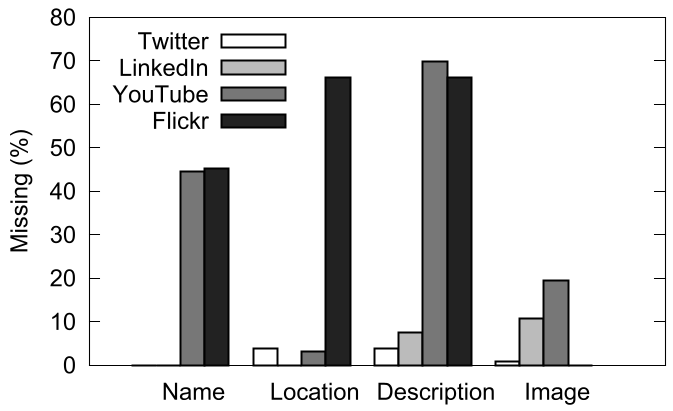 Figure 1: The system architecture showcases the pipeline from raw public data crawling to the final classification engine.
Experiments: Discriminative Power
The study utilized a massive dataset of 29,129 Twitter-LinkedIn pairs. A key finding was the Feature Discriminative Capacity.
Interestingly, while UserID and Name were the heavy hitters, "Number of Connections" was found to be a weak signal. Why? Because social behavior varies: a user might have 500 professional contacts on LinkedIn but only follow 50 people on Twitter.
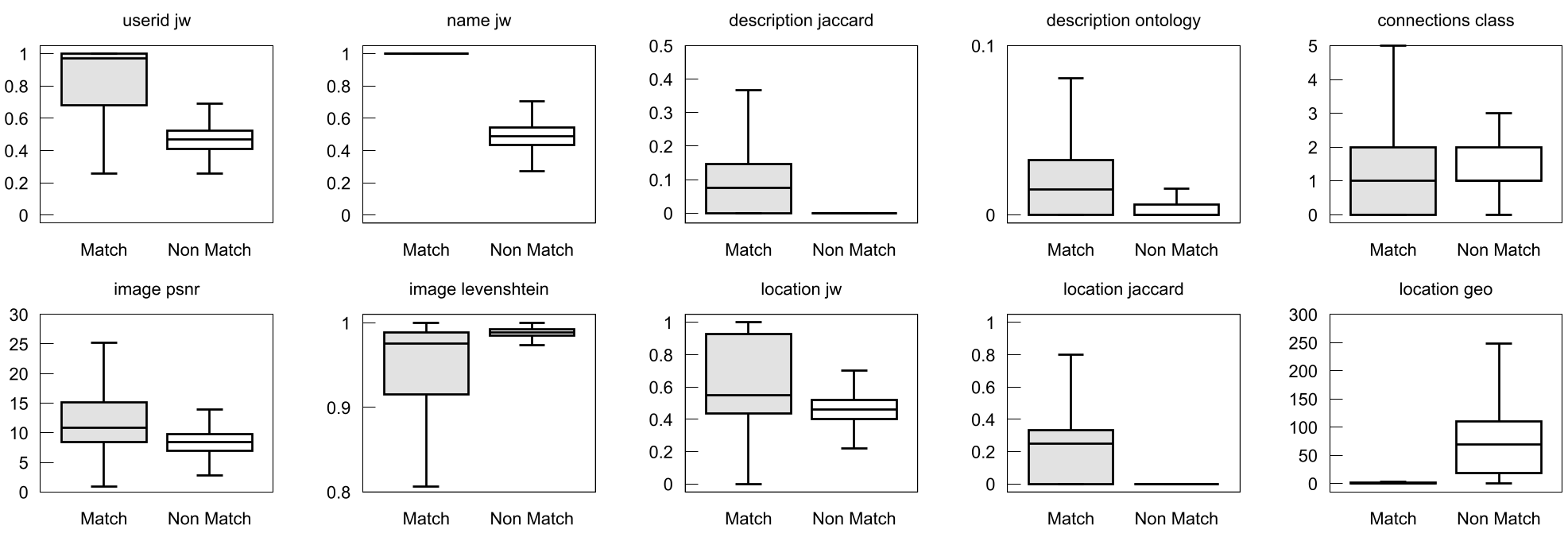 Figure 2: Box plots showing the clear separation between "Match" (true pairs) and "Non-Match" for features like Name and UserID.
Performance Results
The researchers tested four major classifiers:
- Naïve Bayes: 98% Accuracy (The Winner)
- SVM: 97.2% Accuracy
- kNN: 89.8% Accuracy
In a real-world simulation, when queried for a LinkedIn user on Twitter, the system placed the correct profile in the #1 spot 64% of the time.
Critical Insight: The "Why" Behind the Accuracy
Why does this work so well? It’s due to Inductive Bias in user behavior. Humans are creatures of habit; we gravitate toward similar handles (UserIDs) and reuse profile photos across networks for personal branding.
However, the authors honestly admit limitations: the system struggles with "ghost profiles" or those with intentionally misleading attributes. Future work looks toward handling missing data and incorporating even more platforms to provide a truly "unified digital footprint."
Conclusion
This paper serves as both a technical triumph in entity resolution and a sobering reminder for privacy advocates. As automated disambiguation becomes more accessible, the concept of a "private" social life on a public platform becomes increasingly anachronistic.
Takeaway: Your public metadata is a fingerprint. Even without your email, the combination of your location, your professional bio, and your chosen handle is likely unique to you across the entire internet.