
Bridging Centuries: Generating Super-Long Time-Lapses for Cultural Heritage Preservation
Super Long Interval Time-Lapse Image Generation for Proactive Preservation of Cultural Heritage Using Crowdsourcing
This paper introduces a specialized framework for generating super-long interval time-lapse images (50-100 years) to aid in the proactive preservation of cultural heritage. It combines a crowdsourcing-based image collection strategy with a robust matching pipeline utilizing an Autoencoder and Guided Matching to align historical photos/paintings with modern captures.
TL;DR
Researchers have developed a novel pipeline to generate time-lapse sequences spanning up to 100 years. By leveraging crowdsourcing to replicate original camera perspectives and a Multi-scale Autoencoder to extract time-invariant structural features, the system successfully aligns historical sketches and photos with modern digital captures, overcoming the limitations of traditional feature matching in changing environments.
The Challenge: Matching the "Unmatchable"
Preserving cultural heritage requires understanding how a site has changed over decades. However, creating a time-lapse between a 1920s photograph and a 2024 smartphone shot is technically daunting.
- Temporal Degradation: Buildings undergo renovation, war damage, or natural aging, which destroys the local texture similarity required by algorithms like SIFT.
- Architectural Symmetry: Pillars, arches, and windows often look identical, leading to "Incorrect Feature Correspondence" where the left side of a building matches the right side in another photo.
- Media Gap: Matching a hand-drawn illustration to a high-res JPG is a cross-domain nightmare for standard vision pipelines.
Methodology: Feature Extraction via Distillation
The core insight of this paper is that less is more. Instead of trying to find fine-grained details, the authors use an Autoencoder to strip away high-frequency noise and transient textures (like bryophytes or surface wear), leaving behind the "skeleton" of the building.
1. The Autoencoder Filter
The Autoencoder compresses the image into a lower-dimensional representation. When reconstructed, the image is slightly blurred. While this sounds counter-intuitive, it actually preserves the "strength of inclination" in major structures like gates and pillars, which are the most stable parts of a building over a century.
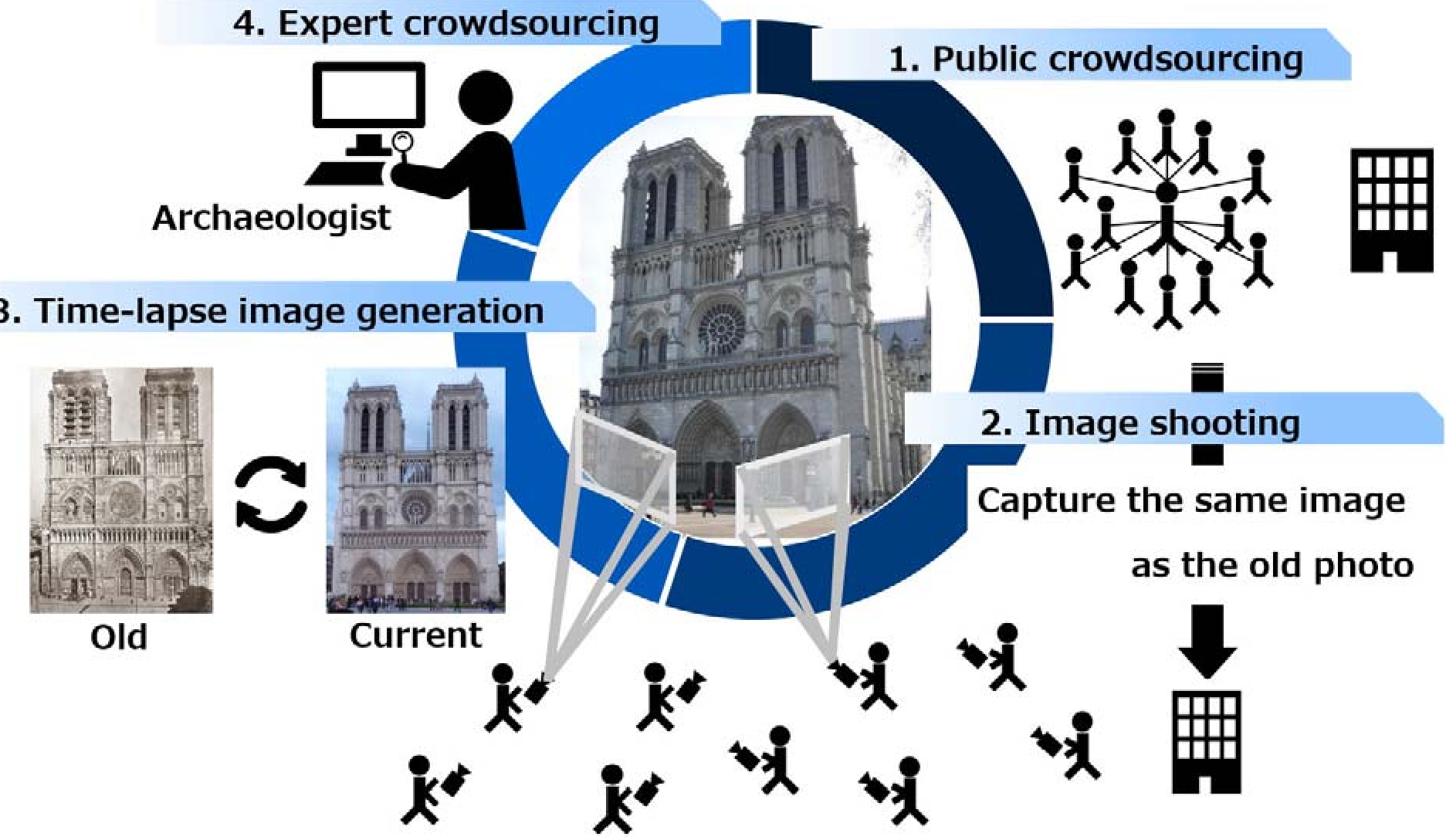 Fig 1. The full operational loop: from crowdsourcing the image capture to expert analysis by archaeologists.
2. Multi-Resolution Hierarchical Matching
To solve the symmetry problem, the authors resize the output from the Autoencoder into three scales (e.g., 500px, 400px, 300px). Feature points are only considered valid if they consistently match across all three resolutions. This acts as a spatial filter for "coincidence" matches.
3. Guided Matching with FAST Features
Using the stable points as a "key," the system applies Guided Matching. It calculates a transformation vector from the reliable points to search for secondary correspondences within a small 5-pixel radius, drastically reducing the search space and eliminating symmetrical errors.
 Fig 2. Visualizing how the Autoencoder retains structural gradients while suppressing temporal noise.
Experiments and Results
The authors tested their method on a dataset of 47 heritage sites. Unlike the baseline (A-KAZE + KNN), which produced a "spiderweb" of incorrect crossing lines, the proposed method showed clean, parallel correspondences even when the historical image was a painting or illustration.
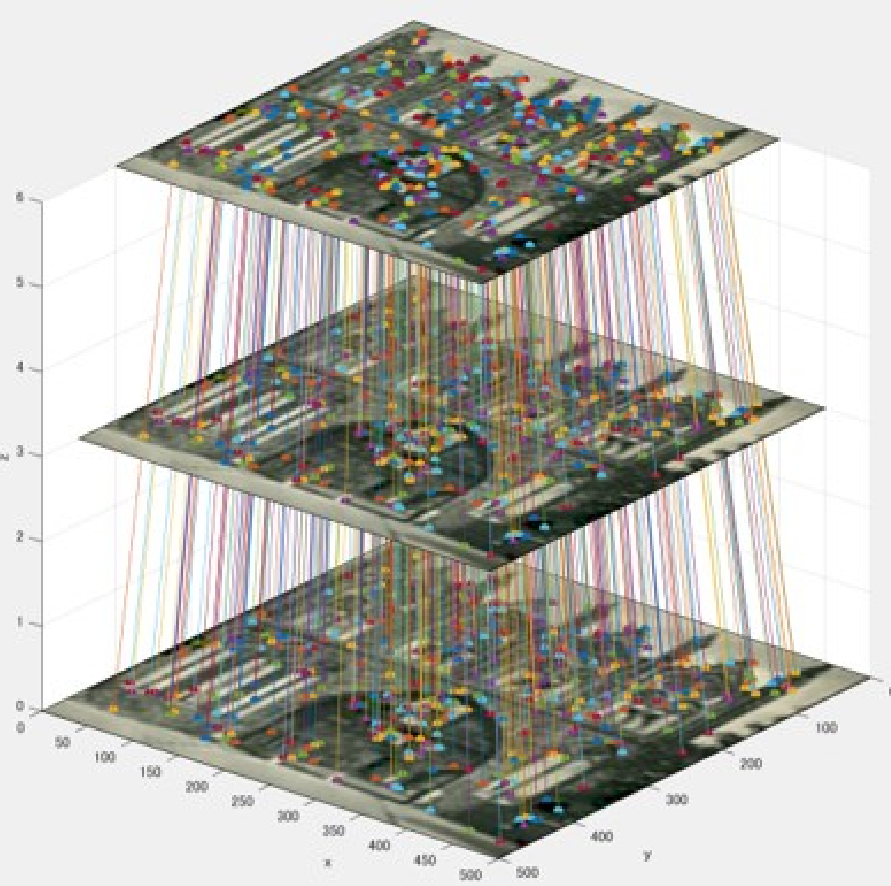 Fig 3. From Top to Bottom: (a) Multi-scale alignment, (b) Initial key correspondences, (c) Final dense Guided Matching.
Critical Analysis & Conclusion
Takeaway
The success of this method lies in its Inductive Bias: it assumes that while the "skin" of a building changes, its "bones" (the fundamental geometry) remain relatively constant. This approach is highly effective for heritage preservation where data is sparse and non-uniform.
Limitations
Currently, the method relies on crowdsourcing to get the "initial" perspective correct. If a user captures the photo from a wildly different angle, the Autoencoder's structural alignment might struggle.
Future Prospect
Integrating this with Neural Radiance Fields (NeRF) could allow for 3D time-lapse reconstructions, providing archaeologists with a "time-machine" interface to fly through historical changes in a truly spatial way.
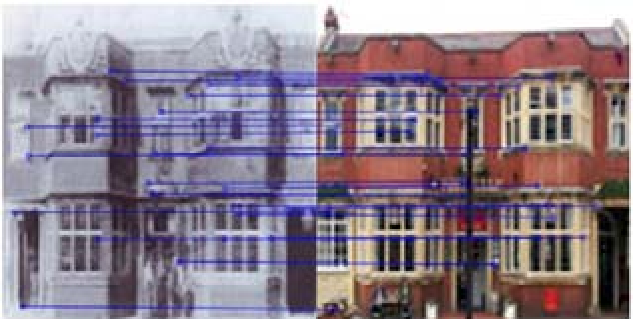 Fig 4. Success cases demonstrating the method's ability to handle diverse architectural styles and media types.