
Machine Learning for Occupational Health: Balancing Accuracy with Knowledge Discovery
Supervised machine learning techniques and genetic optimization for occupational diseases risk prediction
This paper presents a comparative study of supervised machine learning techniques—Support Vector Machines (SVM), K-Nearest Neighbors (K-NN), and a K-Means clustering-based classifier—for predicting occupational disease risks. The authors utilize a Genetic Algorithm (GA) to simultaneously optimize model hyperparameters and feature weights for a custom dissimilarity measure, achieving high classification performance on real-world Italian worker datasets.
TL;DR
Predicting workplace-related diseases is a critical task for public welfare. This research compares SVM, K-NN, and K-Means-based classification for risk prediction. By using Genetic Algorithms (GA) to tune the distance metrics, the study finds that while accuracy is similar across methods, clustering-based models provide a "Grey Box" advantage—allowing researchers to actually see why certain groups of workers are at risk.
Background & Motivation: The Need for More Than Accuracy
In predictive medicine, the goal isn't just to label a patient as "high risk," but to understand the environmental and physiological factors leading to that risk. Most modern SOTA models act as "Black Boxes." This paper argues that in the context of occupational diseases, we need models that are:
- Robust to Heterogeneous Data: Handling age (numerical) alongside job IDs (categorical).
- Resilient to Imbalance: Some diseases are much rarer than others.
- Interpretable: Providing actionable insights for workplace safety improvements.
Methodology: Metric Learning via Genetic Optimization
The authors propose a framework where the distance measure is not a standard Euclidean distance but a weighted sum of individual feature dissimilarities:
The weights and model hyperparameters (like the number of neighbors or the SVM shape ) are found using a Genetic Algorithm. This ensures that the model "learns" which features—like age or specific industry codes—are most relevant for each specific pathology.
Architectural Comparison
The study contrasts three paradigms:
- K-Nearest Neighbors (K-NN): Direct comparison; simple but high computational cost during inference.
- Support Vector Machines (SVM): Uses support vectors to define boundaries; high precision but hard to interpret.
- Clustering-based (NCBA): Groups data into meaningful "prototypes." This is the "Grey Box" approach—clusters can be analyzed post-hoc to understand the "sick" vs. "healthy" worker profile.
 Figure 1: Conceptual workflow of applying computational intelligence to worker health data.
Experimental Results: Performance and Complexity
The models were tested on the "MalProf" dataset from the Italian National Institute for Insurance against Accidents at Work (INAIL).
| Measure | K-NN | SVM | k-means (NCBA) |
|---|---|---|---|
| Complexity | High (All training data) | Medium (Hundreds of SVs) | Low (Dozens of clusters) |
| Sensitivity | Moderate | Moderate | Highest |
| Interpretability | Low | Low | High |
One of the standout findings was the Complexity vs. Accuracy trade-off. The clustering-based approach achieved comparable accuracy with significantly fewer "model components" (clusters vs. support vectors), making it more efficient for real-world deployment.
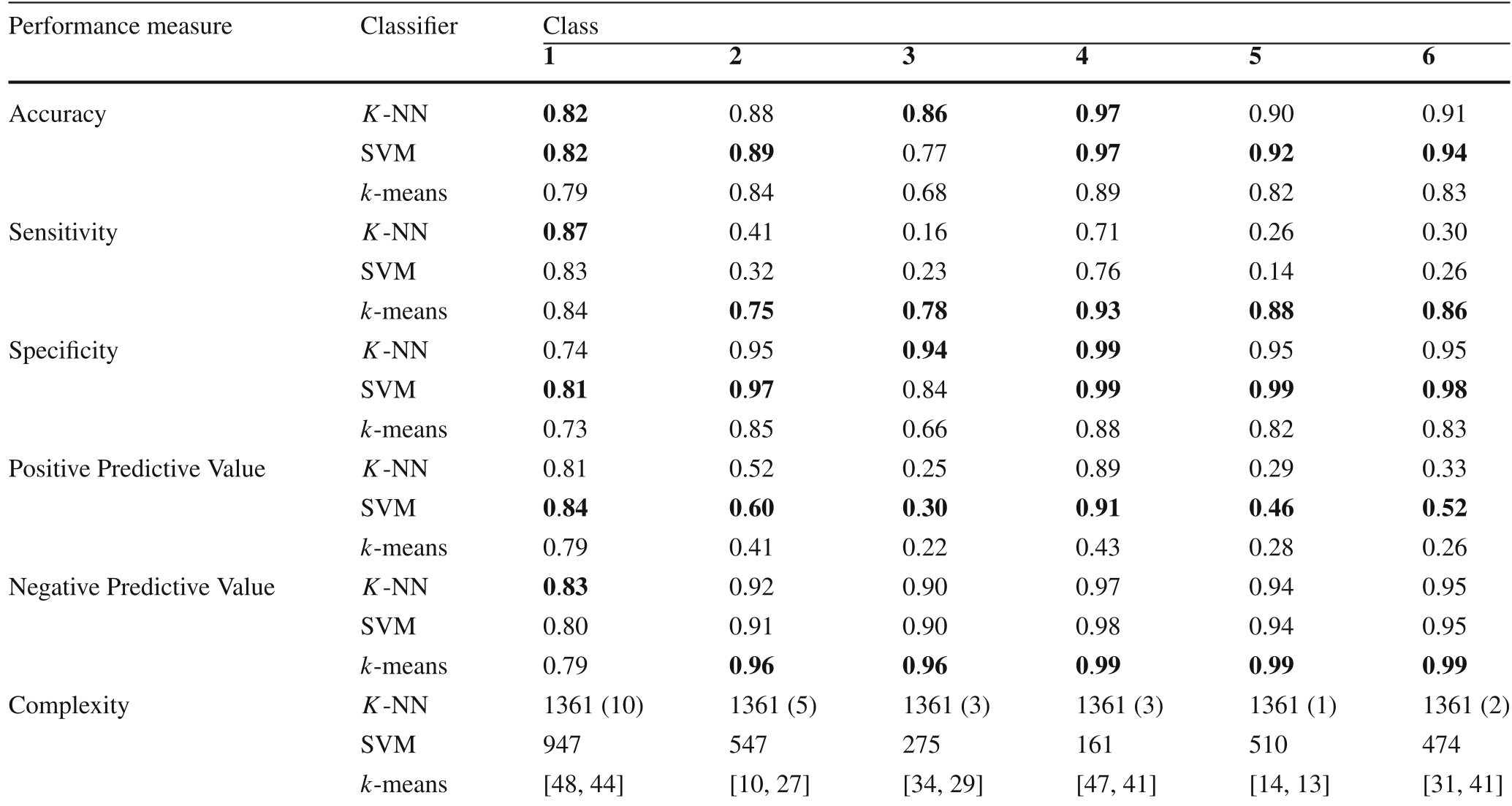 Table 1: Detailed comparison showing accuracy and sensitivity across different pathologies.
Deep Insight: The Power of Knowledge Discovery
The true value of this paper lies in Section 5.3, where the authors perform a post-classification analysis. By examining the clusters formed for Carpal Tunnel Syndrome (Class 120), they derived specific insights:
- Male workers showed higher propensity in certain sectors.
- The disease manifests most strongly after many years of service.
- Early career start (before age 26) was a common trait in the "sick" cluster.
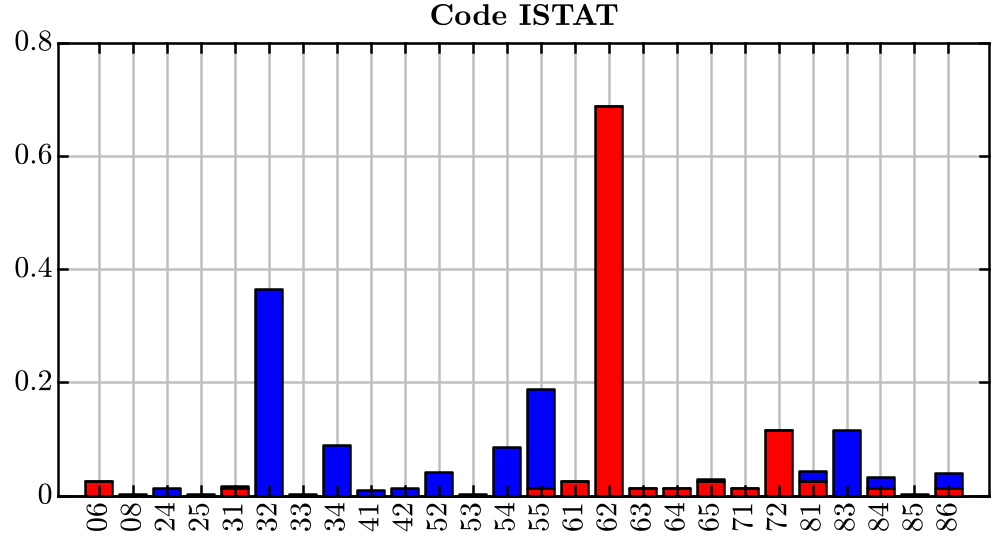 Figure 2: Stacked histograms comparing "sick" (red) vs "healthy" (blue) clusters, revealing the impact of age and employment duration.
Conclusion & Future Outlook
The study concludes that while SVMs are powerful, the clustering-based NCBA approach offers a superior balance for healthcare applications. It provides the "Why" behind the "What." For future researchers, the takeaway is clear: when the goal is risk assessment and policy-making, choose models that allow for a Knowledge Discovery phase.
This methodology isn't limited to occupational health; it can be applied to any domain where "Grey Box" interpretability is required to turn data into preventive action.