
SVM for Corporate Credit Rating: Why Global Optimality Beats Heuristics
Application of support vector machines to corporate credit rating prediction
2006-05-07
Summary
Problem
Method
Results
Takeaways
Abstract
This paper investigates the application of Support Vector Machines (SVM) for corporate credit rating prediction using financial ratios from Korean companies. It proposes an optimized SVM model using a grid-search technique with RBF kernels, achieving superior classification accuracy compared to traditional statistical and AI methods.
## TL;DR
In the high-stakes world of corporate finance, predicting credit ratings accurately is essential for measuring risk premiums. This seminal paper by Young-Chan Lee demonstrates that **Support Vector Machines (SVM)**, when properly optimized via grid-search and RBF kernels, provide a significantly more robust and accurate framework for credit prediction than traditional Neural Networks or Discriminant Analysis, achieving a performance leap of up to 8.5%.
## Problem & Motivation: The Failure of Parametric Models
For decades, credit rating was the domain of **Multiple Discriminant Analysis (MDA)** and logit models. However, these statistical veterans are brittle: they fall apart when data isn't normally distributed or when features exhibit multi-collinearity.
While the 90s saw a surge in **Artificial Neural Networks (BPN)**, they brought their own "black box" headaches—specifically the tendency to get stuck in local optima and a notorious appetite for large datasets to avoid overfitting. The author identifies a critical need for a method that combines the theoretical rigor of statistics with the flexible "learning" capability of AI.
## Methodology: The Power of Structural Risk Minimization
The author pivots to **Support Vector Machines (SVM)**. Unlike BPNs, which minimize empirical risk (training error), SVMs operate on the **Structural Risk Minimization (SRM)** principle. This minimizes an upper bound on the generalization error, making it much more reliable on unseen "holdout" data.
### 1. The Kernel Trick
By using a **Radial Basis Function (RBF) kernel**, the model maps 10 key financial ratios (like Debt Ratio and Interest Coverage Ratio) into a high-dimensional feature space. This allows the model to find a linear "Maximum Margin Hyperplane" to separate credit classes that were non-linearly entangled in the original space.
### 2. Systematic Optimization (The Grid Search)
A frequent criticism of SVMs is their sensitivity to hyperparameters. The study addresses this by using a **5-fold cross-validation grid search** to find the optimal $(C, \gamma)$ pair.
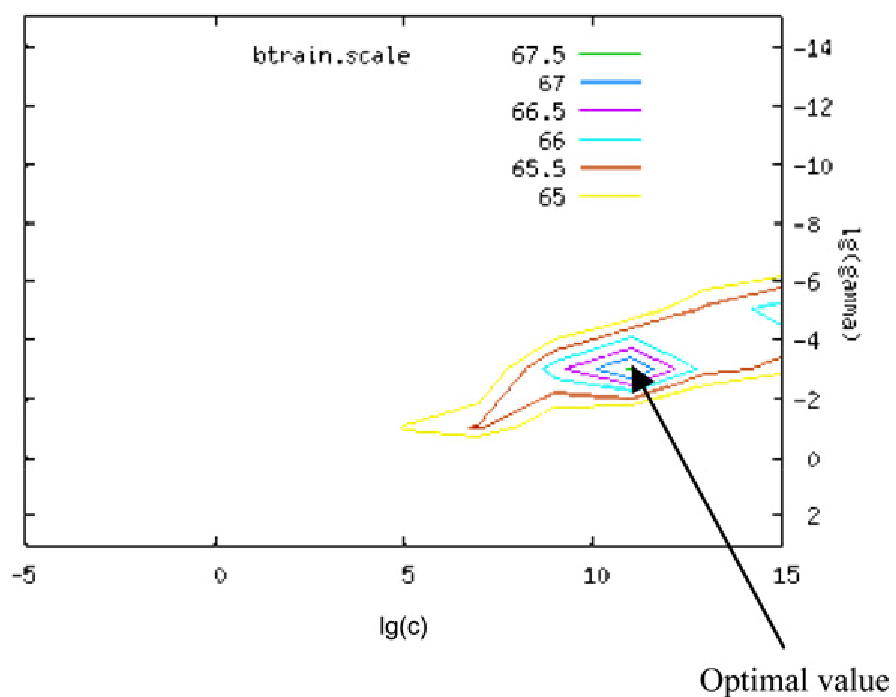
*Fig 1: The grid-search landscape showing the sweet spot for model stability.*
## Experimental Evidence: SOTA Comparison
The researcher tested the model against a dataset of 3,017 Korean companies. The results were clear: SVM didn't just win; it dominated the benchmarks.
| Model | Training Accuracy (%) | Holdout Accuracy (%) |
|-------|-----------------------|----------------------|
| **SVM** | **77.62** | **67.22** |
| BPN | 62.95 | 59.93 |
| MDA | 58.72 | 58.72 |
| CBR | - | 63.41 |
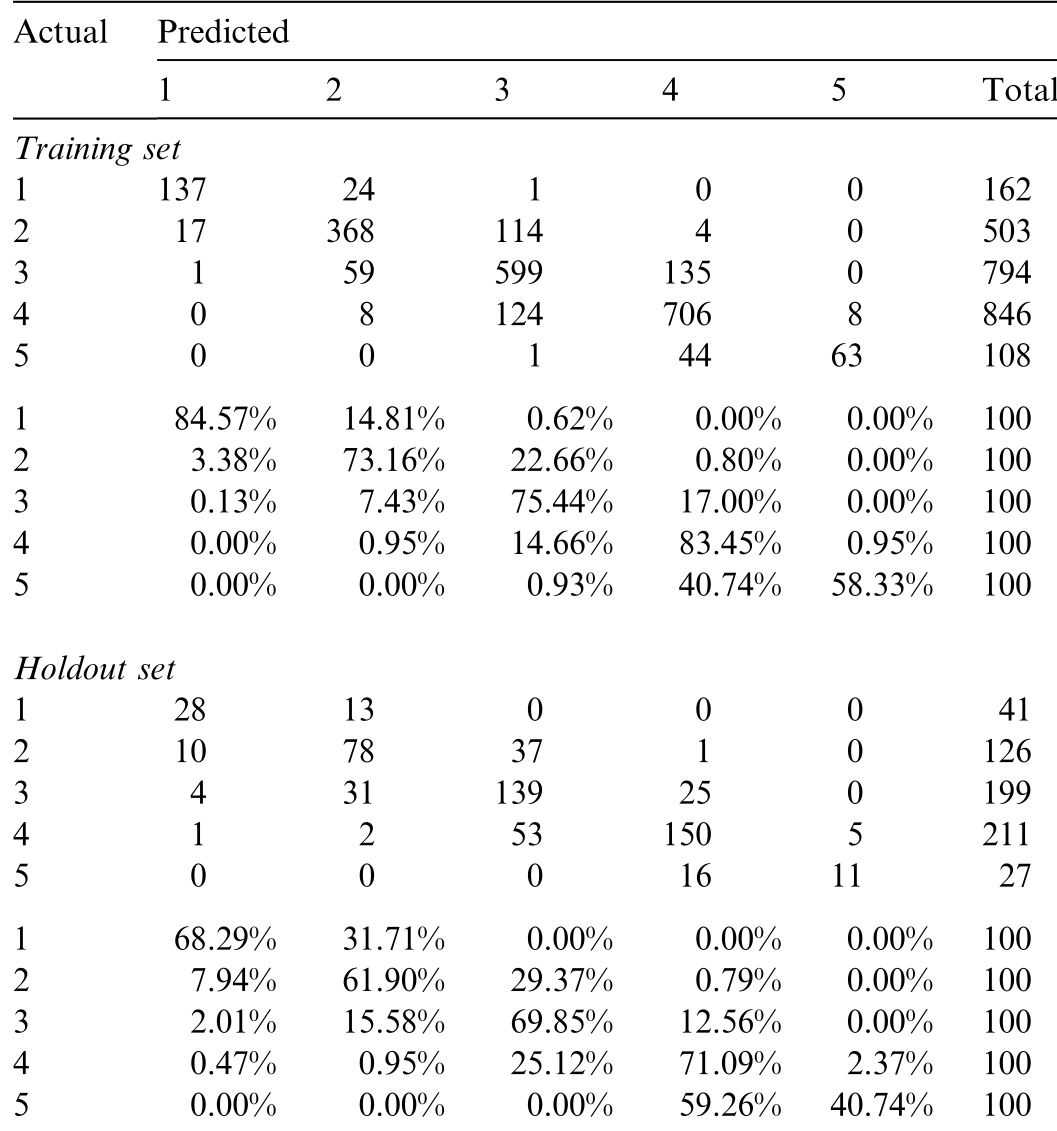
*Table: The confusion matrix highlights SVM's strong performance across most credit tiers, though it struggles slightly with the rarest 'C' class due to data imbalance.*
## Critical Analysis & Deep Insight
Why does SVM outperform BPN so convincingly here?
1. **Convexity**: The SVM optimization problem is quadratic and convex, ensuring the "Global Optimum" is found. BPNs often settle for "Good Enough" local minima.
2. **Small Sample Efficiency**: SVMs rely only on "Support Vectors"—the data points closest to the boundary. This makes them more efficient than BPNs when high-quality labeled data is scarce.
**Limitations**: The study utilizes a coarser five-rating classification (AAA to C) rather than the finer "notch" system (e.g., A+ vs A-). Furthermore, while RBF kernels are powerful, they lack the direct interpretability that financial auditors often crave compared to simple decision trees.
## Conclusion
This research provides a rigorous blueprint for applying SVMs to financial engineering. By replacing heuristic-based parameter tuning with a systematic grid search, the author proves that machine learning can provide the "explanatory power and stability" required for critical corporate credit assessments. For future research, exploring **Ordinal SVMs** that respect the natural hierarchy of credit grades remains a promising frontier.