
Sendoshi-SNS: Bridging the Graduation Gap in Adult E-Learning
Supporting Continued Communication with Social Networking Service in e-Learning
This study evaluates the effectiveness of the "Sendoshi-SNS" platform in maintaining long-term engagement among adult learners in a blended e-learning agriculture program. By analyzing access logs and hit counts, the researchers demonstrate that SNS platforms can successfully foster continued communication even after students have graduated.
TL;DR
Can a social network keep students talking long after the final exam? This study investigates "Sendoshi-SNS," a custom-built platform for adult learners in an IT-agriculture blended program. The research confirms that SNS functions—specifically diary sharing and visitor "footprints"—enable adult students to maintain professional and social ties even years after graduating, though maintaining high engagement requires constant content innovation.
The Engagement Problem in Adult Education
Traditional e-learning often feels like a solitary journey. While Computer-Mediated Communication (CMC) has been used to bridge the gap between students and teachers, adult learners present a unique challenge. Unlike university students, adults (ranging from 20s to 60s) often have varying technical literacy and limited time. The core question is: How do we foster a community that doesn't die the moment the course certificate is issued?
The authors suggest that the answer lies not in formal forums, but in the "Social" aspect of Social Networking Services (SNS).
Methodology: The Sendoshi-SNS Architecture
Built on the OpenPNE open-source engine, the Sendoshi-SNS was designed as a closed, membership-only community. This "walled garden" approach ensured privacy, requiring real names to build professional trust among the 94 students and 10 staff members.
The researchers tracked several key interaction metrics:
- Passive Engagement: "Friends’ Diary" and "List All Diaries" (Reading others' updates).
- Active Engagement: "Add Diary" and "Reply Message."
- Social Awareness: "Footprints" (Tracking who visited one's profile) and "Ranking."
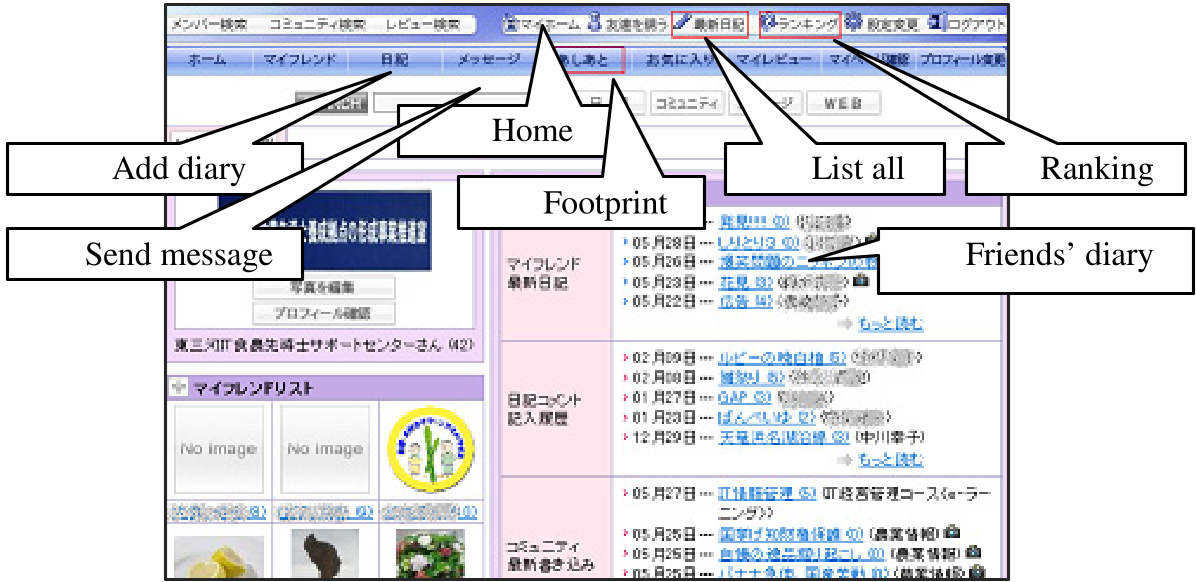 Figure 1: The Sendoshi-SNS provides a centralized hub for diaries, messaging, and community rankings.
Key Findings: Curiosity and Persistence
The data revealed a fascinating trend regarding "First-Year" curiosity versus "Third-Year" routine.
1. The "First-Year" Enthusiasm
As shown in the table below, the first cohort of students was significantly more active than their successors. For instance, the hit count for the "Home" page for the first-year cohort (1270.81) was nearly five times that of the second-year cohort (264.86).
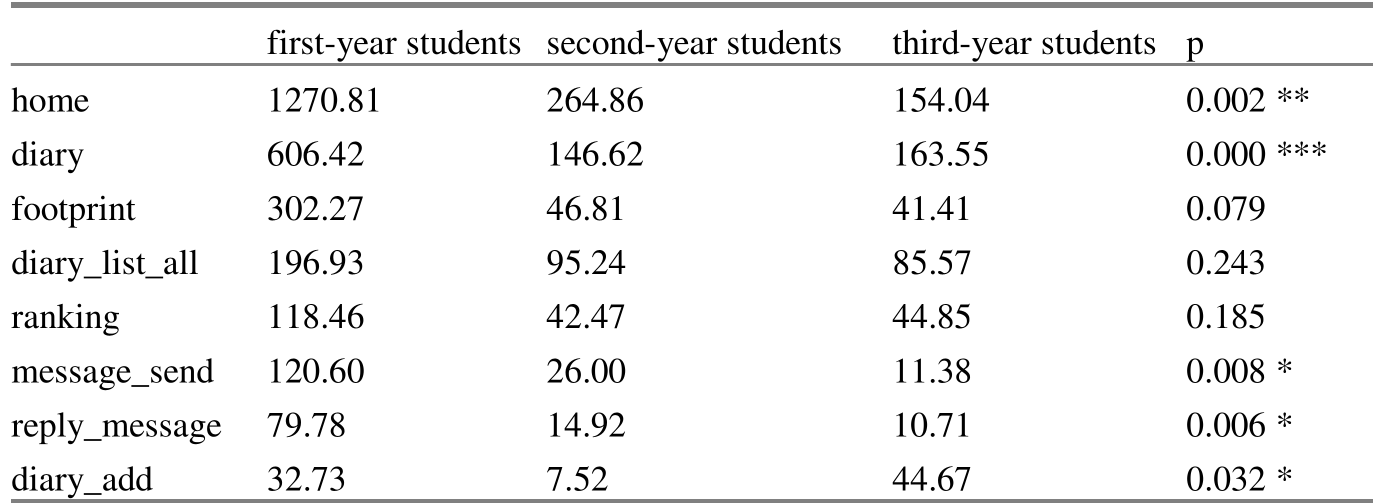 Table 1: Quantitative comparison of SNS activities across different enrollment years.
The authors theorize that the first cohort had the highest curiosity because the project was entirely new. Subsequent years may have received "spoilers" or information from previous students, reducing their drive to explore the platform.
2. Lifespan Beyond Graduation
Crucially, the study proved that communication continued after the program ended. While the frequency declined (specifically in reading friends' diaries, which dropped from 606 to 178 hits over three years), the users did not abandon the platform.
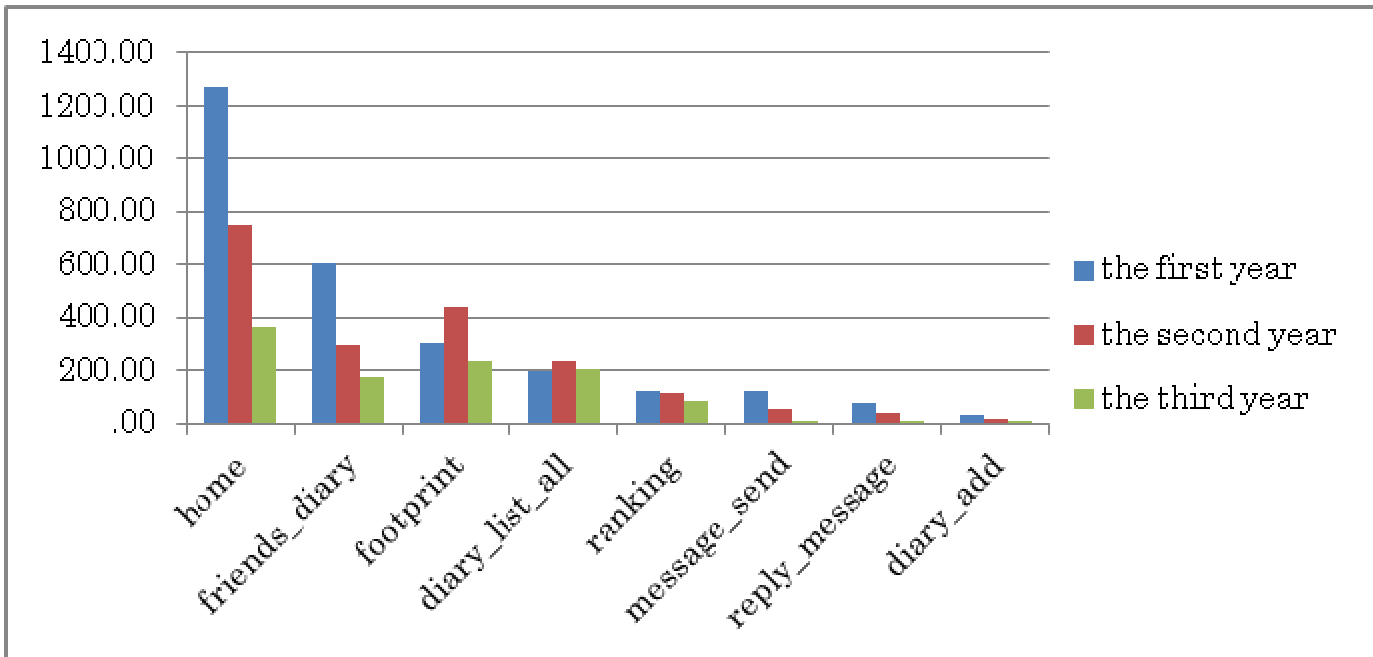 Figure 2: Longitudinal analysis showing the persistence of activity even in the third year (post-graduation).
Critical Insight: The "Footprint" Effect
One of the most interesting behavioral findings was the high hit count for the Footprint function. In adult social networks, it isn't just about sharing information; it's about validation. Students frequently checked who was looking at their profiles. This mutual "watching" behavior acts as a social glue, encouraging users to return to the platform to see their impact on the community.
Conclusion & Future Directions
The Sendoshi-SNS study offers a blueprint for building professional learning communities:
- Focus on Private & Semi-Public Spaces: Adult learners often prefer private messages over public posts.
- The Curiosity Gap: To keep an SNS alive, administrators must introduce new materials or "surprises" to prevent engagement decay.
- Social Hooks: Features like "Footprints" are essential for maintaining the "social presence" required for long-term stickiness.
Limitations: The study notes that while students stayed active, more work is needed to see if staff/tutor participation can further buoy these numbers. As we move into the era of AI-driven education, integrating these human-centric "social hooks" remains a vital challenge for any e-learning architect.