
Beyond Manual Circles: Automating Collaboration with Aggregated Social Graphs
Supporting Ubiquitous Interaction in Dynamic Shared Spaces through Automatic Group Formation Based on Social Context
The paper introduces a runtime environment and framework for Automatic Group Formation based on social context. Leveraging an Aggregated Social Graph (ASG), it automates the creation of "dynamic shared spaces" (collaborative environments with widgets) by pruning social networks using tags, location, and object-based context.
TL;DR
Managing digital groups is currently a manual chore. This paper presents a system that breaks down platform silos by aggregating social data (call logs, calendars, social networks) to automatically form groups. By using contextual triggers like location and tags, it dynamically creates "Shared Spaces" equipped with collaborative tools (chat, maps, notes) without requiring the user to hand-pick every participant.
The Problem: The High Tax of Spontaneous Collaboration
In the current landscape of ubiquitous computing, starting a group project or an ad-hoc meeting environment is surprisingly "heavy." Whether it's a Google+ Hangout or a Facebook Group, the user is burdened with:
- Platform Lock-in: Contacts are often restricted to a single ecosystem.
- Manual Selection: You must manually search and invite members from a contact list.
- Static Configuration: The tools within the group (apps, widgets) are not tailored to the specific context of the meeting.
The authors argue that the "Social Intelligence" already exists in our digital footprints—our call frequency, our calendar events, and our proximity—it just hasn't been unified to simplify group management.
Methodology: The Aggregated Social Graph (ASG)
The heart of the solution is the Aggregated Social Graph (ASG). Unlike a standard social graph that looks at one network, ASG pulls from multiple sources to calculate Social Strength (tie-strength).
1. The Architecture
The system operates on three layers:
- Application Layer: Mobile and Web apps.
- Management Layer: Handles group discovery, key generation, and resource allocation.
- Service Layer: The "engine room" containing the ASG service and the Distributed Shared Memory (DSM).
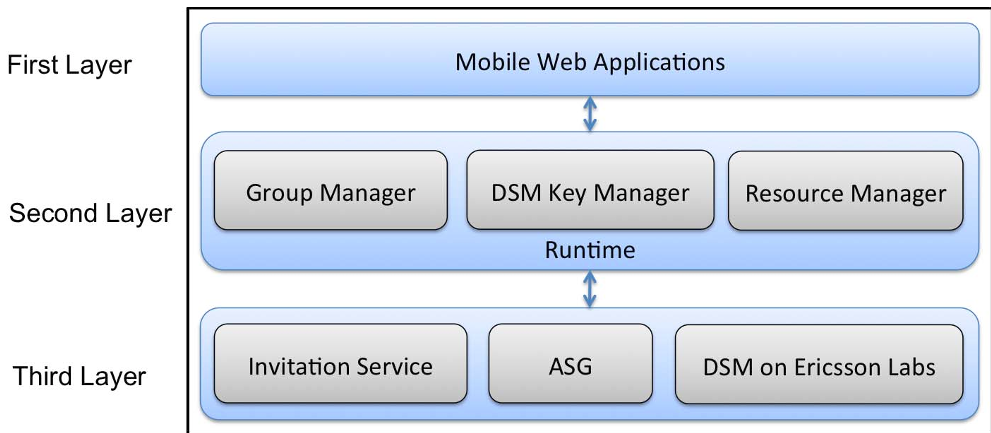 Fig 4: The multi-layered runtime environment for Shared Spaces.
2. Contextual Pruning
The system doesn't just invite everyone. It uses three main strategies to "prune" the social graph:
- Tag-based: Matches users based on interests (e.g., "Project X").
- Location-based: Forms temporary groups for people in the same physical space (e.g., a conference hall).
- Object-based: Treats smart devices (cameras, cars) as group members that can "participate" in the collaboration.
Implementation: Dynamic Address Keys
One of the technical hurdles in ad-hoc collaboration is concurrency control—making sure everyone sees the same thing at the same time. The authors solve this by using the DSM Key Manager. When a group is formed via context, a unique UUID version 3 is generated. This key identifies the specific memory space for that group's widgets (coApps), allowing for real-time synchronization across different devices.
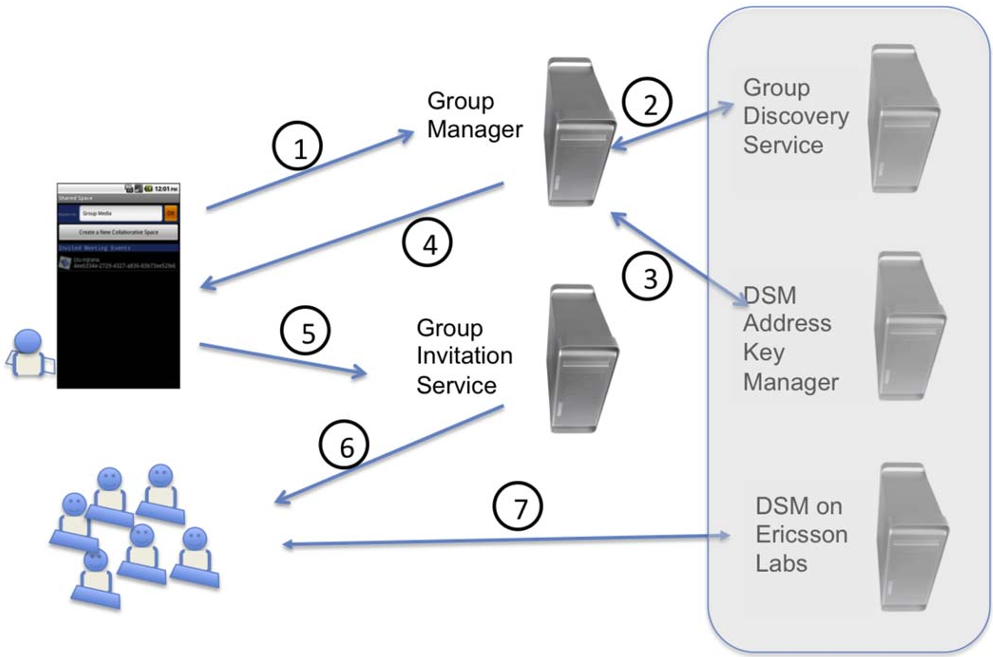 Fig 5: The flow from context identification to Shared Space point-of-access.
Experimental Results & Comparison
The prototype confirms that a user can simply enter a keyword (e.g., "Media Project"), and the system identifies relevant collaborators based on social strength and proximity, invites them via Push Notifications or SMS, and launches a shared environment with a chat and note-taking tool.
When compared to industry giants, the proposed system excels in automation and context adaptation:
| Feature | Google+ Hangouts | Skype | Shared Spaces (This Paper) |
|---|---|---|---|
| Automatic Invitation | - | - | X |
| Social Context Adaptation | - | - | X |
| Global Contact Integration | - | X | X |
| Extensible coApps | X | X | X |
Critical Insight & Multi-Modal Future
This paper’s true innovation lies in the Inductive Bias that social groups are not static entities but functions of Time, Space, and Intent. By shifting group management from a "list of names" to a "pruned graph of context," the authors pave the way for a more fluid Internet of People and Things.
Limitations: The tie-strength calculation relies on privacy-sensitive data (call logs/calendars), which poses significant hurdles for real-world deployment in the era of GDPR. Future iterations would likely need decentralized or privacy-preserving (Edge) computation to reach mainstream adoption.
Final Takeaway
The future of ubiquitous interaction is frictionless. By automating the "Group Formation" stage of the collaborative loop, we move closer to a world where our digital tools anticipate our team-building needs before we even click "Create."