
Decoding Information Diffusion: From Viral Viruses to Social Cascades
A Survey on Information Diffusion in Online Social Networks
This survey paper provides a comprehensive overview of information diffusion in Online Social Networks (OSNs), categorizing methodologies into Explanatory Models (SI, SIS, SIRS) and Predictive Models (Independent Cascade, Linear Threshold). It highlights SOTA strategies for source detection and influence maximization, such as the LDAG algorithm which achieves million-node scalability for competitive influence propagation.
TL;DR
This survey explores the mathematical backbone of how information travels across online social networks. By categorizing diffusion into Explanatory Models (understanding the past) and Predictive Models (forecasting the future), it identifies how researchers can locate the "Patient Zero" of a rumor and maximize the reach of positive influence.
Background & Positioning
In the modern digital landscape, information behaves remarkably like a biological virus. This paper serves as a technical coordinate system, mapping out classic epidemiological models (SI, SIS, SIRS) and their evolution into sophisticated social algorithms like Independent Cascade (IC) and Linear Threshold (LT). It bridges the gap between theoretical physics/biology and applied social computing.
The Core Problem: Complexity and Malice
Traditional diffusion research faced two main hurdles:
- Observability: Identifying a source node (the originator) from a partial snapshot of an infected network is an "inverse problem" that is mathematically NP-hard in general graphs.
- Dynamics: Unlike a virus, human "infection" by information involves complex factors like Social Reinforcement and Competition (e.g., a rumor vs. a fact-check).
Methodology: The Two Pillars of Diffusion
The survey bifurcates the field into two distinct methodological approaches:
1. Explanatory (Epidemiological) Models
These models focus on the state of the user.
- SI/SIS/SIRS: Models where users transition from Susceptible (S) to Infected (I) and potentially Recovered (R).
- Insight: Recent improvements use Sample Path-based approaches, which analyze the most likely trajectory the information took to reach its current state, allowing for much more accurate "Patient Zero" identification.
2. Predictive (Cascade) Models
These models focus on the mechanism of the spread.
- Independent Cascade (IC): Each "infected" neighbor has an independent probability of activating you.
- Linear Threshold (LT): You only "activate" if the combined influence of your neighbors exceeds your personal internal resistance (threshold).
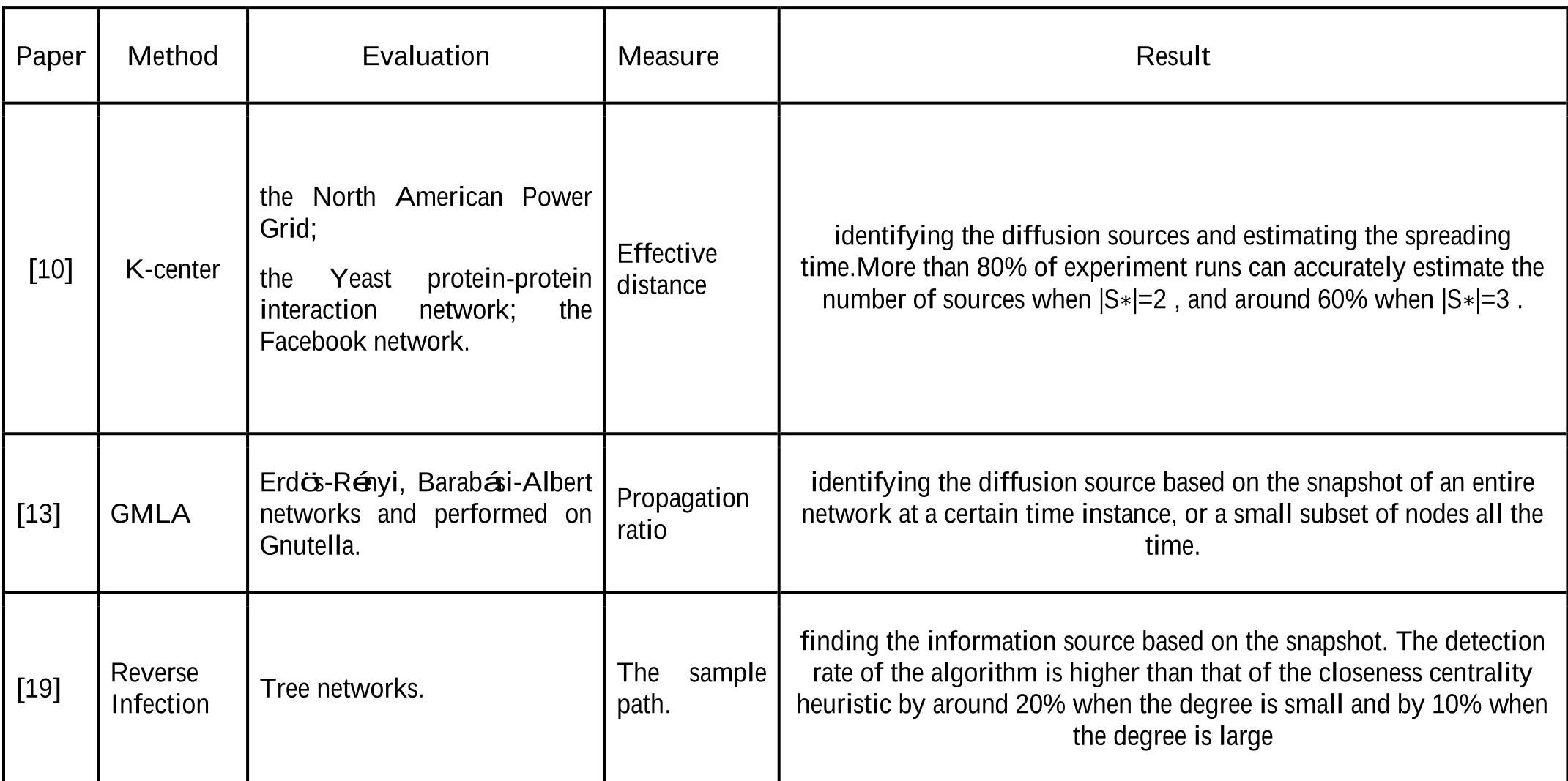 Figure 1: Comparison of source detection methods, showing how Reverse Infection and K-center approaches perform across different network topologies.
Key Breakthroughs & Experiments
The survey highlights several SOTA achievements:
- Scalability: The LDAG algorithm (under the LT model) moved influence maximization from a theoretical exercise to a practical tool capable of handling millions of nodes by approximating influence using Directed Acyclic Graphs (DAGs).
- Competitive Dynamics: The CLDAG model explores "Influence Blocking Maximization," where one entity strategically picks "seed nodes" to cancel out a competitor's negative rumor—achieving up to an 80% improvement over baseline heuristics.
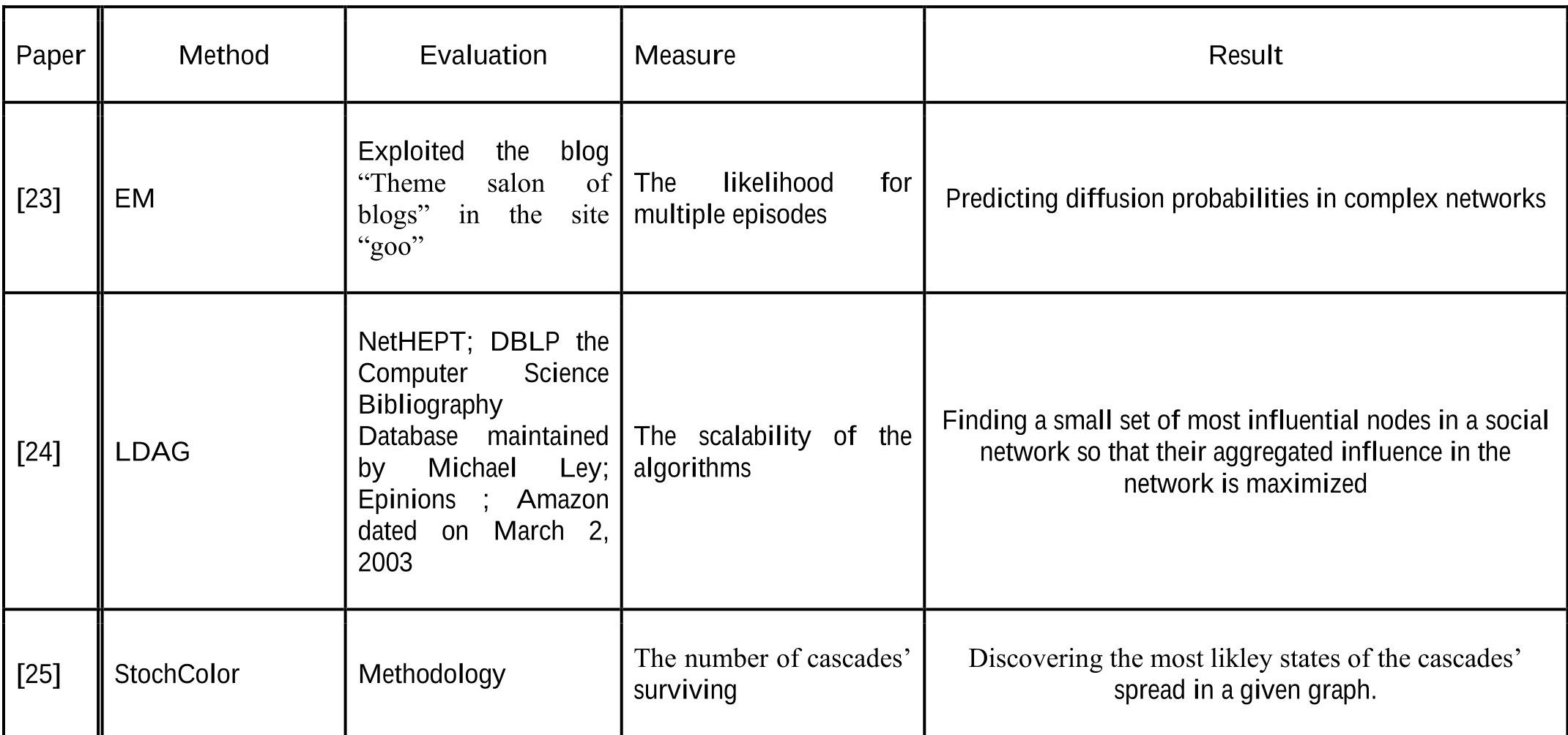 Figure 2: Performance metrics of predictive models like EM and LDAG on real-world datasets like DBLP and Amazon.
Critical Analysis & Future Outlook
While the survey provides a robust taxonomy, it also hints at the Limitations:
- Most models still assume a relatively static network topology, whereas real social networks are highly dynamic (edges appear and disappear hourly).
- The "human element" (emotional bias, cognitive load) is often simplified into a single probability or weight.
Takeaway for the Future: The next frontier in this field involves Real-time Dynamic Models. As misinformation becomes more automated (AI-generated), our defense mechanisms—the algorithms that detect and block these cascades—must move toward multi-source, real-time optimization.
Conclusion
Whether it's marketing a new product or halting a dangerous rumor, understanding the underlying mathematical "cascades" of our social networks is no longer just academic—it's a requirement for digital governance and industrial strategy.