
Mining the Past: How Data Mining and Linked Data Revitalize Cultural Heritage
A Survey: Mining Linked Cultural Heritage Data
The paper, "A Survey: Mining Linked Cultural Heritage Data," provides a comprehensive overview of the integration between Semantic Web technologies and Data Mining techniques in the cultural heritage sector. It reviews how ontologies like CIDOC CRM and RDF-based linked data are augmented by mining methods such as Association Rules, Clustering, and Named Entity Recognition (NER) to uncover hidden patterns in digitized artifacts.
TL;DR
The digitization of history has reached a crossroads: we have the data, but do we have the insight? This survey explores the synergy between the Semantic Web—the structure of information—and Data Mining—the engine of discovery. By applying techniques like Association Rules and Named Entity Recognition to linked cultural data, researchers are turning static museum archives into dynamic, interconnected knowledge bases.
Problem & Motivation: The "Data Grave" Dilemma
In the past decade, massive efforts were funneled into digitizing books, sculptures, and testimonies. However, simply converting an old manuscript into an XML or RDF file creates what some call a "data grave." The information exists, but the latent connections (e.g., how a 15th-century painting in Italy influenced a specific sculpture in Greece) remain hidden.
The challenge is twofold:
- Heterogeneity: Data comes from diverse sources with different levels of granularity (e.g., one record lists a "City," another lists a "Country").
- Static Semantics: Ontologies provide the "what" (entities) and "how" (relationships) but can't easily quantify the strength or relevance of those relationships without external analysis.
Methodology: The Semantic-Mining Pipeline
The authors detail a workflow where the Semantic Web provides the representation (the "Layercake" of XML, RDF, and OWL) and Data Mining provides the extraction logic.
1. The Semantic Foundation
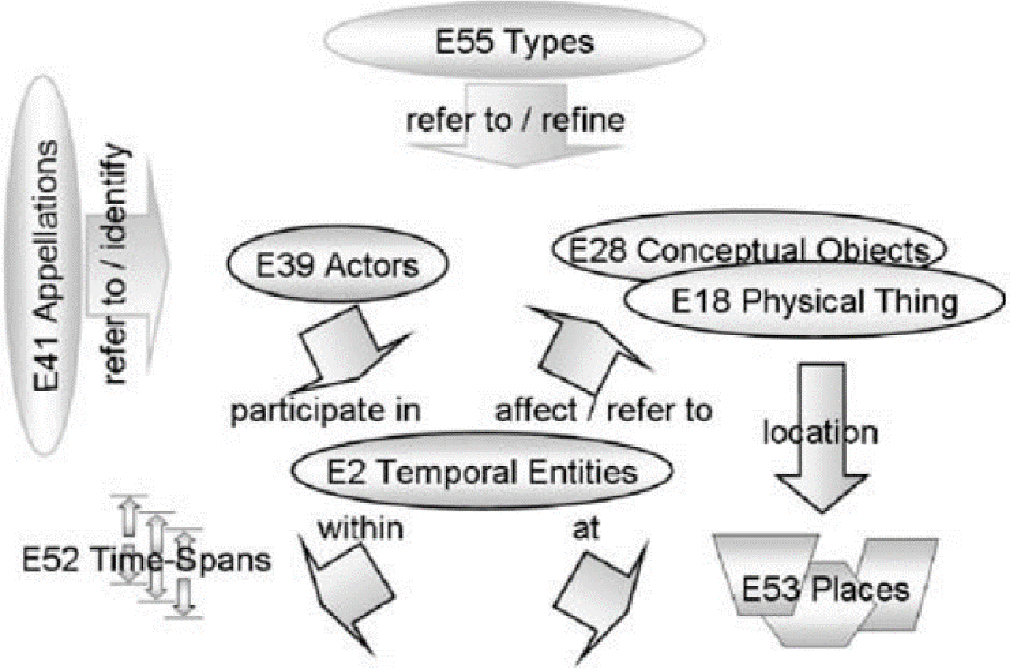
The paper highlights CIDOC CRM as the "gold standard" ontology for cultural info. It allows disparate museums to speak the same language.
2. The Mining Mechanics
Different tasks require different tools:
- Association Rules: Used to compute mutual relations between locations based on artifact manufacturing sites vs. where they were found.
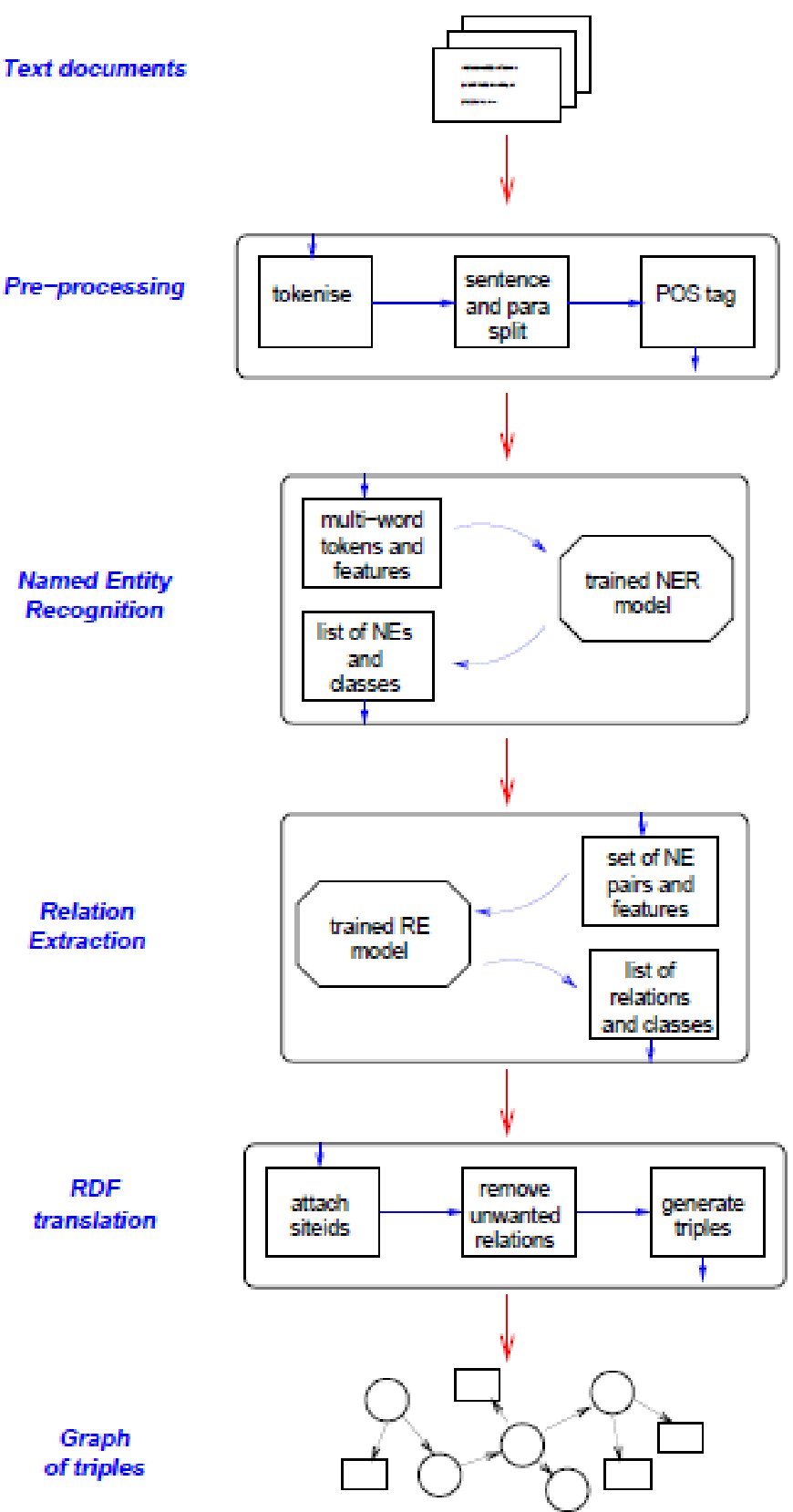
- NER (Named Entity Recognition): Essential for extracting entities from free text and turning them into RDF triples (Subject-Predicate-Object).
- Clustering: Vital for "data cleaning" (e.g., grouping different spellings of the same artist's name).
3. Integrated Architectures
One standout approach mentioned is the translation of Relational Databases (RDBMS) into RDF through a systematic extraction and mapping process.
Experiments & Results: Real-World Impacts
The survey summarizes performance across various datasets:
| Dataset | Mining Technique | Main Achievement |
|---|---|---|
| National Monument Record (Scotland) | NER | Successfully merged free-text annotations with structured RDF schemas. |
| CULTURESAMPO | Association Rules | Discovered diachronic regional connections between historical artifacts. |
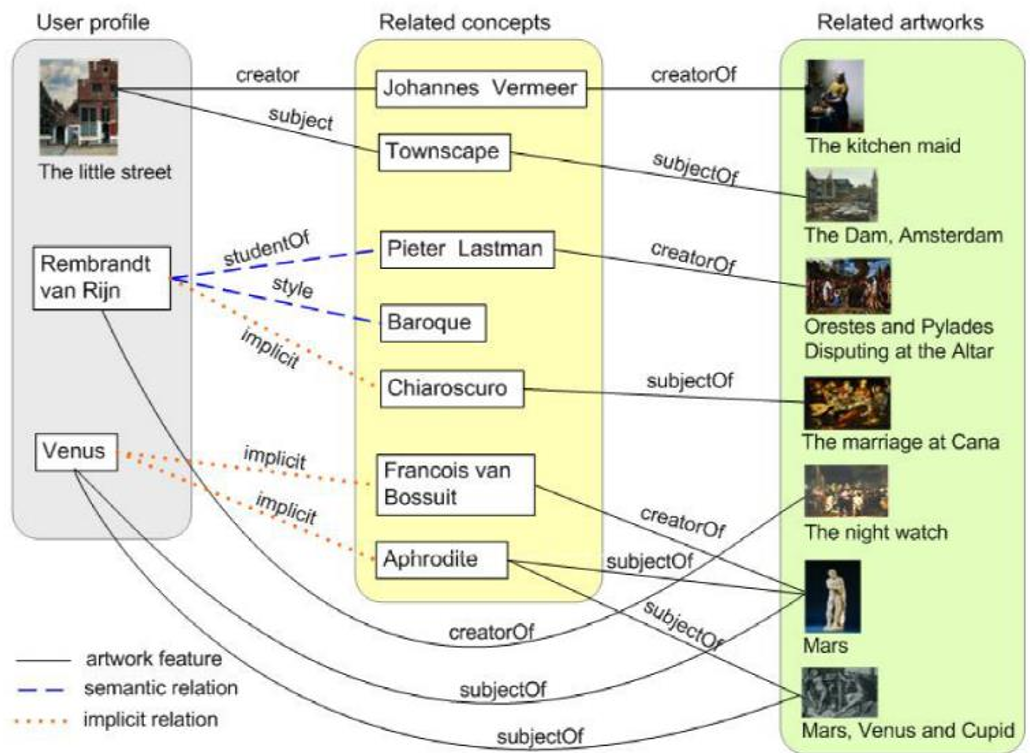
| Rijksmuseum Amsterdam | Classification/Clustering | Enabled personalized art recommendations for users based on taste. |
One of the more impressive visualizations shows how semantically enriched recommendations guide a user through a collection based on conceptual similarities rather than just simple keywords.
Critical Analysis & Future Outlook
The "Semantic Web in Cultural Heritage" isn't a solved problem. The authors point out a few critical gaps:
- Subjectivity: Cultural data is inherently biased by the observer or the era. Mining techniques need to account for this perspective shift.
- Dynamic Content: As new evidence emerges (e.g., an archeological find), our ontologies must evolve dynamically.
- The "Validator" Need: Many current ontologies have modeling defects. We need automated "Logical Health Checks" before we can trust the patterns we mine.
Conclusion: This survey serves as a blueprint for the next generation of "Semantic Culturomics." By moving beyond simple storage and toward intelligent, pattern-aware ecosystems, we can finally allow the data to tell its own story.