
Spatial Crowdsourcing: The Physical Frontier of the Gig Economy
A Survey of Spatial Crowdsourcing
This paper provides a comprehensive technical survey of Spatial Crowdsourcing (SC), a paradigm where mobile workers physically move to specific locations to perform tasks. It introduces a multi-dimensional taxonomy covering task matching, scheduling, and incentive mechanisms, while highlighting State-of-the-Art (SOTA) approaches like LLEP and TGOA for dynamic task assignment.
TL;DR
Spatial Crowdsourcing (SC) extends digital crowdsourcing into the physical world, requiring workers to be at specific coordinates (e.g., food delivery, noise sensing). This survey maps the transition from static, offline optimization to dynamic, online systems that must balance worker movement, task deadlines, and location privacy.
The "Spatial" Shift: Why CC Fails in the Physical World
Conventional Crowdsourcing (CC) platforms like Amazon Mechanical Turk assume tasks are "location-agnostic." In SC, the physical location () is the primary constraint.
- The Mobility Dilemma: Unlike online workers, SC workers incur travel costs and time delays.
- The Latency Trap: Tasks expire. If a worker isn't matched and moved to a location within a narrow window, the utility drops to zero.
Methodology: Deconstructing the SC Infrastructure
The paper defines the SC ecosystem through a rigid 4-pillar architecture:
- Requester: Defines the task, reward, and required expertise.
- Worker: Defined by location , range of interest , and reputation .
- Spatial Task: Features an expiration time and a physical coordinate.
- SC Server: The "brain" that manages task-publishing modes—Server-Assigned (SAT) vs. Worker-Selected (WST).
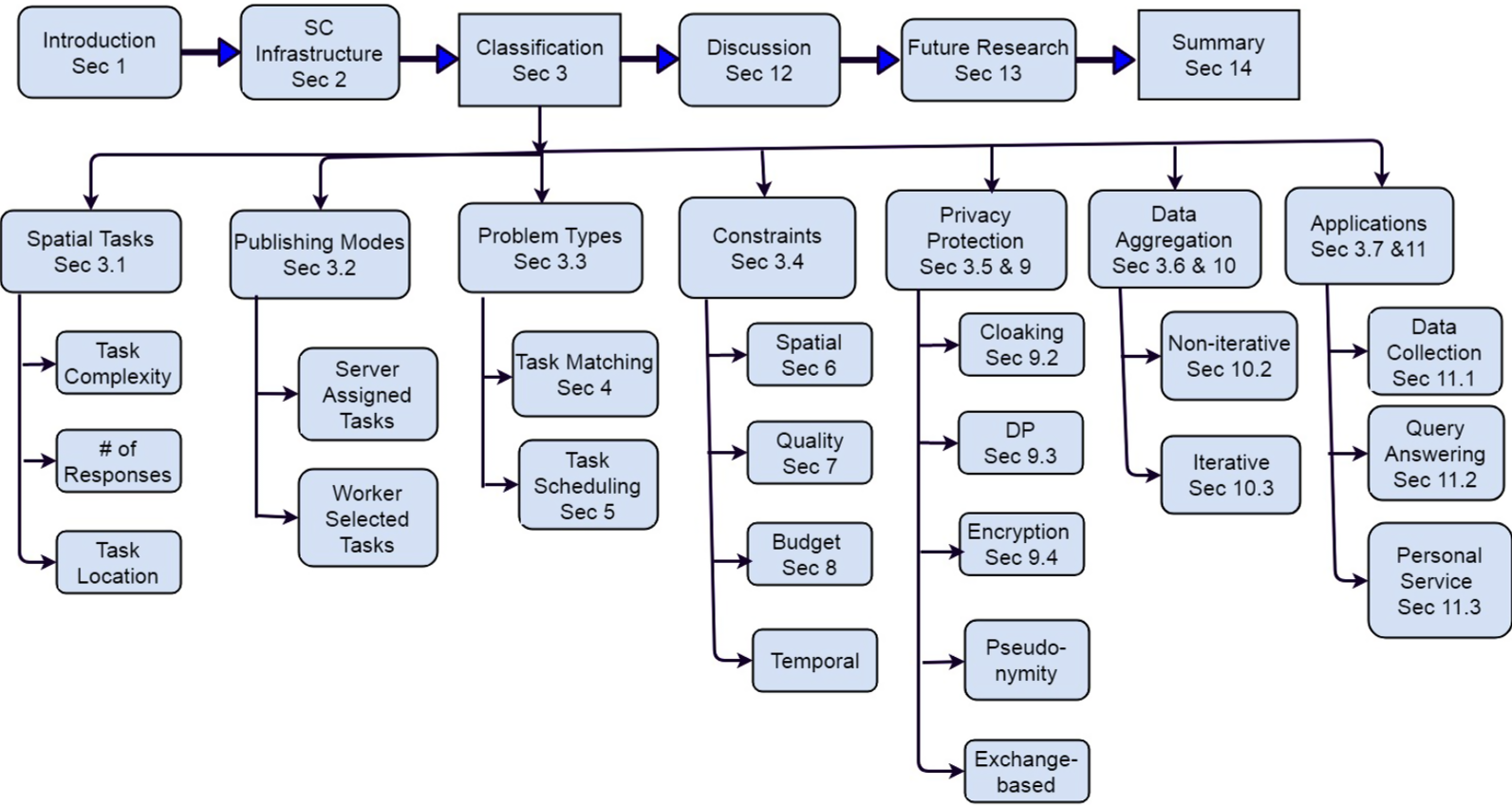 Figure 1: The lifecycle of an SC task, from request to feedback.
Core Technical Challenges
1. Task Matching (Who does what?)
In offline scenarios, this is treated as a Maximum Weighted Bipartite Matching (MWBM) problem. However, real-world SC is Online.
- LLEP (Least Location Entropy Priority): Predicts worker availability by analyzing historical "Location Entropy." It prioritizes tasks in "rare" areas where fewer workers are likely to pass by, increasing overall completion rates by up to 35%.
2. Task Scheduling (In what order?)
For a single worker with multiple assigned tasks, SC reduces to a specialized Traveling Salesman Problem (TSP) with deadlines.
- Prediction-based Rerouting: Unlike static routes, modern algorithms (like OnlineRR) compute candidate spaces to suggest detours that maximize rewards without missing the worker's final destination (e.g., getting home by 6 PM).
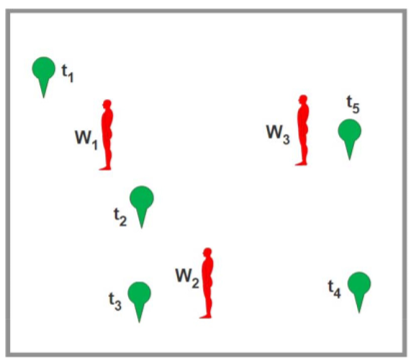 Figure 2: Comparing basic Voronoi-based assignment with constraint-aware task matching.
3. The Privacy-Quality Paradox
This is perhaps the most significant "Academic Nut" to crack.
- Privacy: Workers use Differential Privacy (DP) or Cloaking to hide their exact .
- Quality: Requesters need to know to verify the task was done.
- SOTA Insight: Frameworks like PrivGeoCrowd use Private Spatial Decompositions (PSD) to geocast tasks to regions rather than individuals, ensuring 1-out-of- anonymity.
Critical Analysis & Future Directions
The survey concludes that while we have mastered static "snapshot" matching, the industry lags in:
- Worker-Task Mutual Benefit: Most algorithms maximize server profit. Future systems must treat worker satisfaction (minimal travel, maximum pay) as a first-class citizen.
- Harnessing Geo-Social Ties: Using "location influence" (who follows whom) to recruit leaders in disaster response scenarios.
- Dynamic Immutability: Currently, once a task is assigned, it’s locked. Real-world efficiency requires "revocable assignments" where a closer worker can "steal" a task to optimize global travel costs.
Final Takeaway
Spatial Crowdsourcing is the technical backbone of the Uber/DoorDash era. The next frontier is not just better matching, but creating Privacy-Enabled Truth Inference models that can trust a worker's data without ever knowing their exact home address.