
Beyond the Wall: How Fake Personas and Social Engineering Compromise Digital Privacy
Surveying Privacy Leaks Through Online Social Networks
This paper presents an empirical survey on privacy leaks and social engineering vulnerabilities within Online Social Networks (OSNs), specifically Facebook. By deploying two fake teenage profiles and utilizing automated tools like "Facebook Blaster," the researchers achieved an alarmingly high friendship acceptance rate (up to 95.6%), gaining unauthorized access to thousands of private photos and sensitive personal data.
TL;DR
Researchers at the University of Macedonia demonstrated how easily Facebook's privacy walls crumble under a simple social engineering attack. By creating two fake 14-year-old profiles, they attained a friendship acceptance rate of up to 95.6%, harvesting over 13,000 private photos and exposing the severe risks of "grooming" by adults—all within just 25 days.
Background: The Illusion of "Only Friends"
Online Social Networks (OSNs) have revolutionized human interaction, but they have also created a paradox of privacy. Users often feel protected by settings like "Friends Only," yet they simultaneously feel an innate pressure to expand their social circle to appear "popular." This study positions itself as a critical reality check on the behavior of OSN users, particularly teenagers, who are the most vulnerable to predators and data harvesters.
The "Fake Teenager" Experiment
The methodology was deceptively simple but strikingly effective. The researchers created two fake profiles:
- Profiles: One male, one female, both 14 years old.
- Identity: Used cartoons/paintings instead of real human photos to test if users care about visual authenticity.
- Automation: Used "Facebook Blaster" to collect IDs from public groups and automate friend requests.
The "Insight" here is the Trust Loop: the more friends a fake profile acquires, the more "legitimate" it appears to the next target. Users often look at common friends rather than the person’s actual identity.
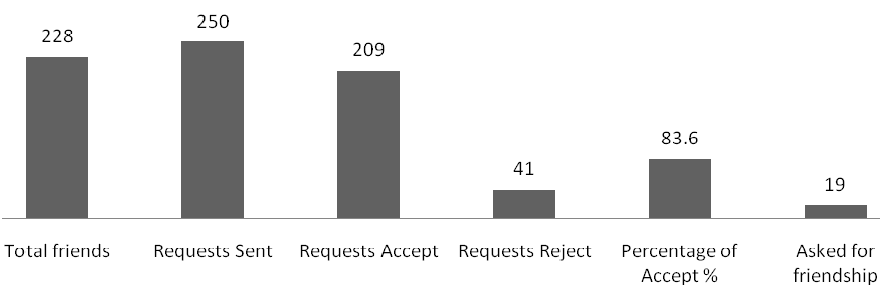 Figure 1: High acceptance rates for the female profile despite the lack of a real photo.
Terrifyingly High Success Rates
The results shattered the assumption that people are cautious online:
- Acceptance: The male profile had a 95.6% acceptance rate.
- Predatory Behavior: Both profiles were contacted by adults (up to age 53), many of whom requested private "Instant Messaging" IDs for off-platform chatting.
- Data Harvesting: By simply being "friends," the researchers gained access to:
- 12,977 Photos across 1,188 albums.
- 510 Email addresses.
- 531 Birthdays and 85 physical home addresses.
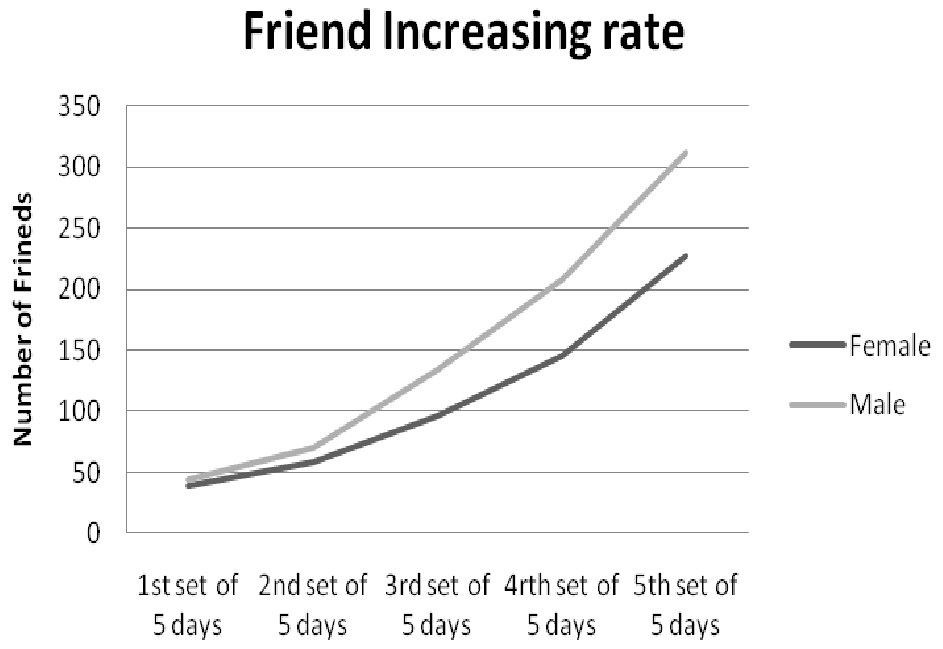 Figure 2: The sheer volume of personal data accessible to a "friend" within 25 days.
Critical Analysis: Why Does This Stay Valid?
The paper highlights a fundamental flaw in OSN architecture: ID Availability. Even if your profile is private, your User ID is often public in group lists or comment threads. Automated bots can scrape these IDs and "spam-request" thousands of users.
The study reveals that Privacy is a Social Contract, not just a Technical Guard. If a user clicks "Accept" to a stranger, the platform's most sophisticated encryption and permission settings become irrelevant.
Key Takeaways for the Future:
- The Inductive Bias of Popularity: Users assume a high friend count equals safety. This is a cognitive bias that attackers exploit.
- The Need for AI Moderation: Platforms must move beyond static settings and use behavioral analysis to detect bots (like the Facebook Blaster tool) that send requests at rhythmic intervals.
- Educational Duty: As the study suggests, "Informatics in education" is crucial. We must teach digital literacy—specifically the hazards of "Friendship with Strangers"—as early as we teach traditional safety.
Conclusion
This study serves as a timeless reminder that in the realm of cybersecurity, the human is the weakest link. Despite the age of this survey, the core psychological triggers it identifies—social validation and the illusion of digital intimacy—remain the primary vectors for modern data breaches and cyber-grooming today.