
The Vital Link: How Sustainable Urban Planning Shapes Global Environmental Health
Sustainable Urban Planning and Its Connection to Environmental Health: A Literature Analysis
This paper presents a comprehensive literature analysis on the intersection of Sustainable Urban Planning and Environmental Health using bibliometric tools like VOSviewer and MAXQDA. It identifies a strong correlation between urbanization strategies and public health outcomes, highlighting "Sustainability" as the leading publication source for these emerging interdisciplinary fields.
Executive Summary
As we move deeper into the 21st century, the collision between rapid urbanization and environmental integrity has become unavoidable. This paper, Sustainable Urban Planning and Its Connection to Environmental Health: A Literature Analysis, investigates the symbiotic relationship between how we design our cities and the biological health of our planet. By synthesized data from thousands of scholarly works, the research establishes that sustainable urbanism is no longer a "green luxury" but a fundamental requirement for public health and safety.
The Core Conflict: Urbanization vs. Ecology
The primary motivation for this study stems from a historical oversight. Since the 1960s, environmental health was often managed as a "reactive" field—cleaning up pollution after it occurred. However, as the majority of the global population shifts into urban centers, the competition for scarce resources (water, land, energy) has reached a breaking point.
The author points out a critical Resource Skew: Cities draw energy and clean water in while pumping wastewater and waste energy back into the environment. This destructive cycle not only degrades the ecosystem but creates immediate health hazards such as poor air quality and contaminated groundwater, which disproportionately affect those of lower social standing.
Methodology: Mapping the Intellectual Landscape
To understand how the academic world is responding, the study utilizes a sophisticated toolset:
- VOSviewer: Used for co-citation and content analysis to find "clusters" of knowledge.
- Harzing's Publish or Perish: Used to pull massive datasets from Google Scholar.
- MAXQDA: Utilized for word cloud generation to identify the most frequent concerns in the literature.
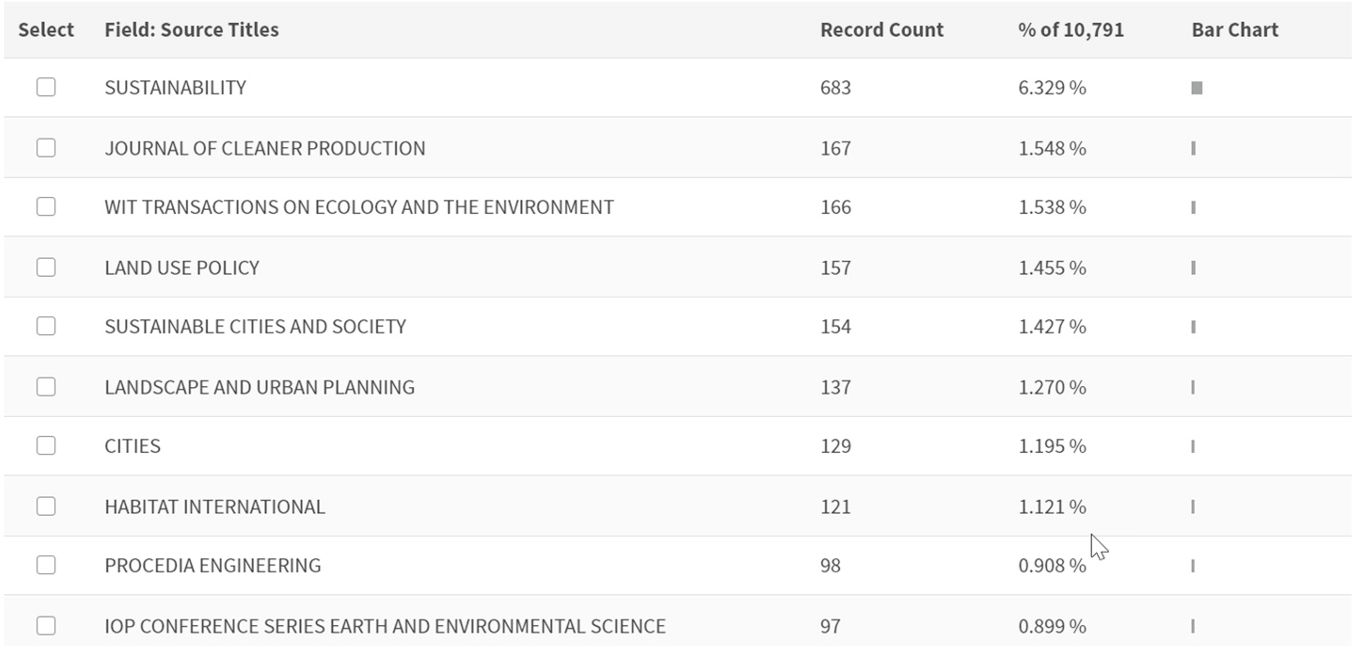 Figure: The dominance of the journal "Sustainability" and other environmental stems in the research landscape.
Key Findings & Visual Trends
The study reveals a powerful upward trajectory in scholarly attention. Environmental health publications alone have seen a rolling 20-year growth, indicating that the global community is finally recognizing the "Emerging Health-Urban Link."
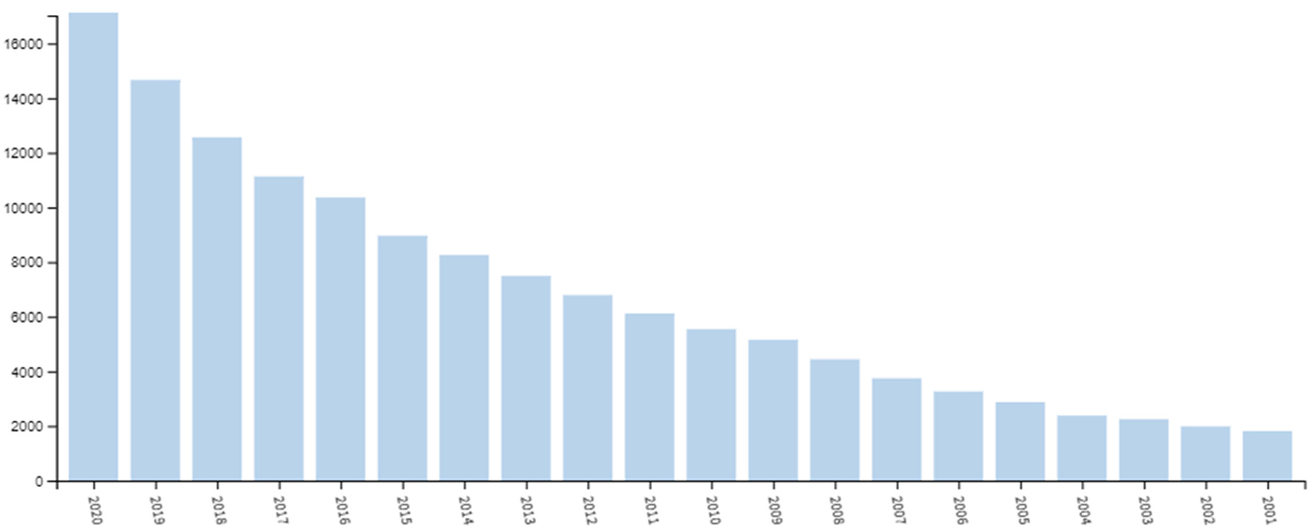 Figure: The steady rise of Environmental Health research indicates a global shift toward proactive planning.
The Growth of Sustainability Indicators
One of the paper’s most significant takeaways is the transition from vague "green ideas" to specific Sustainability Indicators. These include:
- Mass Transit Investment: Reduction of fossil fuel dependence (e.g., Tehran’s sustainable transit).
- Walkability and Cycling: Reshaping the physical footprint of cities to favor human movement over vehicular throughput.
- Green Infrastructure: Incorporating technologies that protect air and water quality at the source.
Critical Insight: The Human-Computer Interaction (HCI) Angle
Perhaps the most forward-thinking aspect of this analysis is the emphasis on Human-Computer Interaction. The author argues that digital infrastructure and smart-city paradigms are essential for:
- Collecting real-time data on environmental health.
- Measuring the impact of planning decisions via Key Performance Indicators (KPIs).
- Facilitating "Communicative Planning," where citizens participate in the design of their own environments.
Conclusion and Future Outlook
The paper makes a compelling case: The health of the urban resident is an unavoidable reflection of the health of the urban environment. To move forward, researchers and planners must focus on three specific areas:
- Developing robust metrics for sustainability.
- Gathering and leveraging Best Practices from successful cities (like Sydney or Toronto).
- Integrating Smart Technologies to bridge the gap between human needs and environmental limits.
Limitations: The study notes that while research is growing, it remains relatively "young" and fragmented. There is a dire need for a global, harmonious integration of local and global health needs to prevent "spontaneous," unplanned development in the developing world.