
Sustainable Urban Planning: Harmonizing Human Expansion with Environmental Health
8881_Sustainable Urban Planning and Its Connection to Environmental Health A Literature Analysis.
This paper presents a comprehensive literature analysis on the intersection of Sustainable Urban Planning and Environmental Health. Using bibliometric tools like VOSviewer and MAXQDA, it maps the rapid growth of these fields and establishes a critical link between urban design strategies and long-term public health outcomes.
TL;DR
As the global population shifts toward 100% urbanization, the friction between human infrastructure and ecological stability has reached a breaking point. This literature analysis by Michael Lambros (Purdue University) utilizes advanced bibliometric mapping to prove that Sustainable Urban Planning is no longer a luxury—it is a mandatory subset of Environmental Health. By analyzing decades of scholarly data, the study identifies that the future of healthy cities lies in the intersection of green technology, social equity, and digital infrastructure.
The Core Conflict: Consumption vs. Sustainability
For decades, urban development has followed a "destructive consumption pattern." Cities act as metabolic engines that suck in land, water, and energy, only to expel wastewater, solid pollutants, and waste heat.
The author points out a critical Inductive Bias in traditional planning: the assumption that environmental degradation is an inevitable byproduct of progress. However, the emergence of "Environmental Sustainability" as a focal point in the 1970s shifted the goal from mere restoration to proactive prevention. The challenge today is that urbanization is occurring most rapidly in the developing world, where resource constraints and lack of planning protocols create a high-risk environment for public health crises.
Methodology: Mapping the Intellectual Landscape
The study doesn't just review papers; it maps the "DNA" of the field using a sophisticated technical stack:
- VOSviewer: Used for co-citation and cluster analysis to see which authors and papers are "talking" to each other.
- Harzing’s Publish or Perish: Facilitated deep-dive metadata retrieval from Google Scholar.
- MAXQDA: Provided qualitative synthesis through word cloud generation to pinpoint dominant themes like "Exposure," "Management," and "Equality."
Mapping the Trends
The data confirms a massive explosion in interest. Sustainable Urban Planning saw an increase of over 1,000 articles yearly, while Environmental Health grew by a staggering 15,000 articles annually over the last 20 years.
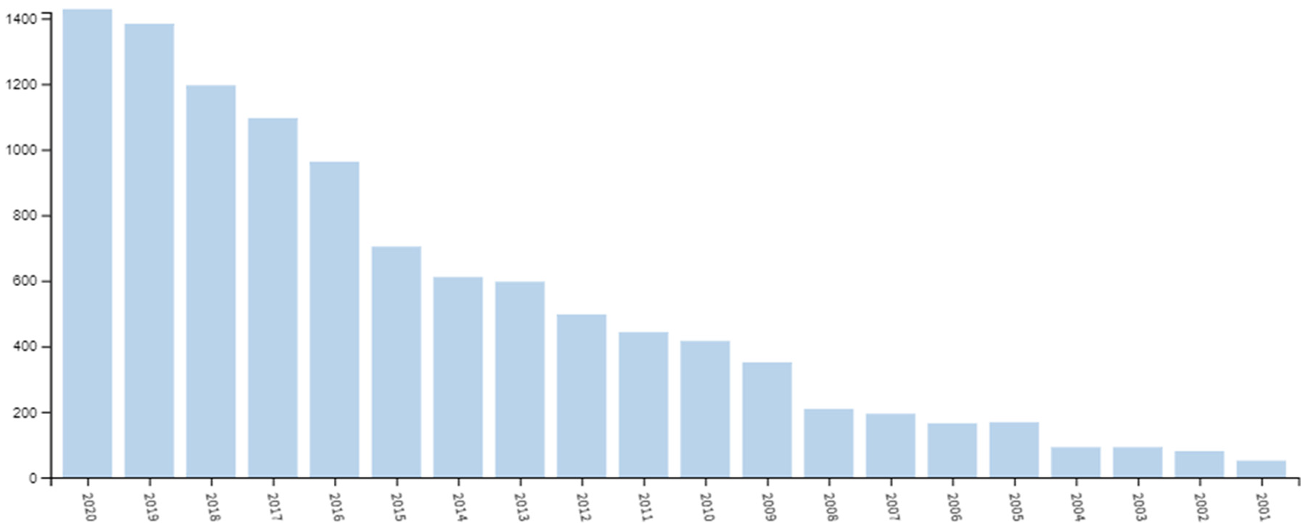 Figure 1: The steady climb of research output reflects the urgent global shift toward resilient infrastructure.
Deep Insights: The Three Pillars of Future Planning
Through the literature review, the author identifies three critical pathways for the next generation of urban development:
- Metric-Driven Sustainability: We cannot manage what we cannot measure. The field is moving toward defining "Sustainable Indicators" that quantify the impact of a new building or transit line on local air and water quality.
- Technological Integration: The adoption of green technologies—such as mass transit innovation in Tehran or walkable "Green Belts" in Sydney—is essential for curbing the negative impacts of fossil fuel dependence.
- The Social Equity Component: Environmental health issues disproportionately affect those of lower social standing. Sustainable planning must be "equitable for present and future generations," ensuring that green infrastructure isn't just a premium feature for the wealthy.
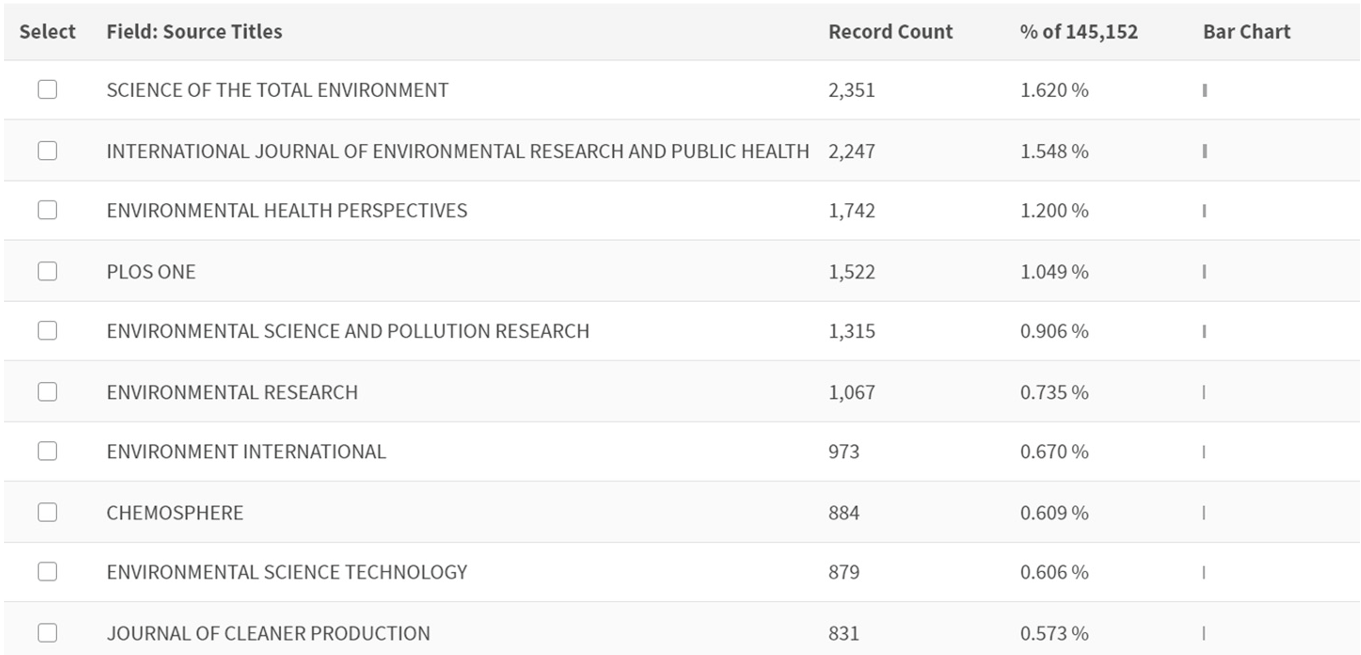 Table 1: Leading journals like "Science of the Total Environment" and "Sustainability" dominate the discourse, showing the interdisciplinary nature of the field.
The Role of Human-Computer Interaction (HCI)
Perhaps the most forward-looking insight in the paper is the pivot toward digital infrastructure. The author argues that Human-Computer Interaction will be the "pivotal role" in promoting these fields.
- Why? Because digital twins, smart sensors, and AI-driven urban modeling allow planners to simulate health outcomes before a single brick is laid.
- How? By creating KPIs for "Smart Urban Infrastructure," cities can leverage real-time data to adjust resource consumption and reduce human exposure to pollutants.
Critical Analysis & Conclusion
While the paper successfully maps the growth and connection of these fields, it also highlights a sobering reality: research in these areas is still "relatively young and brief."
Limitations
- Geographic Gap: While the paper mentions the developing world, much of the SOTA (State-of-the-Art) practices are still derived from Western case studies (e.g., Sydney, Toronto).
- Metric Fragmentation: There is still no single, globally standardized framework for measuring "Urban Environmental Health."
Final Takeaway
The transition from grassroots environmentalism to governmental policy is complete. The next phase is the Technical Integration Phase. To ensure human safety in the 21st century, urban planners must stop viewing the city and the environment as opposing forces and start viewing them as a single, integrated biological and digital system.