
Symbiotic Encounters: Decentering the Human in Sustainable Agriculture
Symbiotic Encounters: HCI and Sustainable Agriculture
This paper presents an ethnographic study of sustainable farming practices in Taiwan, proposing a posthumanist framework for Human-Computer Interaction (HCI). By documenting "symbiotic encounters" between farmers and nonhuman entities like insects and soil, it advocates for a shift from human-centered control to multispecies collaboration in environmental design.
TL;DR
Moving beyond the "control-and-monitor" paradigm of traditional sustainable technology, this paper explores how HCI can learn from alternative farming in Taiwan. It argues that true sustainability requires "noticing differently"—viewing insects, weeds, and soil not as problems to be solved, but as companion species in a shared worldmaking process.
Background: The Limits of Human-Centered Sustainability
For decades, Sustainable HCI has focused on regulating individual human behavior or optimizing resource efficiency. However, the authors argue this human-exceptionalism is exactly what led to our current environmental crises. Industrial farming—the quintessential "human-centered" approach—uses fertilizers and pesticides to dominate nature, inadvertently creating drug-resistant pests and dead soil.
The core insight of this work is that we must move toward non-anthropocentric HCI, where the "user" isn't just a human with a smartphone, but a multispecies assemblage of soil, microbes, and "pests."
Methodology: The Farm as an Assemblage
The research involves long-term ethnographic fieldwork (2017-2018) in Taiwan’s agricultural hubs, Pinglin and Yilan. Using posthumanist theory (specifically the work of Donna Haraway and Anna Tsing), the authors analyze three distinct "symbiotic encounters."
1. The Leafhopper as Co-Creator
In Pinglin, farmers produce the world-famous "Oriental Beauty" tea. The secret? Jacobiasca formosana—a small leafhopper.
- The Symbiosis: When the leafhopper bites the tea bud, the plant releases a chemical defense that transforms into a sweet honey aroma during brewing.
- HCI Insight: Instead of viewing the insect as a pest to be eradicated via sensors and sprayers, the farmer "relinquishes control," managing the farm to facilitate this specific damage.
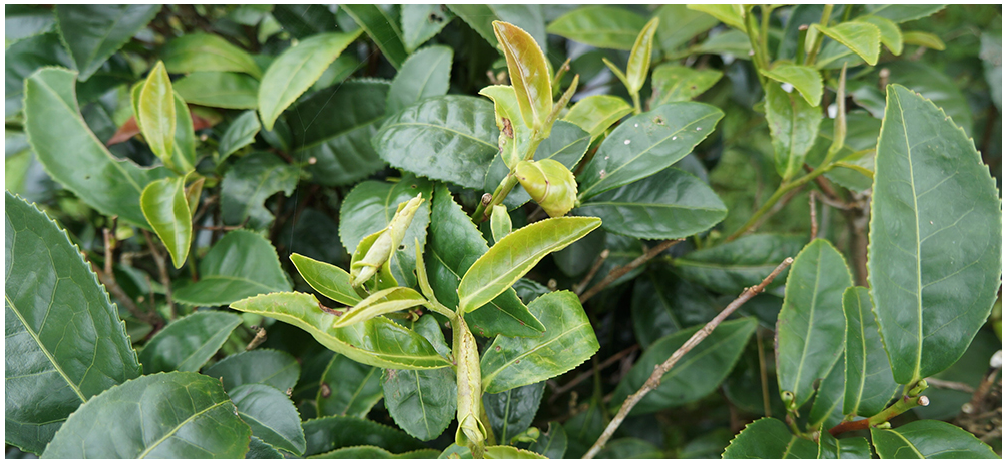 Figure 1: "Infected" tea leaves that are essential for high-quality production.
2. Weeds as Companion Crops
At the "Open Hack Farm," a former engineer treats soil microorganisms as his primary "customers."
- Noticing Differently: He redefines "weeding." Instead of clearing the land, he selectively removes specific fast-growing families while keeping broad-leaf weeds to maintain moisture and "feed" the soil microbes.
- The Soil as Product: His "Open Hack" approach treats the farm as a version of open-source software—modular, experimental, and dependent on a community of species.
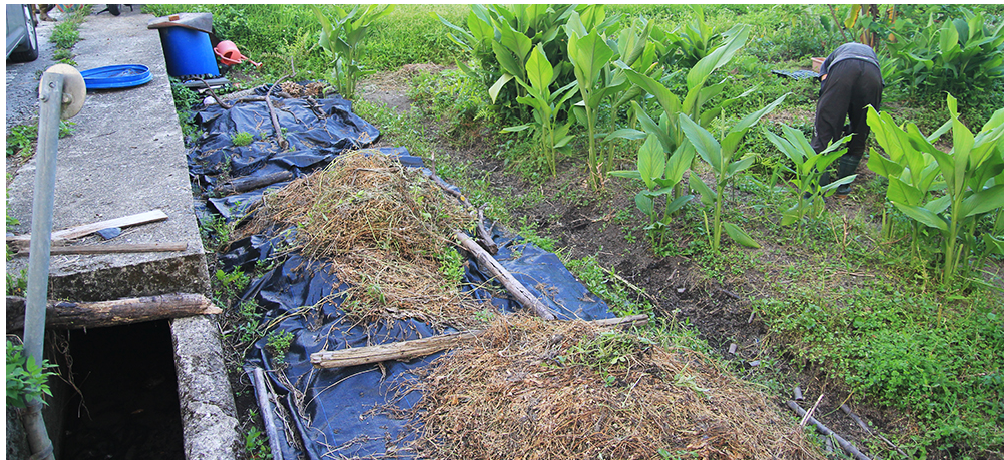 Figure 2: The "Open Hack Farm" uses a sophisticated arrangement of recycling and care.
3. The Tragedy of Scale
Not all encounters are happy. The "Land Dyke" feminist collective faced a devastating scale insect infestation. Despite their eco-friendly commitment, they were eventually forced to use pesticides too late, leading to pesticide-tainted crops and dead trees.
- The Lesson: Vulnerability is a key part of symbiosis. Entanglement means that when one relationship goes awry, the entire system ripples with the consequences.
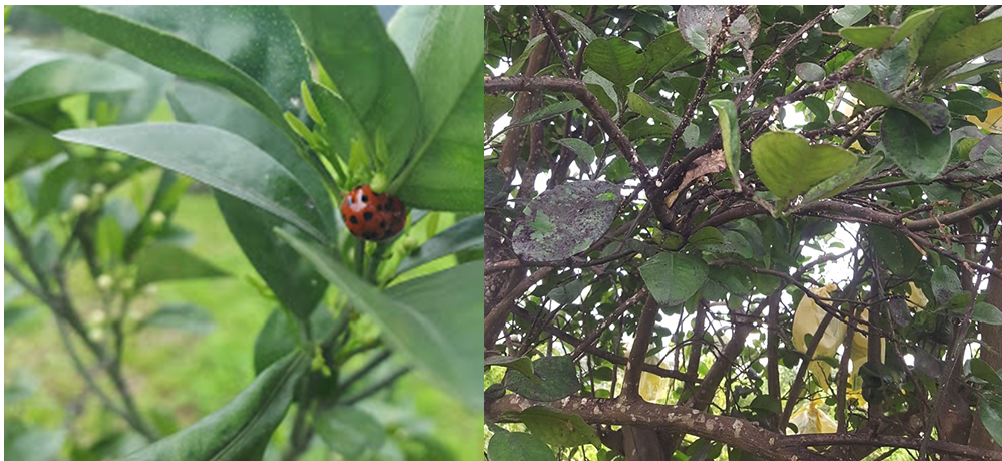 Figure 3: Healthy vs. scale-infested citrus trees.
Critical Analysis & Future Directions
This paper provides a profound critique of how we build technology.
From "The Wild" to "The Lab"
The authors suggest that the farm is humanity’s oldest lab. HCI’s role shouldn't just be to provide "Smart Ag" tools for yield optimization, but to create toolkits for noticing.
- What if sensors didn't tell a farmer when to water, but helped them "hear" the health of soil bacteria?
- What if AR tools helped consumers see the "bug-bitten" history of their tea as a mark of ecological health rather than a defect?
Conclusion: Intimacy with the Biosphere
The ultimate takeaway is that HCI must develop an empathy for nonhuman stakeholders. Just as the field once pioneered "User Experience," it must now pioneer "Biosphere Experience." By understanding that we are "companion species" with the organisms we currently try to control, we can design a more resilient, symbiotic future.
Final Takeaway: To save the world, HCI might need to stop looking at the screen and start "understanding the world through weeds."