
Decoding the Social Maze: A System for Group Behavior Analytics at Networking Parties
A System to Analyze Group Socializing Behaviors in Social Parties
This paper presents a social crowd analytics system designed to detect and quantify group-level socializing behaviors at networking parties. By utilizing wearable Zigbee sensor badges to measure social proximity (RSSI) and applying optimized clustering algorithms (connectivity and centroid models), the system achieves over 87% accuracy in identifying dynamic social groups in real-world settings.
TL;DR
Researchers from KAIST have developed a social crowd analytics system that uses wearable Zigbee badges to map the invisible dynamics of networking parties. By measuring "social proximity" through radio signal strength (RSSI) and body-blocking attenuation, the system can detect socializing groups with nearly 88% accuracy. This data powers real-time games and post-event summaries, turning the chaotic atmosphere of a party into actionable social insights.
Background: Beyond the "Digital" Social Network
While we have mastered the analysis of digital social networks (like Facebook or LinkedIn), the "analog" world of face-to-face networking remains a black box. Networking parties are critical for career growth and social ties, yet we lack quantitative tools to understand why some parties "click" while others fail. Prior attempts using microphones (privacy-invasive) or IR (line-of-sight dependent) proved too brittle for the noisy, crowded reality of a cocktail lounge.
The Core Insight: Social Proximity & Body Attenuation
The authors realized that physical proximity is not enough—two people standing back-to-back are not "socializing" despite being inches apart. They introduced Social Proximity, which accounts for both distance and orientation.
The technical "aha!" moment lies in leveraging the human body as a signal shield. When two people wear forward-facing RF badges and face each other to talk, the signal is strong. When they turn away, their bodies attenuate the signal by up to 10-15 dBm.
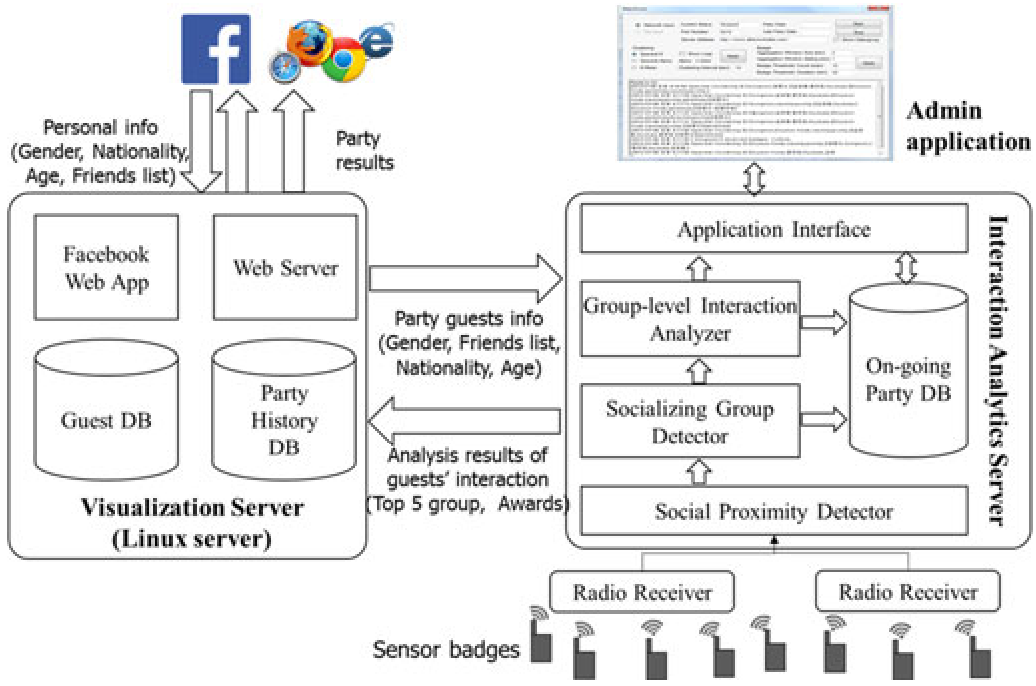 Figure 1: The Social Crowd Analytics System Architecture, from wearable badges to the analytics server.
Methodology: From Raw Signal to Social Context
The system processes data in three distinct phases:
- Sensing: Zigbee-enabled badges broadcast beacons every second. Wearable receivers collect these signals, building an RSSI matrix.
- Clustering: The system evaluates three mathematical models to group attendees:
- Connectivity Models (Spectral Clustering): Views guests as nodes in a graph. Best for complex, overlapping groups.
- Centroid Models (K-Means): Efficient for finding the centers of social gravity.
- Density Models (DBSCAN): Often failed because social density varies wildly between a couch and a wine table.
- Post-Processing: A sliding window filter ensures that someone just "walking through" a group isn't counted as a member.
Experimental Results: Accuracy in the Wild
The system was deployed across 13 parties with up to 45 guests. The Connectivity (Spectral) model emerged as the winner with 87.8% accuracy, closely followed by the Centroid model.
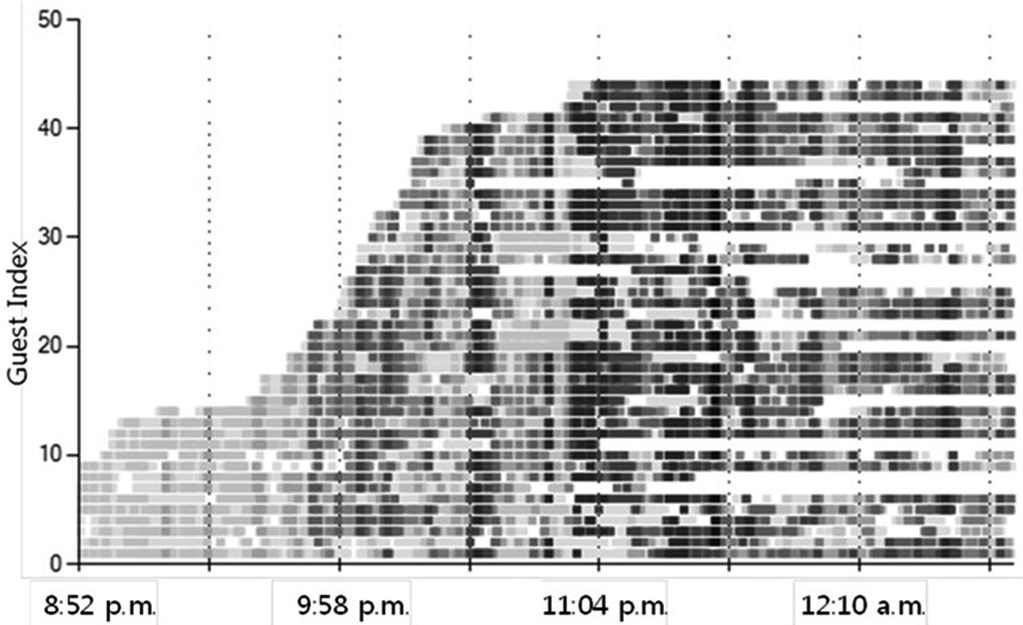 Figure 2: Performance comparison of clustering algorithms. Density models (blue) struggled significantly compared to Connectivity models (red).
Key Findings:
- Robustness: Accuracy remains high (>90%) once the party reaches a critical mass of 20+ people.
- Resource Efficiency: The entire group detection logic can run on a 2011-era smartphone (Google Nexus One) in under 200ms, consuming minimal power.
Applied Gamification: AmbiAward & AfterParty
The authors didn't just stop at data; they built applications that changed the party experience:
- AmbiAward: A real-time "Socializing Game." It awarded prizes for "Most Popular Man/Woman" and "Deepest Talkers" (those with the longest sustained group interaction), encouraging "wallflowers" to engage.
- AfterParty: A Facebook-integrated tool that allowed guests to see a summary of who they talked to most, providing an "ice-breaker" for follow-up emails and connections.
Critical Insight: The Privacy Paradox
A fascinating takeaway from the study is the "Privacy Paradox." While guests were terrified of audio recording, they were almost entirely comfortable with signal-based tracking. This suggests that computational proxy metrics (like RSSI) are the key to deploying social AI in public spaces—they provide the "pulse" of the crowd without the "surveillance" feel of cameras or microphones.
Conclusion & Future Work
This research bridges the gap between pervasive computing and social science. While the system currently lacks the ability to track "who is dominant in a conversation," it provides a robust, real-world baseline for group analytics. Future iterations could integrate low-power social signal processing (e.g., turn-taking) to differentiate between a group of listeners and a truly collaborative discussion.