
Engineering the Hybrid Sky: A System Approach to High-Power Aviation Electric Machines
System Approach to Electric Machines Development for Aviation Hybrid Propulsion Systems Under Economic Crisis
This paper presents a systematic approach for developing high-power density electric machines (EM) for aviation hybrid propulsion systems (HPS). Using a 400 kW, 12,000 r/min generator prototype as a case study, the authors detail the workflow from technical specification to bench testing and flying laboratory integration.
TL;DR
The aerospace industry is at a crossroads where economic pressure meets stringent environmental mandates. This paper outlines a comprehensive framework for developing high-power electric generators (400 kW) for Hybrid Propulsion Systems (HPS). By identifying localized failures in prototyping and advocating for Additive Manufacturing (AM) and Carbon Nanotubes (CNT), the researchers demonstrate a path toward achieving the highly-coveted 15-20 kW/kg power density threshold.
Context & Positioning
In the wake of global economic shifts, there is a burgeoning demand for 9–19 seat aircraft using HPS. Unlike traditional turbine development, which can cost billions and take a decade, electric machines (EM) offer a faster, more modular path to decarbonization. This work positions itself as a "bridge" between theoretical EM design and industrial-scale deployment, highlighting why current simulation-to-manufacturing pipelines often fail.
The "Technological Uncertainty" Gap
The authors identify a critical "Motivation-Pain Point": even with advanced multidisciplinary simulations (Ansys, Motor-Cad), prototypes often fail due to factors that software cannot easily account for:
- Manual Winding Variability: Slot fill factors and density can vary temperatures by 30-40 °C.
- Surface Roughness: Influences withdrawal losses and rotor sleeve mechanical strength by up to 17%.
- Assembly Errors: A manual winding error in this study led to a catastrophic interturn short-circuit and flame during bench tests.
Methodology: The Core Architecture
The development follows a rigorous V-model, starting from system-level simulation in AMESim to define the technical task, followed by automated multidisciplinary design.
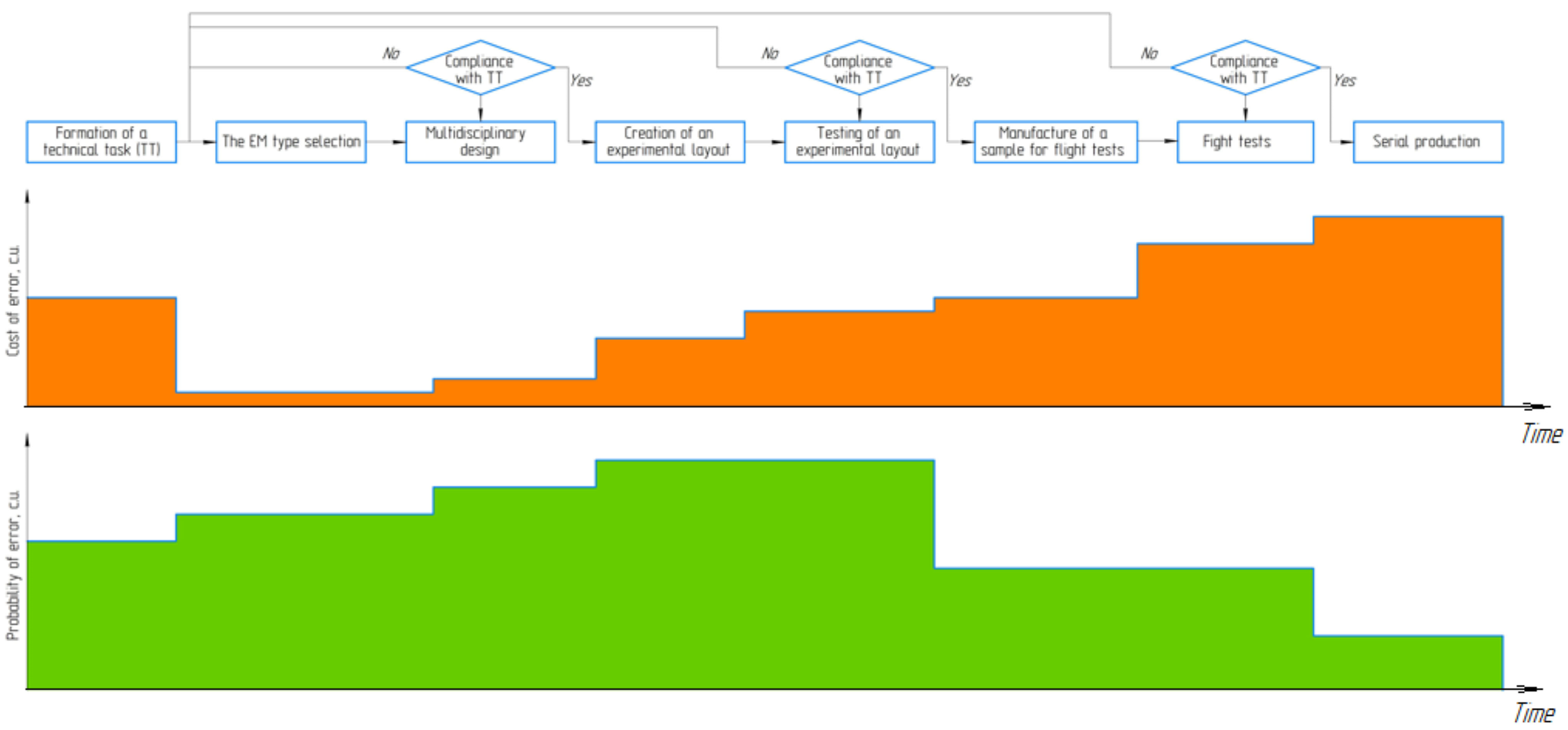 Fig 1: The EM development process highlighting the rising cost of errors vs. their probability at different stages.
The 400 kW Prototype Specs:
- Topolgy: Permanent Magnet Synchronous Machine (PMSM).
- Active Materials: 0.18 mm 2421 electrical steel; Sm2Co17 high-coercive magnets.
- Cooling: Forced oil cooling integrated into the stator.
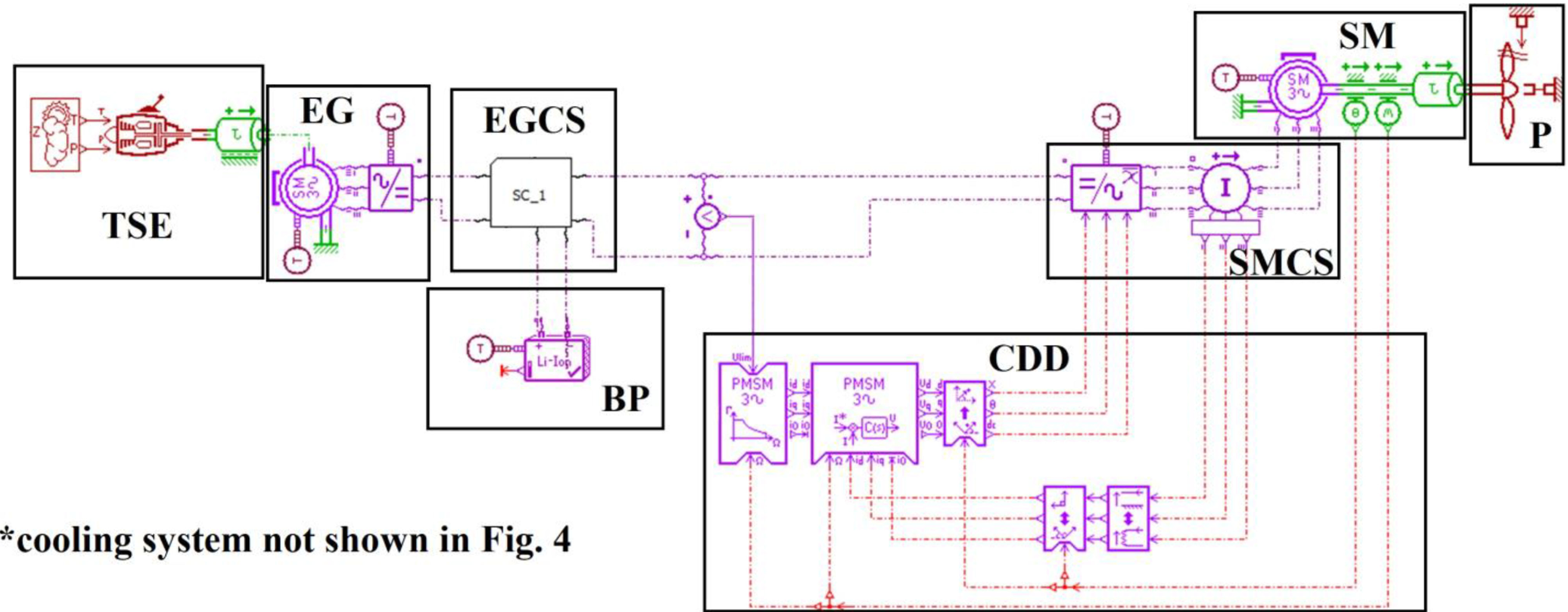 Fig 2: System-level simulation model of the Hybrid Propulsion System (HPS) including the turboshaft engine and battery pack.
Experimental Validation & The Role of Additive Manufacturing
The project experienced a real-world emergency: a fire during initial testing caused by an interturn short-circuit. This served as a catalyst for the paper's primary thesis: The industry must move toward Additive Manufacturing.
By using 3D printing for the stator and winding, the "human factor" is removed. The paper compares "Conventional" vs "Promising" (Additively Manufactured + New Materials) designs:
- Conventional Total Mass: 116 kg
- New Material Total Mass: 47 kg (A ~60% reduction!)
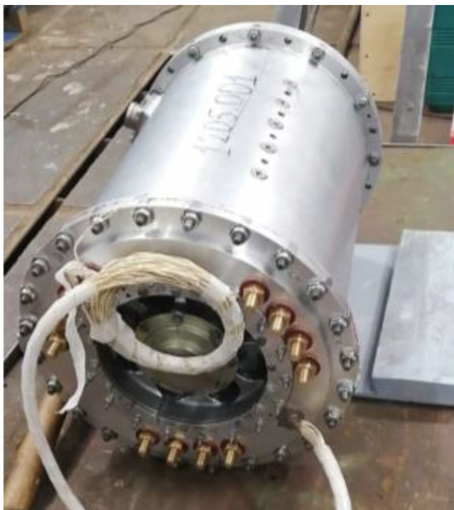 Fig 3: The 400 kW EM prototype on the test bench before flying laboratory integration.
Critical Analysis & Future Outlook
While the paper successfully validated the generator on a Yak-40 flying laboratory, it remains objective about the hurdles:
- CNT Limitations: Carbon Nanotube windings currently have lower conductivity than copper, leading to reduced efficiency despite the weight savings.
- Rotor Strength: 3D printing rotor components remains difficult due to the high centrifugal stresses at 12,000+ RPM.
- Data Scarcity: New soft magnetic materials often lack complete thermal and mechanical datasets for simulation.
Conclusion: This research proves that HPS development is significantly faster than traditional aero-engine cycles (3 years vs. 10+ years). To bridge the final gap to commercialization, the synergy between EM design and 3D printing hardware is not just an advantage—it is a necessity.