
Towards the Holy Grail: Bridging the Strategic-Operational Divide in Healthcare Simulation
Towards the holy grail: Combining system dynamics and discrete-event simulation in healthcare
This paper explores the integration of Discrete-Event Simulation (DES) and System Dynamics (SD) within healthcare modeling. It presents two case studies—chlamydia infection screening and social care call centers—demonstrating a "process environment" hybrid approach where detailed DES models are embedded within strategic SD frameworks.
TL;DR
This seminal work by Sally Brailsford and colleagues addresses the long-standing debate in Operations Research: how to combine the top-down, holistic perspective of System Dynamics (SD) with the bottom-up, stochastic precision of Discrete-Event Simulation (DES). Through healthcare case studies, it proves that while a "perfect" integrated model is technically and philosophically difficult, a hybrid "process environment" approach provides insights that either method alone simply cannot capture.
Background: The Clash of Worldviews
In the world of simulation, we often face a trade-off. If we want to understand how a virus spreads across a city, we use SD—viewing the population as a continuous "fluid" (stocks and flows). If we want to optimize the number of nurses in an Emergency Department, we use DES—tracking every individual patient through a queue.
However, healthcare is a "system of systems." An operational failure in a clinic (DES) causes long wait times, which eventually changes public behavior in the community (SD), which in turn changes the future demand the clinic sees. Modeling one without the other leads to a narrowed, and often dangerously incorrect, understanding of the system.
The Problem: Why is "Hybrid" so Hard?
The authors identify three levels of combination:
- Hierarchical: Models pass data linearly (A -> B).
- Process Environment: Models interact cyclically (A <-> B).
- Integrated (The Holy Grail): A single hybrid model where the distinction between discrete and continuous disappears.
The "Holy Grail" is difficult because of information loss. When a discrete "individual" moves into a continuous "stock," they lose their unique attributes (age, history, risk). When a continuous mass is turned back into discrete entities, how do we "re-generate" those specific characteristics accurately?
Methodology: Two Healthcare Interventions
Case Study 1: The Chlamydia Planning Toolkit
The team modeled chlamydia prevalence in Portsmouth using a dual-software approach.
- SD (Vensim): Modeled the "SIR" (Susceptible-Infected-Recovered) infection process in the city.
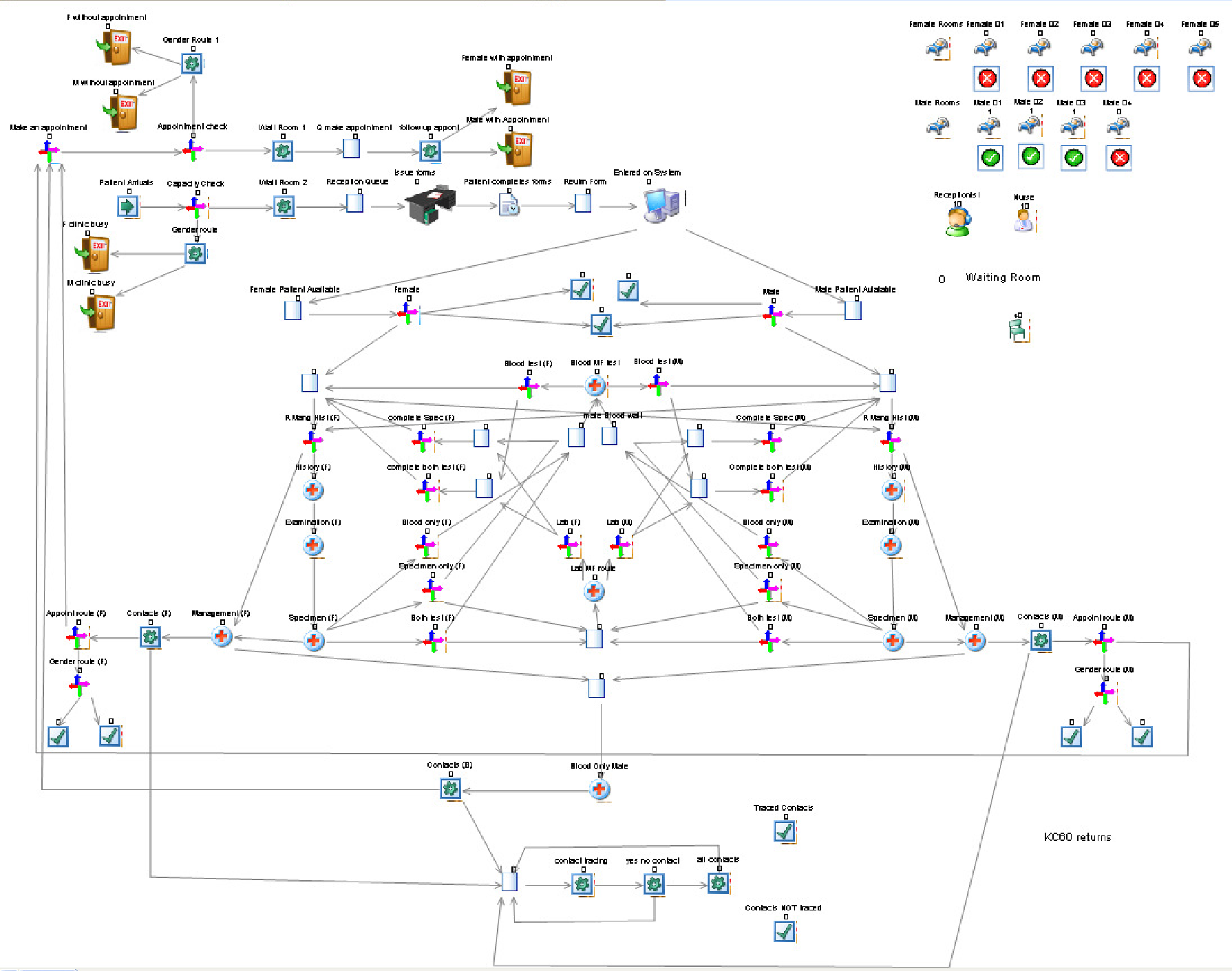
- DES (Simul8): Modeled the actual Genito-Urinary Medicine (GUM) clinic where patients are treated.
The Insight: By feeding clinic wait times back into the SD model, they could simulate how "poor clinic performance" eventually discouraged screening, leading to higher community infection rates—a classic "vicious cycle."
Case Study 2: Social Care Call Center
Hampshire County Council needed to plan for an aging population.
- SD: Modeled aging demographics and service eligibility over 20 years.
- DES: Modeled the "Contact Centre" that handles intake calls.
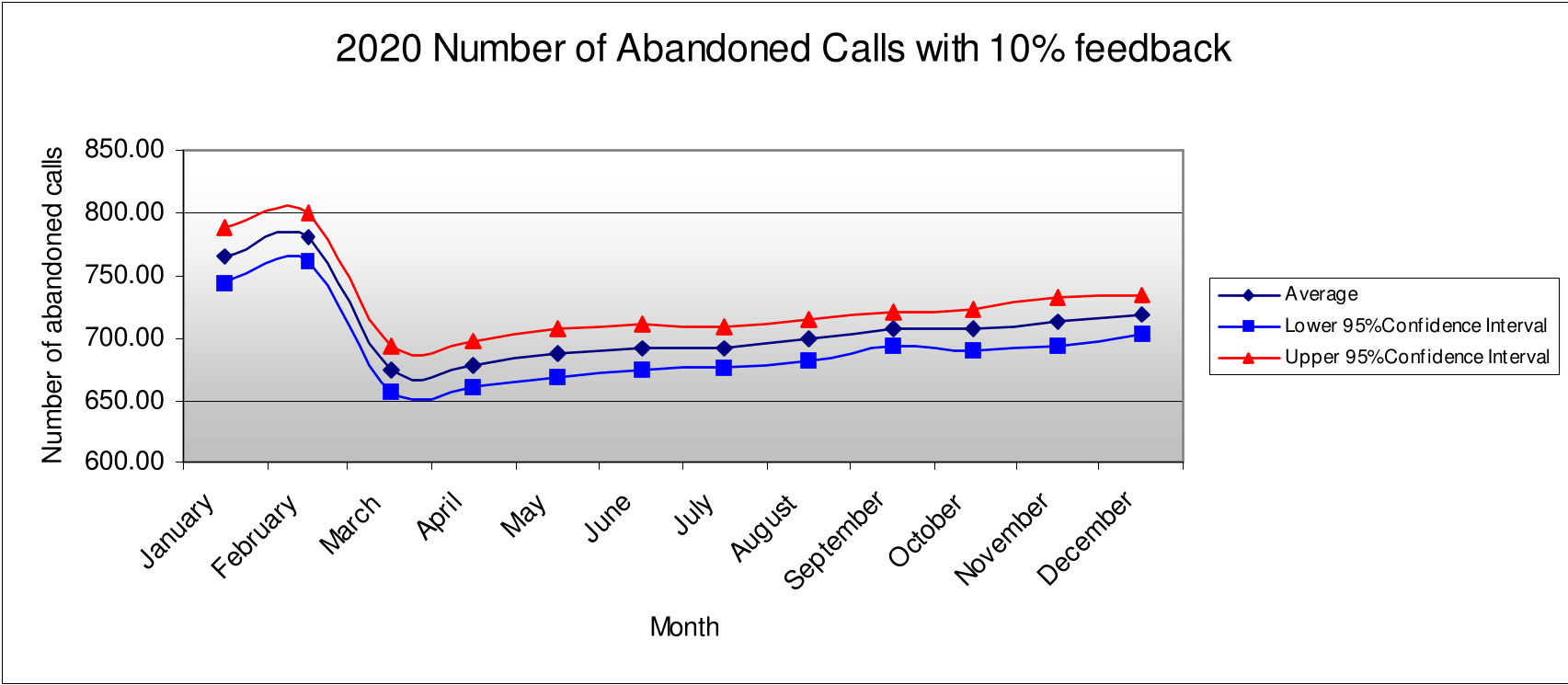
The Insight: They tested a "10% feedback" hypothesis. If 10% of people who hang up (because the queue is too long) wait a month and call back, their health condition has likely deteriorated, requiring more expensive care later.
SOTA Comparison & Results
The authors argue that using SD alone would have oversimplified the "queuing" reality of healthcare, while using DES for the entire county would have been a "data-intensive nightmare."
- Efficiency: The hybrid models allowed for fast strategic runs (SD takes <1 second) while keeping the necessary detail for operational tweaks (DES runs in missions of minutes).
- Counter-Intuitive Findings: In Case Study 2, they successfully quantified how operational staffing levels (Tier 1 vs Tier 2 advisors) directly impacted the severity of unmet needs in the wider community over a decade-long horizon.
Critical Analysis & Conclusion
While the authors admit they haven't reached the "Nirvana state" of a truly unified mathematical language for SD and DES, they demonstrate that the Process Environment mode is currently the most pragmatic solution for healthcare planners.
The Takeaway: For modern AI and OR practitioners, this paper serves as a reminder that "more detail" is not always better. The real value lies in capturing the feedback loops between the strategic environment and operational units. The technical hurdle isn't the software (AnyLogic, Simul8, Vensim)—it's the conceptual philosophy of how to bridge the gap between "the individual" and "the population."