
From Subjectivity to Synergy: A Data-Mining Framework for Product Family Design
A systematic data-mining-based methodology for product family design and product configuration
The paper introduces a systematic framework for product family design and configuration leveraging data mining techniques like PCA, Association Rules, and CBA classifiers. It successfully transitions traditional design from expert-reliant subjectivity to a data-driven process, demonstrated by achieving a 96.11% configuration accuracy in a desktop computer host case study.
TL;DR
This paper presents an end-to-end pipeline that transforms "messy" historical sales data into an intelligent configuration engine. By combining PCA, Association Rules, and CBA classifiers, the authors provide a way to automate complex product design (like customized PCs), achieving over 96% accuracy while reducing the need for human expert intervention.
Background: The "Customization Paradox"
In modern manufacturing, companies face the "Customization Paradox": customers want unique, personalized products, but enterprises need common platforms to keep costs low. Traditionally, bridge-building between customer needs (CN) and technical modules was done by experienced engineers. However, as product complexity scales, human designers become a bottleneck—prone to fatigue, bias, and inefficiency.
The Core Insight: Mining Differentiated Needs
The authors suggest that not all customer requirements are created equal. By applying Principal Component Analysis (PCA), they separate "Differentiated Needs" (the features customers actually care about) from "Non-Differentiated Needs" (features customers are willing to standardize on). This allows for a much larger "Common Platform," which is the holy grail of mass customization.
Methodology: The Implementation Pipeline
The proposed framework follows a rigorous five-step data-driven path:
- Digitization: Converting fuzzy customer language (e.g., "High speed") into structured fuzzy numbers.
- PCA Extraction: Reducing the dimensions of customer needs to find the "Principal Components" that drive variety.
- Rule Mining: Using Association Rule algorithms to find "If-Then" logic between needs and hardware (e.g., If high-end gaming need, THEN M13 CPU and M73 GPU).
- CBA Classification: Building a Classification Based on Association (CBA) model to act as the "Digital Expert."
- Sequence Alignment: Borrowing techniques from biology to align product variants and identify which modules are "Common" (Platform) vs. "Special" (Custom).
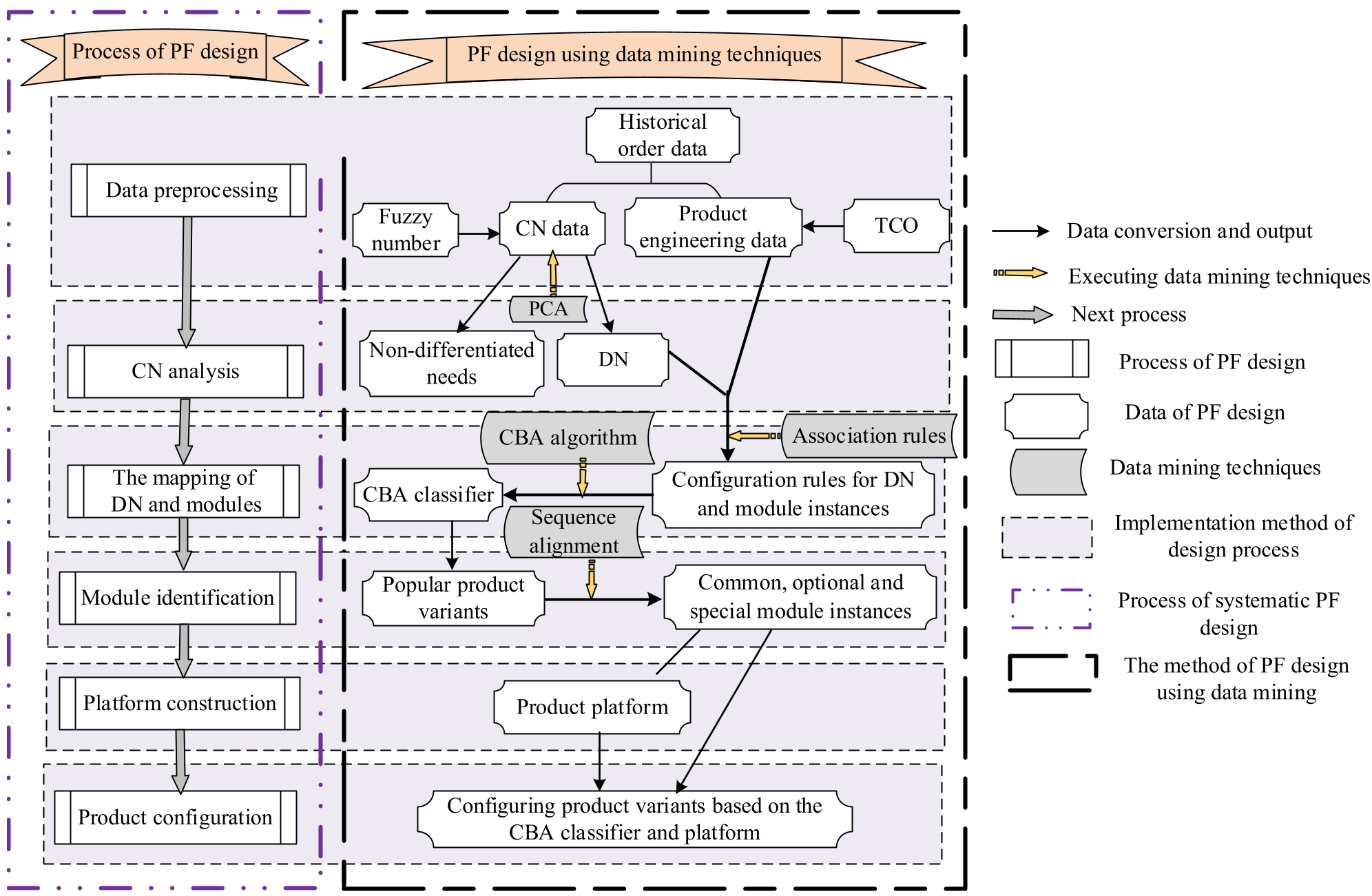 Figure 1: The systematic pipeline from historical orders to automated configuration.
Experiments: The PC Host Case Study
The researchers applied this to a desktop computer host company. By analyzing 500 historical orders, they extracted three key Differentiated Needs: Price, Operating Speed, and Storage Space.
The resulting CBA Classifier was able to recommend the "Best Product Configuration" with striking efficiency. While initial training sets (based on human data) showed an accuracy of ~79%, the refined system eventually reached over 96% accuracy in real-world test sets during a five-month trial.
 Figure 2: Coverage and Accuracy trends showing the robust learning capability of the method.
Academic Insight: Why it Works
The brilliance of this paper lies in its Sequence Alignment for Platform Planning. By treating a product configuration like a DNA sequence, the system can mathematically pinpoint which modules are "Common" and should be pre-assembled in the warehouse.
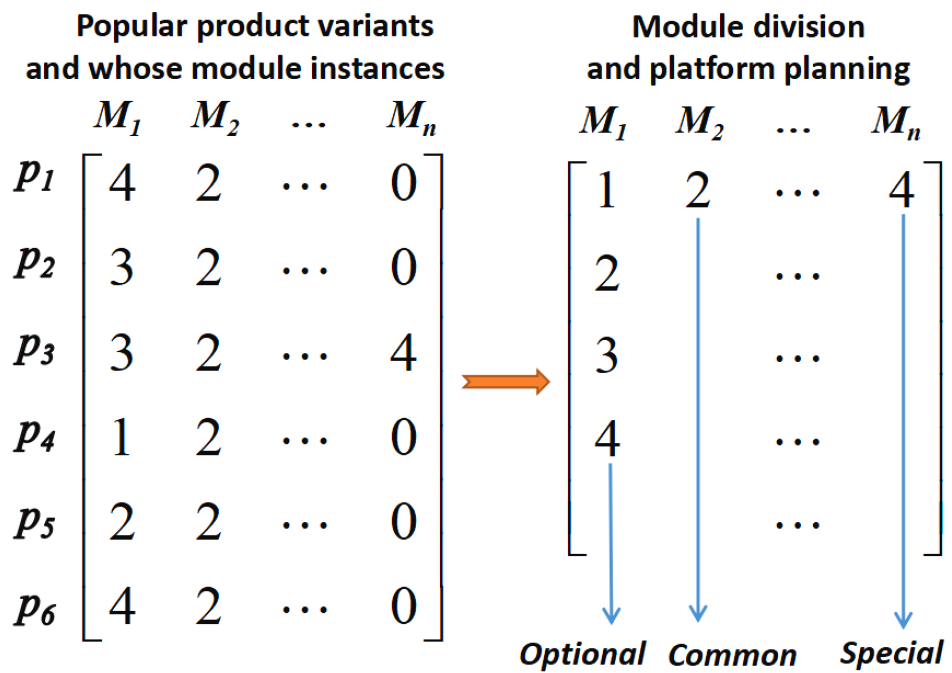 Figure 3: Visual representation of how modules are classified into Common, Optional, and Special via alignment.
Conclusion & Future Outlook
This work fills a critical gap by providing a holistic methodology rather than a single-point algorithm. It proves that we can "extract" the expertise of senior engineers from historical databases and turn it into an automated, low-error configuration engine.
Limitations: The current model is somewhat static; it doesn't yet account for how customer tastes shift over time (e.g., the "speed" of 2024 is the "slowness" of 2026). Future research into "Dynamic Data Mining" will be essential to keep these product families relevant in fast-moving markets.