
Mapping the Pulse of Healthcare: A Decade of Process Mining Evolution
Systematic Mapping of Process Mining Studies in Healthcare
This systematic mapping study (SM) provides a comprehensive overview of Process Mining (PM) applications in healthcare by analyzing 172 primary studies published between 2005 and 2017. The authors establish a multi-dimensional classification scheme to categorize research trends, contribution types, and the specific PM techniques—such as Heuristic Miner and Fuzzy Miner—used to optimize complex clinical workflows.
TL;DR
Process Mining (PM) has transitioned from a niche business tool to a vital diagnostic instrument for healthcare workflows. This systematic mapping study by Erdogan and Tarhan analyzes 172 papers to show that while we are excellent at discovering what happens in hospitals (90% of studies), we are still in the early stages of improving those processes (only 12% focus on enhancement).
The "Spaghetti" Challenge in Clinical Workflows
Healthcare is notoriously difficult to model. Unlike a manufacturing line, a patient's journey is highly variable, influenced by human intuition, emergency pivots, and multi-disciplinary handovers. Previous attempts at process management often resulted in "Spaghetti Models"—visualizations so complex they were unreadable.
The authors argue that we need a systematic way to understand how the community is using PM to untangle this complexity. They identified a critical gap: most research stays within the "Validation" phase, rarely moving into large-scale, multi-hospital "Evaluation."
Methodology: How the Map was Built
The researchers didn't just list papers; they created a Classification Scheme to act as a GPS for the field. They categorized studies by:
- PM Activity: Is the focus on Discovery (mapping the current state), Conformance (checking if doctors follow guidelines), or Enhancement (fixing bottlenecks)?
- Research Type: Is it just an "Experience Paper" or a rigorous "Evaluation Research"?
- Specialty: From Oncology to the Emergency Department.
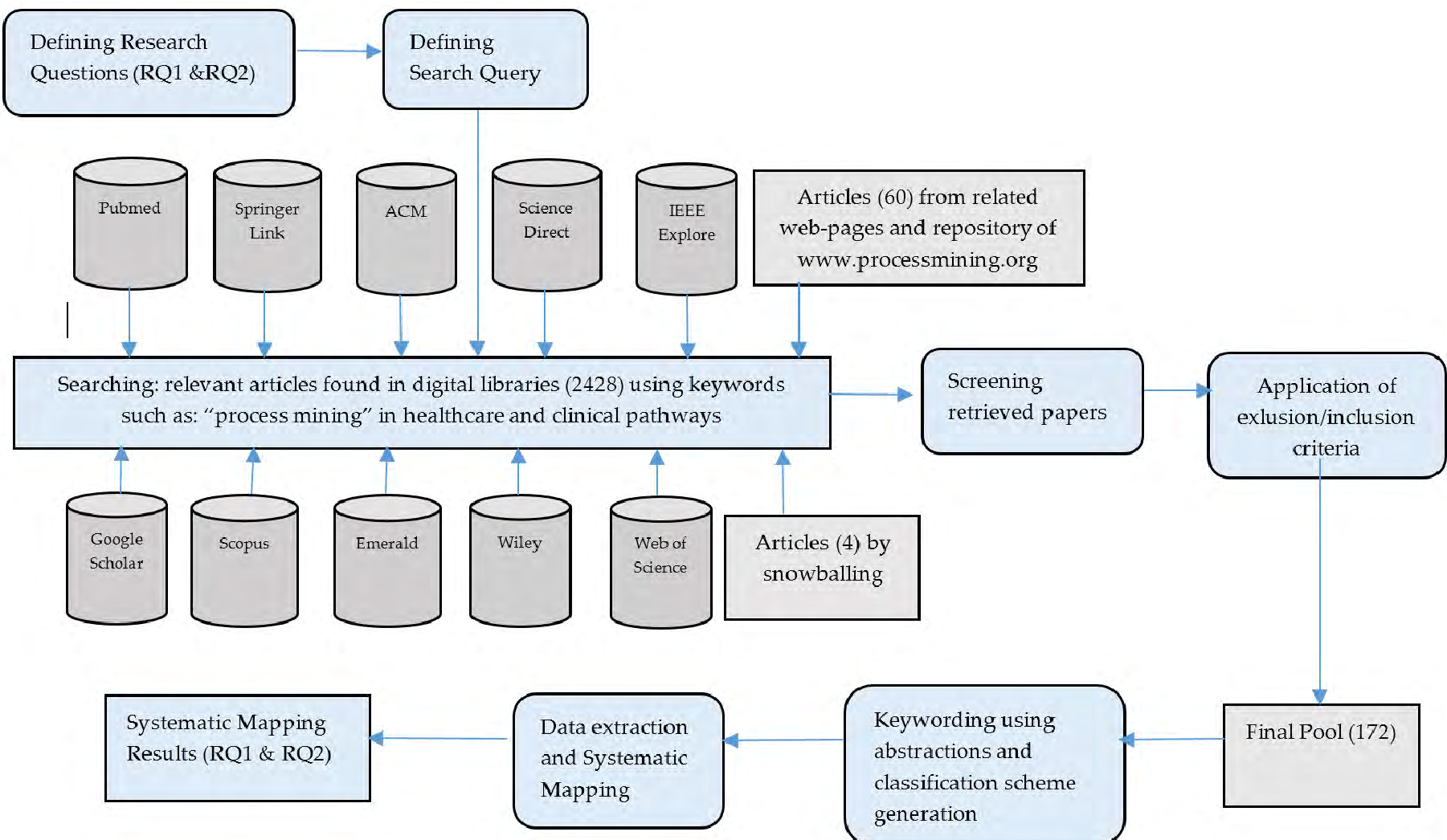 Figure 1: The Systematic Mapping workflow used to filter 2,428 records into 172 key insights.
Key Insights: Where is the Field Crowded, and Where is it Empty?
1. The Dominance of Discovery
Most researchers are still using PM as an "X-ray" to see the current process. The Heuristic Miner and Fuzzy Miner are the tools of choice because they are robust against the "noise" (outliers) inherent in hospital data.
2. The Clinical Sights
Oncology and Surgery are the "SOTA" hotspots for PM. Why? Because these fields rely on rigid protocols (Clinical Pathways), making it easier to measure deviations than in more fluid fields like general practice.
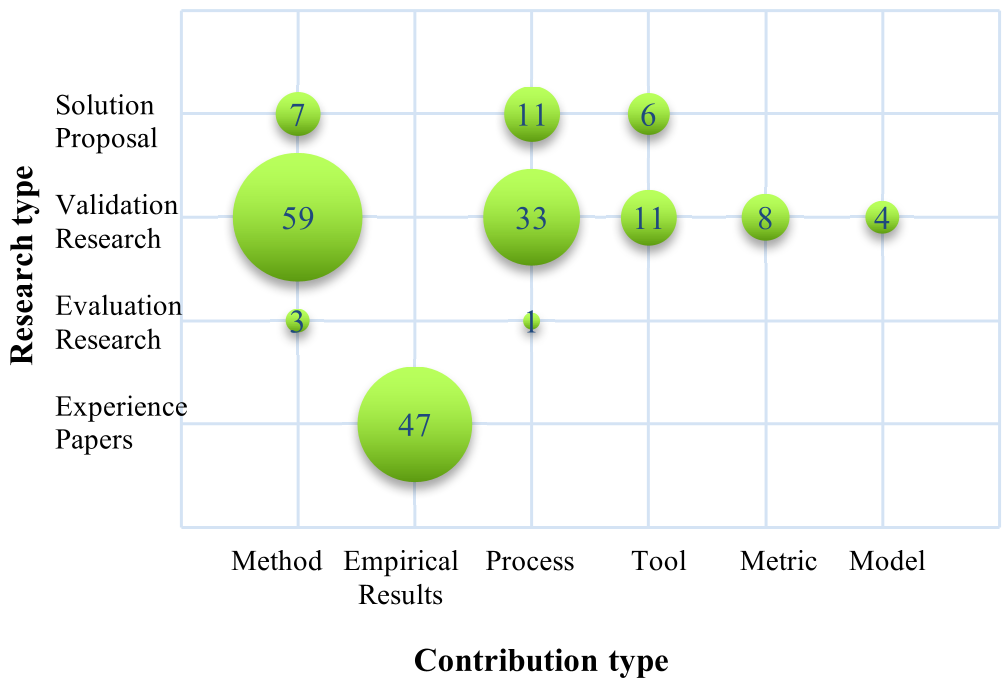 Figure 2: Cross-analysis showing that while many new 'Methods' are proposed, they often remain in the 'Validation' stage without broad clinical evaluation.
3. The Data Quality Bottleneck
A major takeaway is that "Healthcare Data Challenges" (e.g., incomplete logs, varying granularity) remain the biggest barrier. 47 of the 172 studies were dedicated solely to cleaning and preparing data before the actual mining could begin.
Critical Analysis: Moving Beyond the Single Department
The study highlights a significant limitation in the current state of the art: Scale. Most PM projects are confined to a single department or a single hospital. To truly revolutionize healthcare, PM must evolve to handle:
- Multi-center benchmarks: Comparing how different hospitals treat the same condition.
- Predictive Monitoring: Moving from "What happened?" to "What is about to go wrong with this patient's pathway?"
Conclusion
Erdogan and Tarhan’s mapping study serves as a call to action. We have the algorithms (Heuristic, Fuzzy, Alpha) and the interest is surging. However, the future of the field lies in Process Enhancement and Visual Analytics—creating dashboards that medical professionals can use in real-time, rather than academic post-mortems of past event logs.
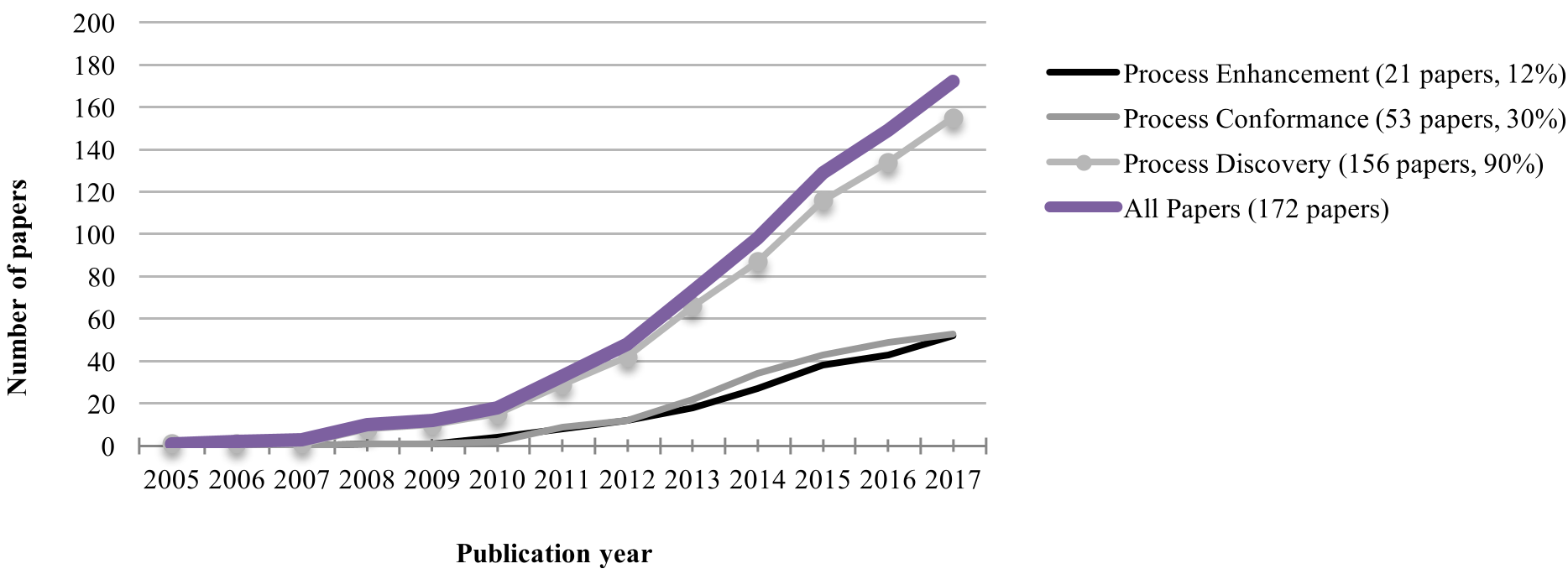 Figure 3: The rapid growth of PM activities in healthcare, with Process Discovery leading the way.
Future Outlook: Expect to see more "Domain-Specific" tools that hide the complexity of Petri Nets and Heuristic Nets behind user-friendly clinical dashboards.