
Advancing Social Integration: How AmI and Social Networks are Redefining Elderly Care
A Systematic Review of Proposals for the Social Integration of Elderly People Using Ambient Intelligence and Social Networking Sites
This paper presents a systematic review of 53 computational approaches designed to promote the social integration of elderly people. It focuses on the synergy between Ambient Intelligence (AmI) and Social Networking Sites (SNSs) to mitigate social isolation and preserve cognitive health in aging populations.
TL;DR
As the global population aged 60+ is set to double by 2050, social isolation has become a "silent killer" for the elderly. This systematic review explores how Ambient Intelligence (AmI) and Social Networking Sites (SNSs) are moving beyond mere gadgets to become vital lifelines. The paper identifies that while AmI provides the environment, SNS provides the connection, and their integration is the key to psychological and cognitive longevity.
Problem & Motivation: The Loneliness Epidemic
Social isolation isn't just a feeling; it's a biomedical risk factor. The scientific community faces a twofold challenge:
- Physical/Cognitive Barriers: The elderly often struggle with complex interfaces or lack the mobility to engage in traditional social circles.
- Communication Asymmetry: Younger generations use fast-paced, digital communication, while older adults may prefer asynchronous or more "presence-based" interactions.
The authors' insight is grounded in Gerontechnology: the idea that technology must adapt to the physical and cognitive constraints of aging, rather than forcing the elderly to adapt to the tech.
Methodology: Mapping the Tech Landscape
The researchers analyzed 53 core studies to categorize how we fight isolation. They identified a shift from purely functional monitoring (vital signs) to emotional supports.
The Core Framework
The methodology focuses on five distinct intervention strategies:
- Independent Living: Using tech to keep seniors safe at home.
- Cognitive Stimulation: Triggering reminiscence and memory through digital media.
- Emotional Ties: Closing the gap between long-distance relatives.
- Physical Activity: Using "Exergames" (like Nintendo Wii) for social play.
- Health Monitoring: Integrating sensors with social alerts.
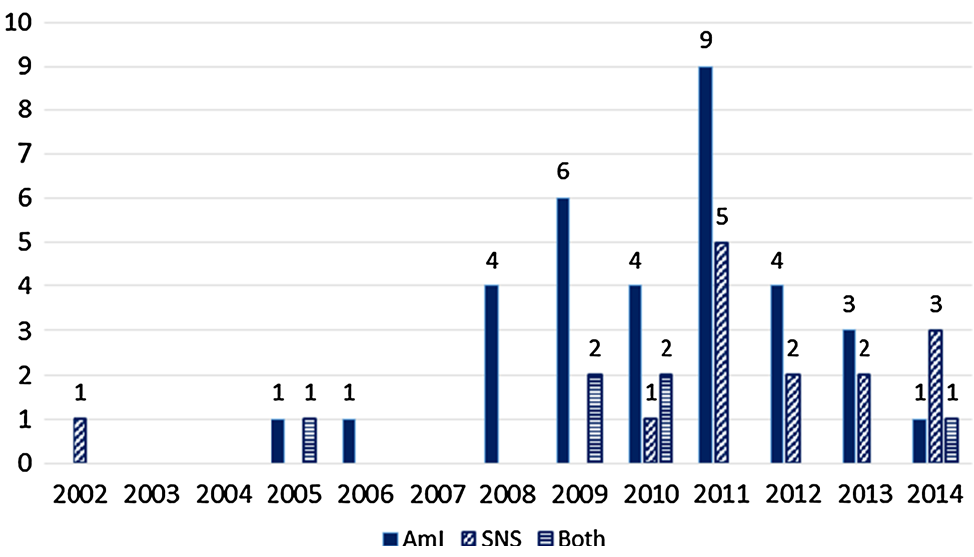 Figure 1: The steady climb in research interest highlights the scientific shift toward social-wellness technologies.
Key Technological Resources
The review breaks down the "How" into seven technical pillars:
- Robots: Telepresence systems that provide a physical proxy for distant relatives.
- Ambient Displays: Low-effort, always-on screens that show photos or family status.
- Wireless Sensor Networks (WSN): Monitoring movement within "Smart Homes."
- SNS: Leveraging platforms like Facebook but tailoring the UI for older eyes and hands.
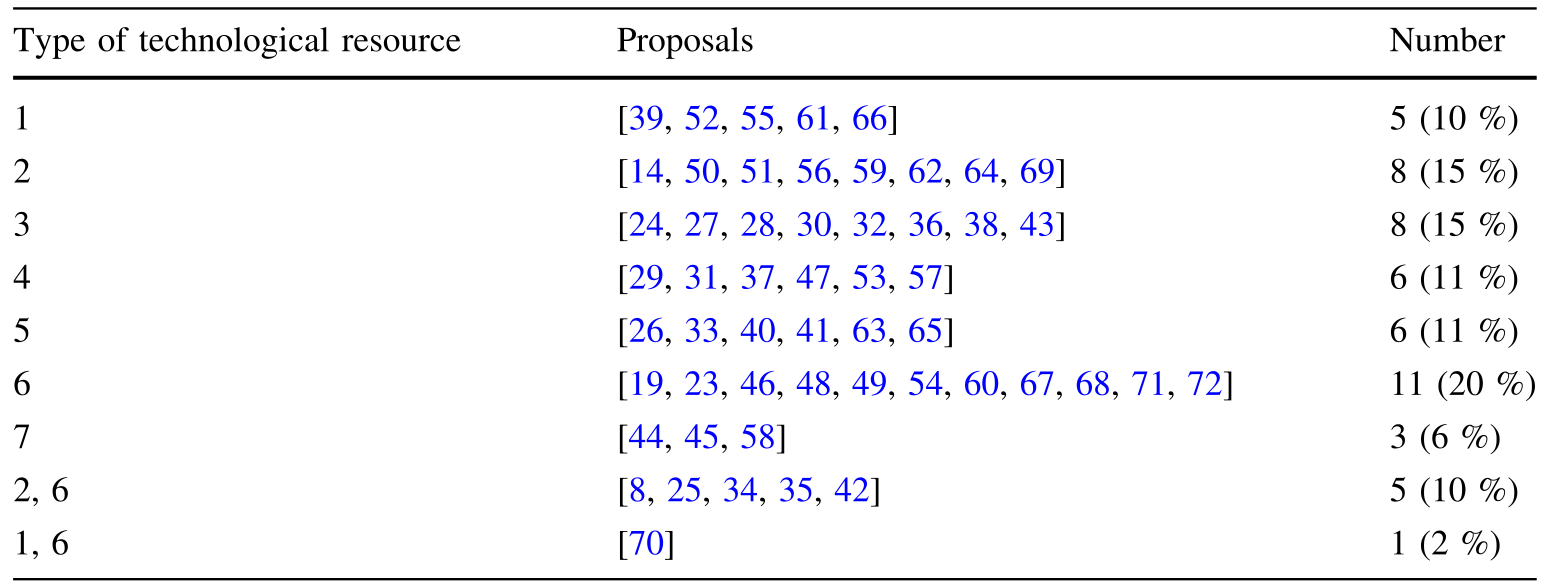 Table 1: Classification of proposals based on the specific technological resources employed.
Experimental Insights: What Actually Works?
The study found that Ambient Displays paired with SNS (11% of studies) are the "gold standard" for the future. Why? Because they lower the cost of entry. While dedicated robotics and smart-home sensor nets (WSN) are expensive and invasive, tablet-based ambient displays are intuitive and utilize existing internet infrastructure.
Key Results:
- 62% dominance of AmI is based on its ability to be context-sensitive and non-obtrusive.
- SNS adoption by seniors over 65 jumped from 3% to 33% in just six years, making it the fastest-growing niche for intervention.
Critical Analysis & Conclusion
The Takeaway
We are moving away from technology that "watches" the elderly (surveillance) toward technology that "engages" them (integration). The most impactful work identifies that social interaction is a biological necessity for cognitive health.
Limitations & Future Work
The paper identifies a major gap: Early Detection. Most current systems respond to isolation rather than predicting it. The authors propose a "Predictive Model of Social Isolation" using Cognitive Computing. By using data mining and pattern recognition, future systems won't just facilitate a call—they will alert a caregiver before a senior falls into a depressive or isolated state.
The ultimate goal? Ambient Social Networking Sites—a world where the home itself understands your social needs and connects you to your loved ones naturally.