
FeD: Quantifying the Emotional Pulse of Social Media through Intent and Intensity
Systematical Approach for Detecting the Intention and Intensity of Feelings on Social Network
The paper introduces FeD (Feeling Distinguisher), a systematic approach for detecting both the intention (positive/negative) and intensity (strong/general) of feelings in social network posts. It utilizes a hybrid model combining supervised Latent Dirichlet Allocation (sLDA), LDA, and SentiWordNet to categorize emotions into four distinct classes: Strongly Negative (SN), Generally Negative (GN), Generally Positive (GP), and Strongly Positive (SP).
TL;DR
Researchers have developed FeD (Feeling Distinguisher), a multi-layered system that doesn't just ask if you are sad, but how sad you are. By integrating sLDA for classification and SentiWordNet for lexical intensity, FeD categorizes social media posts into four tiers: Strongly Negative, Generally Negative, Generally Positive, and Strongly Positive. It out-performs standard SVM and sLDA models by nearly 20%, offering a potential lifeline for early mental health intervention.
Context: Beyond "Happy" and "Sad"
In the wake of tragedies like the 2014 Isla Vista killings, where attackers left digital trails of profound dissatisfaction, the academic community realized that binary sentiment analysis (Positive vs. Negative) is insufficient. We need to distinguish between a "bad day" and a "mental health crisis." The difficulty lies in the informality of social media—where "I'm fine" might mean something entirely different based on surrounding keywords.
Methodology: The Multilayer Approach
The authors argue that the difference between "Negative" and "Positive" is broad enough for supervised learning (sLDA), but the difference between "General" and "Strong" is often too subtle and "vague" for hard labels. Thus, they designed a specialized pipeline:
- Sentiment Filtering: Using SentiWordNet to strip away non-emotional noise.
- Intent Classification: sLDA acts as the gatekeeper, deciding if a post is Negative (N) or Positive (P).
- Intensity Inference: Within the Predicted N or P category, the system uses unsupervised LDA to find latent topics that represent intensities (SN vs. GN and SP vs. GP).
- Scoring & Comparison: The final intensity is determined by a formula that averages the SentiWordNet scores of the discovered representative keywords.
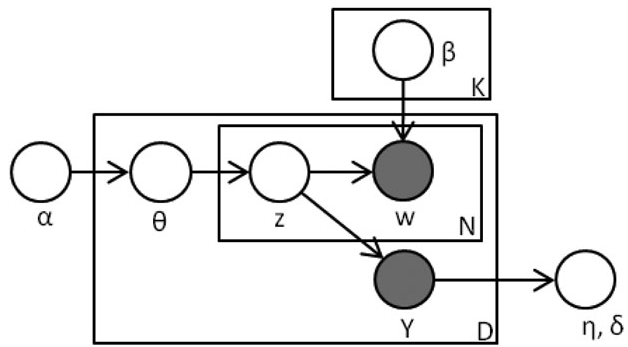 Figure 1: The FeD architecture showing the duality between the Training Phase (keyword learning) and Evaluation Phase (intensity scoring).
The "Why": Physical Intuition of Keywords
The success of FeD stems from how it weights specific words. For instance, in the Strongly Negative (SN) category, terms like "bad" and "hate" carry significantly higher negative weights in SentiWordNet than "tired" or "hard" found in General Negative (GN) posts. By mapping these to latent topics, FeD captures the linguistic style of different emotional states.
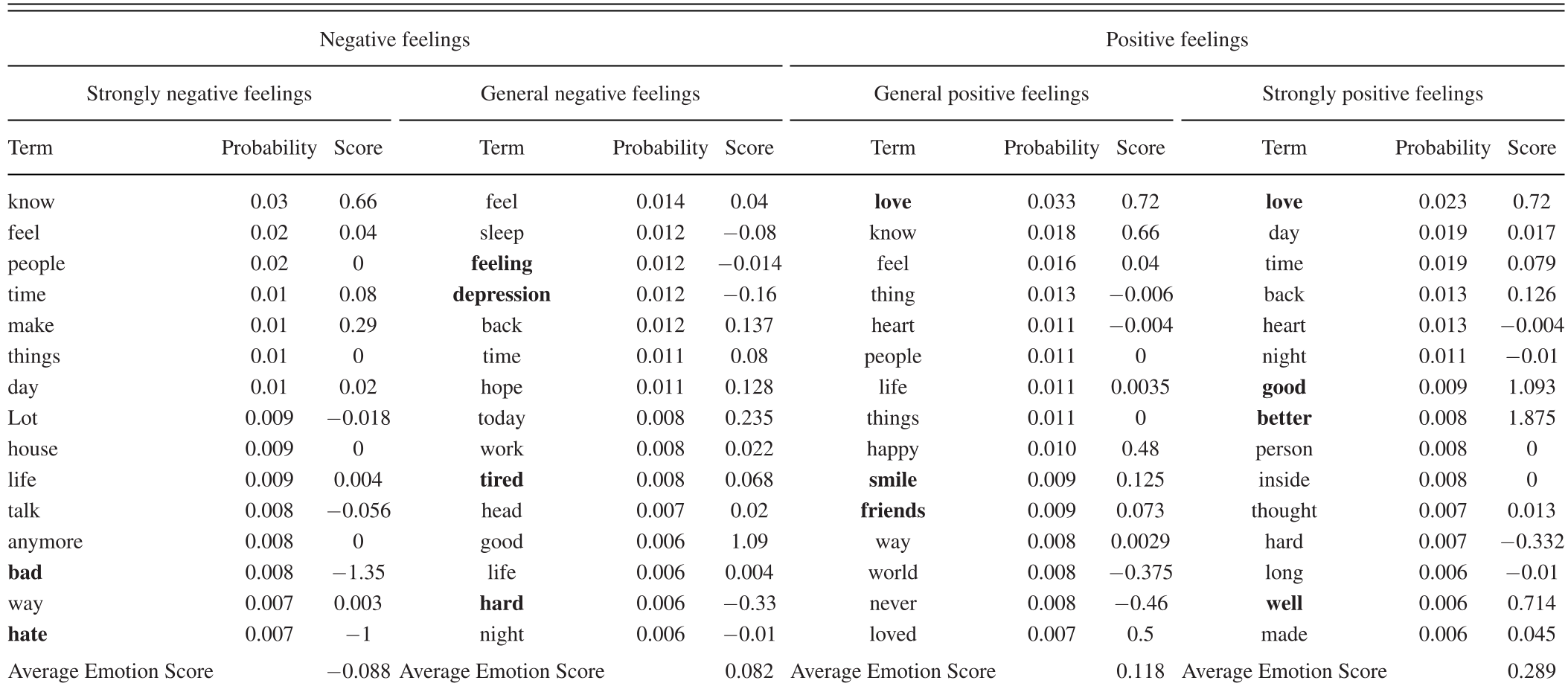 Table 1: Top concept keywords showcasing the lexical difference between General and Strong feelings.
Experimental Performance
The system was tested against SVM (Support Vector Machines) and standard sLDA. The researchers introduced a custom metric called Significant Error (), which penalizes high-stakes misclassifications (e.g., labeling a "Strongly Negative" post as "Positive").
- Accuracy: FeD consistently outperformed SVM by ~3.6% and sLDA by ~5.2%.
- F1-Score: Showed a stable improvement, demonstrating that the modular use of LDA for intensity refinement effectively reduces noise.
- Case Study: Interestingly, in a community like "Wedding Plans," FeD predicted a "Generally Negative" status. Upon manual review, it was correct—users weren't sharing joy; they were venting about the stress/difficulty of planning!
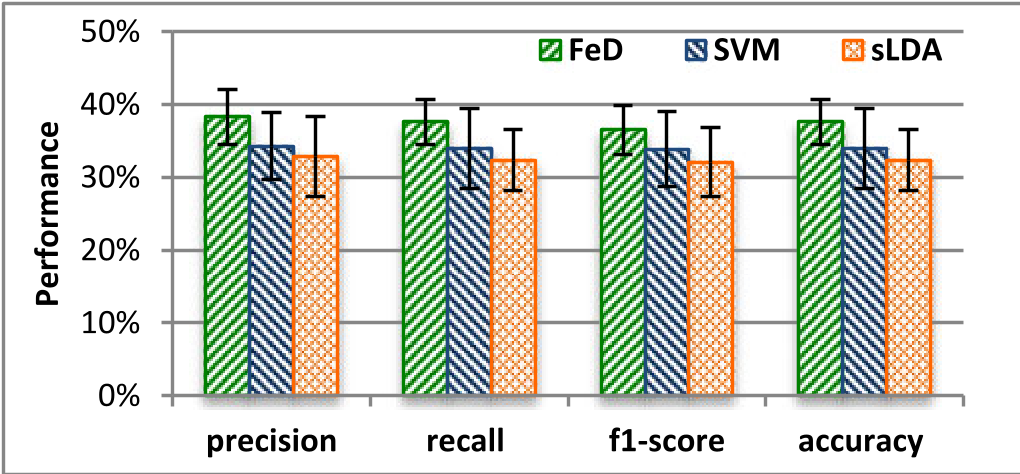 Figure 2: Performance metrics across 10-fold cross-validation.
Critical Insight & Future Outlook
While FeD is a major step toward nuanced sentiment analysis, its reliance on SentiWordNet means it might struggle with sarcasm or rapidly evolving internet slang. However, its core "takeaway" is profound: Supervised intent + Unsupervised intensity is a powerful paradigm for handling the skewed and subjective nature of human feelings online.
Future iterations could integrate Transformers (like BERT or GPT) to replace the LDA layers, potentially capturing even deeper contextual nuances in "Strongly Negative" expressions.
Conclusion
FeD represents a shift from "opinion mining" to "empathy mining." By quantifying the intensity of feelings, it provides a technical foundation for tools that could one day alert support systems or friends before a mental health crisis escalates to tragedy.