
Deciphering the Digital Hive: A Systems Thinking Approach to OSS in Social Media
A systems thinking model for open source software development in social media
The paper proposes a novel "Systems Thinking" model to analyze and optimize open-source software (OSS) development within social media environments. It integrates Hard Systems Thinking (HST) and Soft Systems Thinking (SST) to bridge the gap between individual technical tasks and collaborative social dynamics.
TL;DR
The paper "A Systems Thinking Model for Open Source Software Development in Social Media" explores how to harmonize two distinct systems: the chaotic, organic nature of social media and the structured, goal-oriented world of open-source development. By combining Soft Systems Thinking (SST) for discovery and Hard Systems Thinking (HST) for execution, the author provides a roadmap for turning social interactions into efficient software production.
Behind the Motivation: Why Open Source Needs "Systems Thinking"
While social media provides an unprecedented platform for knowledge sharing, it often lacks the rigorous structure required for complex engineering tasks. Most OSS projects suffer from unexpected emergent behaviors—bottlenecks or communication breakdowns that arise when hundreds of developers interact without a unified methodological lens.
The author argues that we cannot treat social media-based development as a simple engineering problem. Instead, it is a "system of systems" where the human environment is just as critical as the code itself.
Methodology: Balancing "What" and "How"
The heart of the paper lies in the hybrid application of two systemic philosophies:
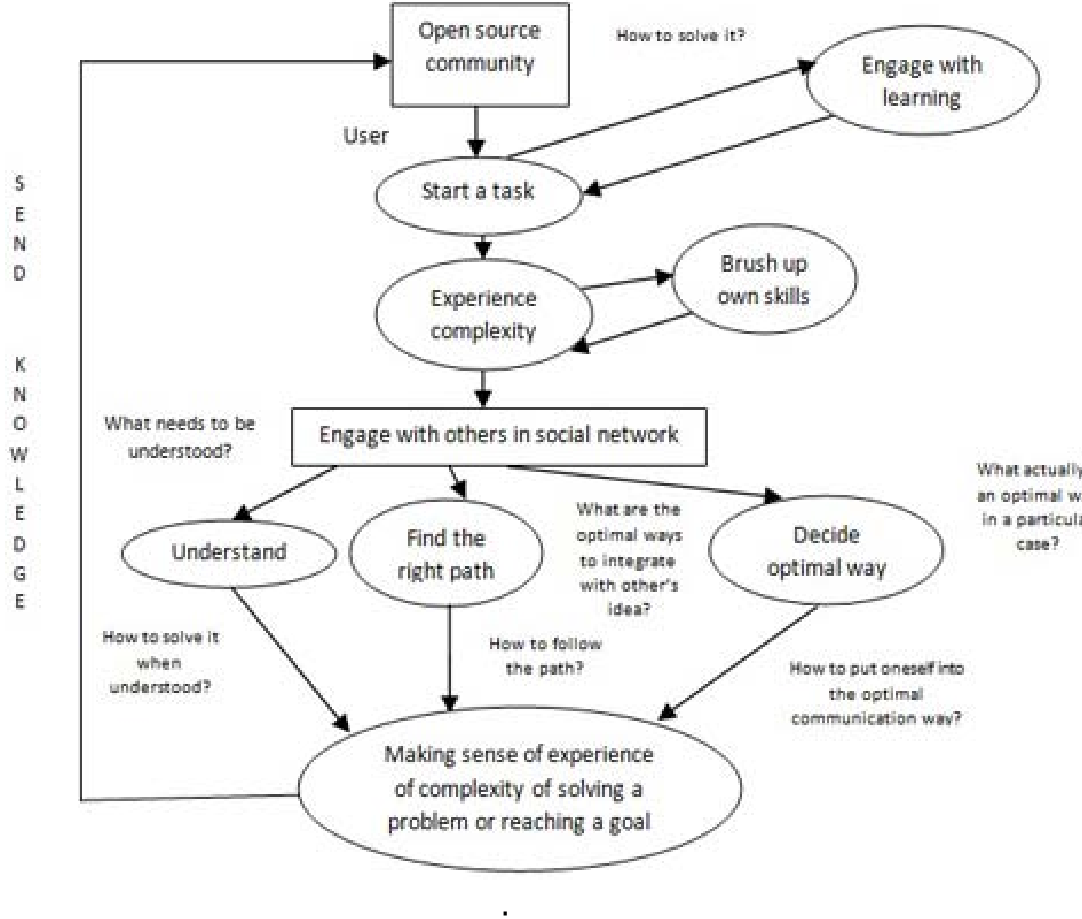
- Soft Systems Thinking (SST): This is the "Learning Paradigm." It is used when the problem is messy and the definition of "success" is unclear. It helps the community understand the problem and find the optimal way to communicate.
- Hard Systems Thinking (HST): This is the "Optimization Paradigm." Once SST has cleared the fog and defined the goal, HST steps in to solve the problem in the fewest possible steps.
The Dual-Structure Model
The paper proposes two specific workflows to handle this synergy:
- The Task Pipeline: A primary user identifies a complexity, hands it to the "social hive," which uses SST to align on the problem and HST to execute the fix, before returning the knowledge to the source.
- The Error-Correction Loop: Specifically designed to identify "bad synergies" or friction between the social platform and the development community.
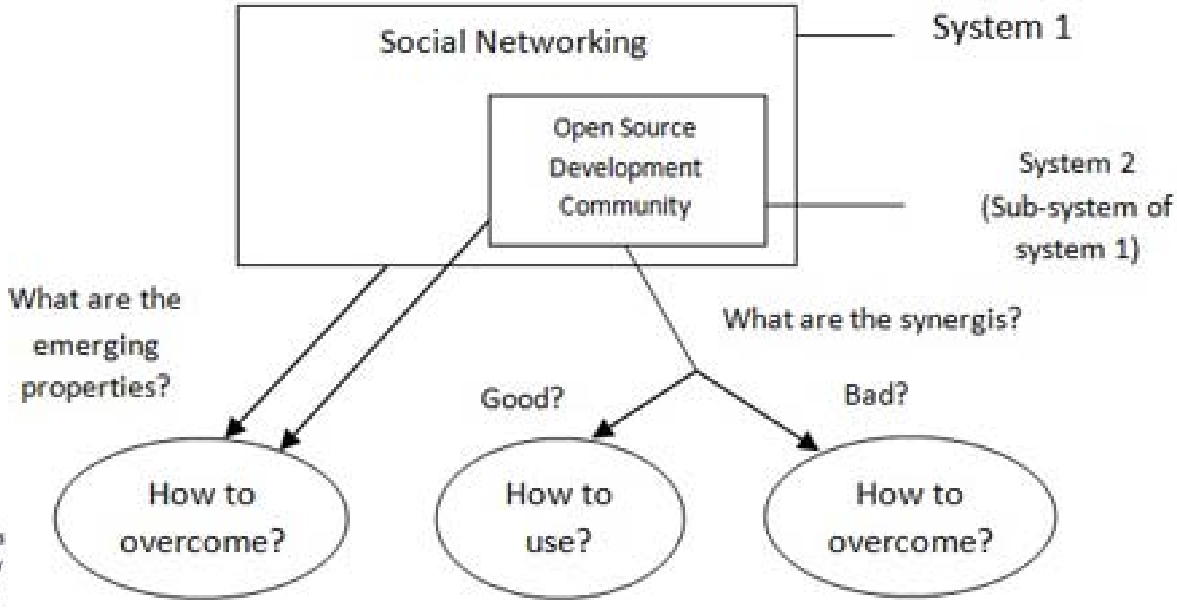
Analyzing the Synergy: The Result of Integration
The paper posits that Synergy is the core concept of system science. In this context, synergy occurs when the combined action of the social network produces an outcome far superior to the sum of individual contributions.
By using the proposed model, communities can:
- Identify Emergent Properties (unexpected outcomes) before they become hurdles.
- Utilize HST to stabilize the system once SST has identified the correct direction.
Critical Insight & Future Outlook
The true value of this work lies in its early recognition (published in 2010) of how social networks would eventually dominate technical collaboration. While platforms like Discord and GitHub have since automated some of these "social-to-technical" handovers, the SST-then-HST sequence remains the gold standard for high-functioning open-source organizations.
Limitations: The model is largely conceptual and lacks quantitative validation through large-scale data mining of social commits. However, its theoretical foundation in System Science remains a robust framework for anyone building decentralized developer communities.
Conclusion: For OSS to thrive in social environments, we must stop viewing social media merely as a "tool" and start viewing it as a dynamic system that requires its own specialized management model.